
Whale Strandings: Acoustic Sensors Revolutionize Rescue Efforts
Published on February 7, 2026 by Admin
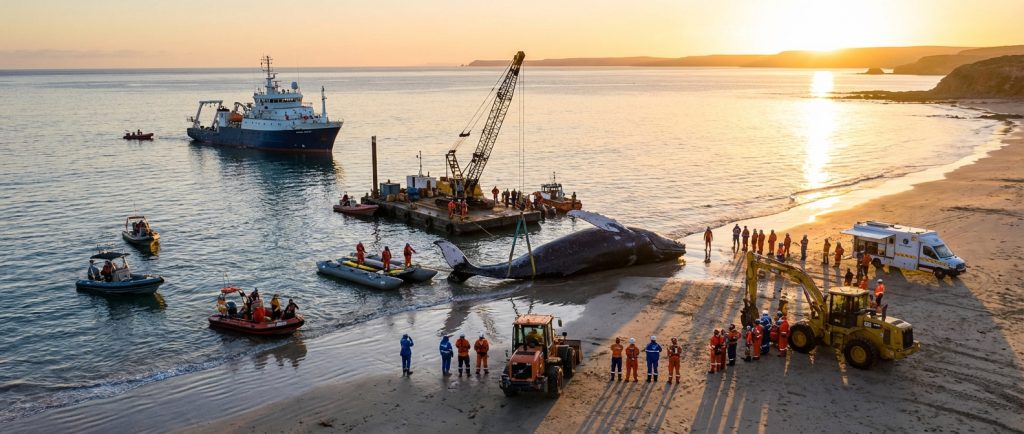
Marine mammal strandings present a critical challenge for conservationists and rescue teams worldwide. These events often require rapid response to save the animals. However, locating stranded whales quickly can be difficult. Fortunately, new technologies are emerging to help. High-tech acoustic sensors are now playing a vital role. They offer a groundbreaking approach to detecting and responding to whale strandings.
This article explores how advanced acoustic monitoring is transforming marine mammal rescue operations. We will look at the technology itself. We will also discuss its benefits and future potential. This information is crucial for marine biologists and coastal rescue teams.
Understanding Whale Strandings
Whale strandings occur when whales intentionally or unintentionally beach themselves. This can happen in shallow waters or on land. The reasons for strandings are complex. They can include disease, injury, disorientation, or environmental factors. For instance, strong currents or unusual weather patterns can play a role.
When a stranding occurs, time is of the essence. Stranded whales are vulnerable. They can suffer from dehydration, physical injury, and stress. Prompt rescue is essential for their survival. However, vast coastlines make locating stranded animals a significant hurdle.
The Challenge of Detection
Traditional methods for detecting stranded whales rely on reports from the public or aerial surveys. While valuable, these methods have limitations. Public reports can be delayed. Aerial surveys are costly and weather-dependent. Sometimes, by the time a whale is found, it is too late to save it.
The sheer scale of coastlines presents a logistical nightmare. Many areas are remote and difficult to access. This means that stranded animals might go unnoticed for hours, or even days. This delay significantly reduces the chances of a successful rescue.
Introducing Acoustic Sensors
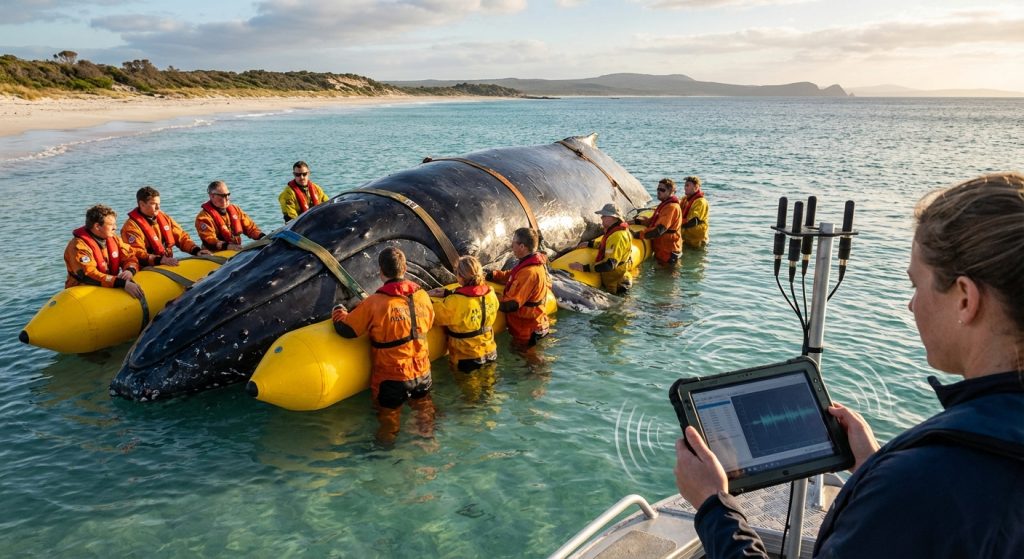
High-tech acoustic sensors are changing this landscape. These devices listen to the ocean’s sounds. They are designed to detect specific vocalizations made by marine mammals. Whales produce a wide range of sounds for communication, navigation, and echolocation. These sounds travel long distances underwater.
Acoustic sensors can pick up these vocalizations. They can then analyze the sound patterns. Advanced algorithms can identify the species of whale. They can also determine if the whale is in distress. This technology provides an “ear” in the ocean, constantly listening for signs of trouble.
How Acoustic Sensors Work
Acoustic sensors, also known as hydrophones, are submerged in the water. They are often deployed in strategic locations along coastlines or in areas known for whale activity. These sensors are connected to sophisticated data processing systems.
The systems analyze incoming audio. They look for specific acoustic signatures. For example, a whale in distress might emit unusual or repetitive calls. Or, a species might be detected in an area where it is not typically found. The sensors can also detect the absence of expected vocalizations, which might indicate a problem.
The Role of AI and Machine Learning
Artificial intelligence (AI) and machine learning are crucial components of this technology. They enable the sensors to learn and adapt. The systems can be trained on vast datasets of whale sounds. This allows them to accurately identify different species and behaviors. Furthermore, AI can help distinguish whale sounds from other ocean noises, such as ship traffic or natural phenomena.
This intelligent analysis is what makes acoustic monitoring so powerful. It moves beyond simple sound detection. It offers a nuanced understanding of the marine environment. Indeed, understanding soundscapes is vital for conservation. For example, noise pollution from ships can disrupt whale communication, a significant concern in many marine environments. You can learn more about how ships affect whale communication.
Benefits for Marine Rescue Teams
The deployment of acoustic sensors offers numerous advantages for marine mammal rescue efforts.
- Early Detection: Sensors can detect whales much earlier than traditional methods. This allows rescue teams to mobilize sooner.
- Improved Accuracy: AI-powered analysis helps identify species and potential distress signals with high accuracy. This ensures the right resources are deployed.
- Wider Coverage: A network of sensors can monitor large areas of the ocean. This is especially useful for remote or inaccessible coastlines.
- Reduced Costs: While the initial investment can be significant, long-term operational costs for continuous monitoring can be lower than frequent aerial surveys.
- Data Collection: The data collected can be invaluable for research. It helps scientists understand whale behavior, migration patterns, and population health.
Therefore, these systems provide a proactive approach to rescue. They shift the focus from reacting to reports to actively monitoring for problems.
Case Studies and Real-World Applications
Several pilot projects have demonstrated the effectiveness of acoustic monitoring for marine mammal rescue. For instance, research institutions are deploying arrays of sensors off the coasts of various countries. These arrays are designed to detect the presence and movement of whales.
In some cases, these systems have successfully alerted authorities to stranded or disoriented whales. This has led to quicker intervention. For example, one project in a busy shipping lane detected unusual vocalizations from a humpback whale. This led to a swift rescue operation. Such successes highlight the practical value of this technology.
Challenges and Future Directions
Despite its promise, acoustic monitoring faces challenges. The ocean is a noisy environment. Distinguishing whale sounds from anthropogenic noise is an ongoing challenge. Furthermore, the cost of deploying and maintaining extensive sensor networks can be substantial.
However, ongoing research is addressing these issues. Innovations in sensor technology and AI are improving detection capabilities. Furthermore, efforts are underway to make the technology more cost-effective. Future developments may include:
- Real-time alerts: Systems that can send immediate notifications to rescue teams when a stranding is detected.
- Mobile sensors: Autonomous underwater vehicles (AUVs) equipped with acoustic sensors that can actively patrol and investigate.
- Integrated systems: Combining acoustic data with other monitoring methods, like satellite imagery or drone surveillance, for a comprehensive picture.
- Predictive modeling: Using historical acoustic data to predict areas and times when strandings are more likely to occur.
Moreover, international collaboration is key. Sharing data and best practices will accelerate the adoption and effectiveness of these technologies globally. For instance, understanding ocean acoustics is vital for marine conservation efforts.
Integrating Technology with Traditional Methods
It is important to note that acoustic sensors are not intended to replace traditional rescue methods entirely. Instead, they serve as a powerful complementary tool. The expertise of marine biologists and the dedication of rescue teams remain paramount.
Acoustic monitoring enhances these efforts. It provides crucial early warning information. This allows human responders to be better prepared and more efficient. Therefore, the synergy between technology and human intervention is vital for successful outcomes.
Conclusion
High-tech acoustic sensors represent a significant leap forward in marine mammal rescue. By providing continuous, real-time monitoring of ocean soundscapes, they enable earlier detection of whale strandings. This, in turn, leads to faster and more effective rescue operations. As the technology continues to evolve, it promises to play an even more critical role in protecting these magnificent creatures.
For marine biologists and coastal rescue teams, embracing these advancements is essential. It offers a powerful new way to safeguard marine life. Ultimately, it contributes to the health and preservation of our oceans.
Frequently Asked Questions (FAQ)
What types of marine mammals can acoustic sensors detect?
Acoustic sensors are most effective at detecting marine mammals that produce distinct vocalizations, such as whales and dolphins. Different sensors and algorithms are optimized for specific species.
How accurate are these sensors in identifying distress calls?
Accuracy depends on the sophistication of the AI and the quality of the training data. Modern systems can achieve high accuracy, but continuous refinement and validation are ongoing.
Can acoustic sensors detect stranded animals on land?
Primarily, acoustic sensors detect sounds underwater. However, some systems might be able to detect distress vocalizations if the animal is very close to shore or in shallow water. They are most effective for detecting animals in the water.
What is the lifespan of an acoustic sensor in the ocean?
The lifespan varies depending on the sensor’s design, materials, and environmental conditions. Many high-quality sensors are designed for long-term deployment, potentially lasting several years.
How do these sensors handle background noise in the ocean?
Advanced signal processing algorithms, including AI and machine learning, are used to filter out background noise. This allows the system to focus on specific marine mammal vocalizations.
