
Bioluminescence: Vietnam’s Deep Sea’s Living Lights
Published on February 7, 2026 by Admin
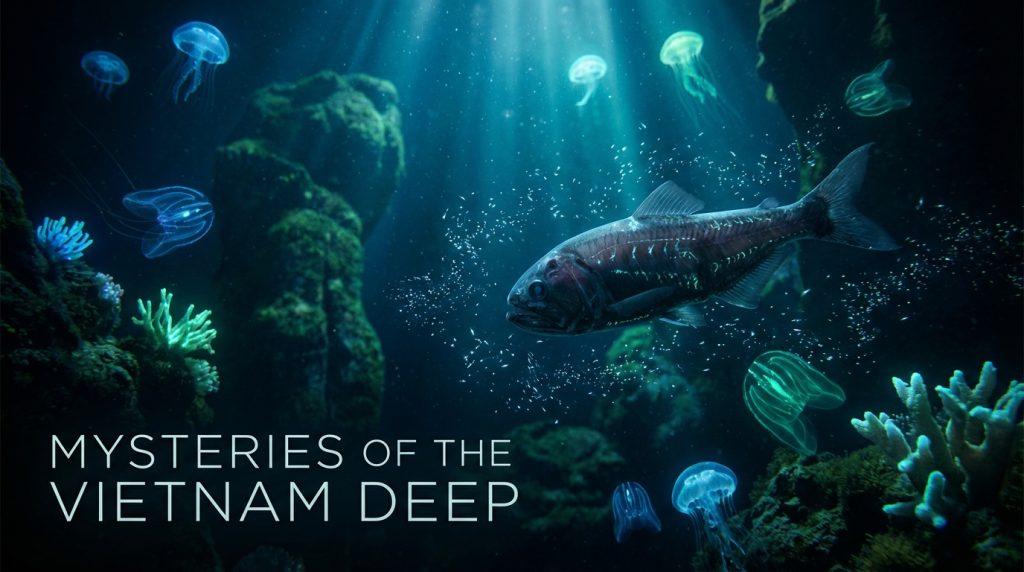
The ocean depths hold countless secrets. Among them is the captivating phenomenon of bioluminescence. This is light produced by living organisms. In the seas around Vietnam, this natural light show is more than just beautiful. It is a critical survival tool for many deep-sea creatures. Understanding this “survival chemistry” offers a unique window into life in extreme environments.
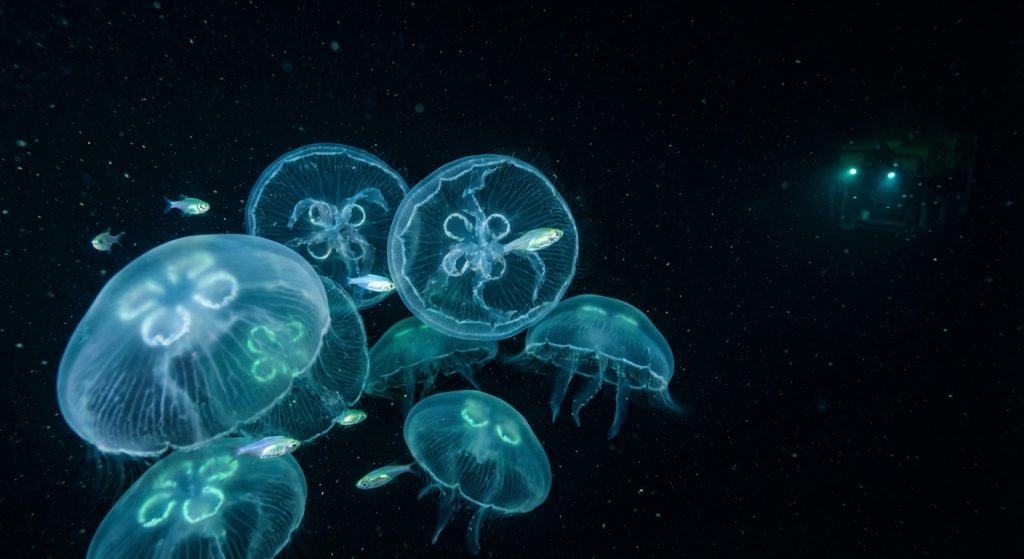
The Chemistry of Living Light
Bioluminescence is a fascinating chemical process. It involves a molecule called luciferin. This molecule reacts with oxygen. An enzyme called luciferase catalyzes this reaction. Therefore, light is produced. This light is “cold light.” It generates very little heat. This is crucial for deep-sea organisms. High temperatures would be detrimental in their environment.
Different species have evolved unique luciferins and luciferases. This leads to variations in light color and intensity. Some creatures produce light continuously. Others flash it intermittently. This chemical diversity highlights evolutionary adaptations. It shows how life thrives under pressure.
Why Do Deep-Sea Creatures Glow?
The reasons for bioluminescence are as varied as the creatures themselves. It is not a single-purpose adaptation. Instead, it serves multiple vital functions. These functions are essential for survival in the perpetual darkness of the deep sea.
1. Communication and Mating
In the vast, dark ocean, finding a mate can be challenging. Bioluminescence acts as a beacon. Specific flashing patterns can attract potential partners. Some species use unique light signals. These signals are like a secret language. They help them find compatible mates. Thus, reproduction is ensured.
2. Defense Against Predators
The deep sea is not free from danger. Predators lurk in the shadows. Bioluminescence offers several defensive strategies. Some creatures release a cloud of glowing particles. This can startle or distract a predator. It allows the prey to escape. Others use a “burglar alarm” effect. They flash brightly when attacked. This attracts larger predators. These larger predators might then attack the original aggressor. This is a clever way to turn the tables. Furthermore, some fish have photophores. These are light-producing organs. They can disguise their silhouette. This makes them harder to spot from below.
3. Predation and Hunting
Not all bioluminescence is for defense. Many predators use light to lure their prey. Anglerfish are a classic example. They have a glowing lure. This lure dangles in front of their mouths. It attracts smaller fish. Once the prey is close, the anglerfish strikes. This is a highly effective hunting strategy. Other organisms use light to illuminate their surroundings. This helps them find food in the darkness. Therefore, they can hunt more efficiently.
4. Camouflage
Counter-illumination is a remarkable form of camouflage. Many deep-sea creatures have light-producing organs on their undersides. They match the faint light filtering down from the surface. This makes their silhouette less visible. Thus, they avoid being seen by predators below. This is a sophisticated adaptation. It shows the intricate ways life has evolved.
Bioluminescence in Vietnamese Seas
Vietnam’s extensive coastline and deep offshore waters provide a rich habitat. They support a diverse array of marine life. This includes many bioluminescent species. While much of the deep sea remains unexplored, research is ongoing. Marine biologists are uncovering the secrets of these glowing organisms.
Examples of bioluminescent creatures found in Vietnamese waters may include certain species of jellyfish, comb jellies (ctenophores), deep-sea shrimp, and various fish. The specific chemical compounds and their functions are subjects of ongoing study. Understanding these adaptations is vital. It helps us appreciate the unique biodiversity of Vietnam’s marine ecosystems.
Challenges for Researchers and Photographers
Studying and photographing bioluminescent life presents significant challenges. The deep sea is a difficult environment to access. It requires specialized equipment. Submersibles and remotely operated vehicles (ROVs) are often necessary. These tools are expensive and complex to operate.
Furthermore, capturing bioluminescence on camera is tricky. The light produced is often faint. It requires long exposure times. This can be difficult in a moving underwater environment. Photographers must also be patient. They need to wait for the right moment. They need to capture the elusive glow in action. Therefore, these expeditions require dedication and expertise.
Conservation Concerns
Like many marine ecosystems worldwide, Vietnamese waters face threats. These include pollution, overfishing, and climate change. These factors can negatively impact bioluminescent populations. Light pollution from human activities can disrupt natural light signals. This can interfere with mating and communication. Habitat destruction also poses a threat. It removes essential living spaces for these creatures.
Protecting these unique environments is crucial. This ensures the survival of bioluminescent organisms. It also preserves the scientific and aesthetic value of these natural wonders. Conservation efforts are essential. They help safeguard the future of Vietnam’s marine biodiversity. Efforts to protect marine life are ongoing. For instance, there are initiatives to reduce noise pollution in VN seas. This is important for marine mammals. It also benefits other sensitive species. Ships’ Roar: Silencing Whales in VN Waters highlights this issue.
The Future of Bioluminescence Research
Advances in technology are opening new avenues for research. Miniaturized sensors and improved imaging techniques are helping scientists. They can now study bioluminescence in greater detail. Genetic analysis is revealing the evolutionary pathways of these light-producing mechanisms. This provides insights into the chemistry of life itself.
The potential applications of bioluminescence are also being explored. For example, scientists are investigating its use in medical imaging. They are also looking at its potential for developing new biosensors. Nature’s innovations often inspire human technology. The study of bioluminescence is a prime example. It continues to reveal profound insights into life’s resilience and creativity.
Frequently Asked Questions
What is bioluminescence?
Bioluminescence is the production and emission of light by a living organism. It is a chemical reaction involving luciferin and luciferase.
Where can I see bioluminescence in Vietnam?
Bioluminescence is most commonly observed in the deep sea. While specific locations for public viewing are rare, some coastal areas might experience phenomena like glowing plankton during certain times of the year, particularly in calmer, darker waters. However, deep-sea sightings require specialized expeditions.
Are all deep-sea creatures bioluminescent?
No, not all deep-sea creatures are bioluminescent. However, it is a widespread adaptation. Many species across various groups have evolved this ability.
What is the difference between bioluminescence and fluorescence?
Bioluminescence is light produced by a chemical reaction within an organism. Fluorescence, on the other hand, is when an organism absorbs light at one wavelength and re-emits it at another, longer wavelength. Bioluminescence is self-generated light; fluorescence requires an external light source.
What are the main functions of bioluminescence for deep-sea animals?
The main functions include communication, attracting mates, defense against predators (startling, distraction, burglar alarm effect), predation (luring prey), and camouflage (counter-illumination).
Conclusion
Bioluminescence in Vietnam’s seas is a remarkable testament to nature’s ingenuity. It is a vital survival strategy for deep-sea inhabitants. The complex chemistry behind this living light continues to fascinate scientists. Furthermore, it offers potential for future technological advancements. For marine researchers and nature photographers, these glowing creatures represent both a challenge and an incredible reward. Protecting these fragile deep-sea ecosystems is paramount. It ensures that these living lights continue to illuminate the ocean’s mysteries for generations to come. The exploration of these underwater realms is ongoing. It promises further discoveries about life’s adaptability. Understanding these phenomena is key to appreciating the vastness of our planet’s biodiversity. Indeed, the deep sea remains one of Earth’s last great frontiers.
