
CRISPR for Saola: A Genetic Lifeline Against Inbreeding
Published on February 7, 2026 by Admin
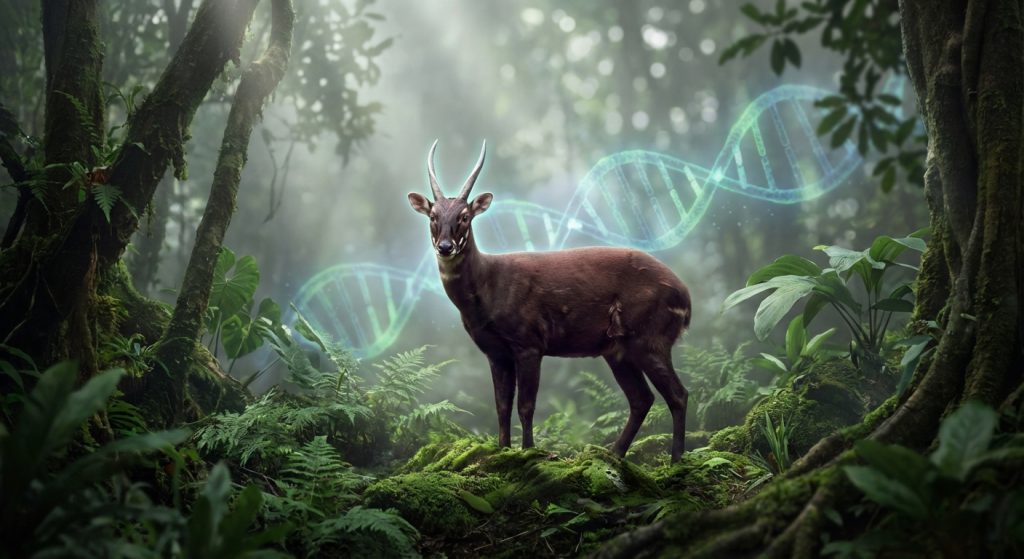
The Saola, often called the Asian unicorn, is one of the world’s most elusive and critically endangered mammals. Sadly, its population is so small that inbreeding poses a severe threat to its survival. Genetic rescue, particularly using advanced tools like CRISPR gene editing, offers a glimmer of hope. This technology could potentially introduce genetic diversity and prevent the Saola from disappearing forever. Geneticists and national park managers must collaborate to explore these innovative solutions.
The Dire Plight of the Saola
The Saola (Pseudoryx nghetinhensis) is a true marvel of nature. It inhabits the Annamite Mountains of Vietnam and Laos. However, sightings are incredibly rare. This rarity is a testament to its elusive nature but also a stark indicator of its precarious existence. The species was only discovered by science in 1992. Since then, its numbers have continued to decline.
Habitat loss and fragmentation are significant drivers of this decline. Poaching, often for traditional medicine or as bycatch in snares set for other animals, also takes a heavy toll. Consequently, the remaining Saola population is fragmented. This fragmentation isolates small groups of individuals. Therefore, their ability to find mates outside their immediate family is severely limited.
Understanding the Threat of Inbreeding
Inbreeding occurs when closely related individuals reproduce. This is a common problem in small, isolated populations. Inbreeding reduces genetic diversity within a population. As a result, offspring are more likely to inherit harmful recessive genes. These genes can lead to a range of health problems. This phenomenon is known as inbreeding depression.
Symptoms of inbreeding depression can include:
- Reduced fertility and reproductive success.
- Lowered immunity to diseases.
- Increased susceptibility to genetic disorders.
- Decreased physical fitness and survival rates.
For the Saola, inbreeding depression is a critical factor accelerating its path toward extinction. Without intervention, the species may not be able to recover.
CRISPR: A Revolutionary Gene Editing Tool
CRISPR-Cas9, often simply called CRISPR, is a groundbreaking technology. It allows scientists to precisely edit DNA. Think of it like a molecular scalpel for genes. It can be used to cut, replace, or disable specific sections of DNA. This technology has revolutionized genetic research and holds immense potential for conservation efforts.
CRISPR works by using a guide RNA molecule. This molecule directs the Cas9 enzyme to a specific DNA sequence. The Cas9 enzyme then makes a cut at that location. Scientists can then use this cut to modify the DNA. For example, they could correct a faulty gene or insert a new one. This precision makes it a powerful tool for genetic intervention.
Genetic Rescue for the Saola: The Concept
Genetic rescue aims to increase genetic diversity in threatened populations. Traditionally, this involved translocation. This means moving individuals from one population to another. However, this can be challenging and risky for elusive species like the Saola. It may also not be feasible if populations are too small or geographically isolated.
CRISPR offers a novel approach. Instead of moving animals, we could potentially edit their genes. The goal would be to reintroduce lost genetic diversity. This could be done by creating individuals with beneficial genetic traits. These traits might be absent in the current Saola population due to inbreeding.
The process would likely involve several steps:
- Identifying critical genes: Researchers would need to identify genes that are important for Saola health and diversity. They would also look for genes negatively impacted by inbreeding.
- Gene editing in vitro: Cells or embryos could be edited in a laboratory setting. This would involve using CRISPR to introduce or correct specific genetic sequences.
- Reproductive technologies: Advanced reproductive techniques, such as in vitro fertilization or artificial insemination, would be necessary. These would be used to produce offspring from the edited genetic material.
- Monitoring and evaluation: The success of the intervention would need careful monitoring. This includes assessing the health and reproductive success of the new individuals.
This is a complex undertaking. It requires extensive research and ethical considerations.
Potential Applications of CRISPR in Saola Conservation
CRISPR could be applied in several ways to aid Saola conservation. Firstly, it could be used to reintroduce genetic variation that has been lost through inbreeding. For example, if a specific gene variant crucial for disease resistance is rare in the current population, CRISPR could help reintroduce it.
Secondly, CRISPR might be used to enhance traits that improve survival. This could include improved immune function or better adaptation to environmental changes. Therefore, it could bolster the species’ resilience.
Finally, CRISPR could potentially be used in conjunction with assisted reproduction. This would help create a more genetically diverse captive breeding program. Such a program could serve as a safeguard against extinction. It would also provide a source for potential reintroduction into the wild.
Challenges and Ethical Considerations
Despite its promise, using CRISPR for genetic rescue in wild populations faces significant challenges. One major hurdle is the technical complexity. Editing genes in a wild animal population is far more difficult than in a lab setting. Furthermore, the long-term effects of gene editing are not always predictable.
Ethical considerations are also paramount. Gene editing raises questions about ‘playing God’ and altering natural evolutionary processes. There are concerns about unintended consequences. These could include off-target edits or the creation of new health problems. Therefore, rigorous ethical review and public discourse are essential.
For national park managers, the practicalities are also daunting. Implementing such a program would require immense resources. It would also demand collaboration between geneticists, veterinarians, conservationists, and policymakers. Moreover, the public perception and acceptance of such technology are crucial. This is especially true when dealing with iconic and endangered species.
The Role of Geneticists and National Park Managers
Geneticists play a vital role in this endeavor. They are responsible for the scientific research. This includes understanding Saola genetics, identifying target genes, and developing precise CRISPR protocols. They must also ensure the safety and efficacy of any proposed interventions. Their work provides the foundation for any genetic rescue attempt.
National park managers are on the front lines of conservation. They understand the ecological context and the challenges of working with wild populations. They are responsible for implementing conservation strategies on the ground. Therefore, their input is critical in determining the feasibility and appropriateness of using tools like CRISPR.
Collaboration between these two groups is essential. Geneticists need the practical insights of park managers. Park managers need the scientific expertise of geneticists. Together, they can develop informed strategies. These strategies must balance innovation with conservation ethics and practical realities. This partnership is key to exploring the potential of gene editing for species like the Saola.
Alternative and Complementary Conservation Strategies
While CRISPR offers a cutting-edge solution, it’s important to remember that it is not a silver bullet. Traditional conservation methods remain crucial. Protecting and restoring Saola habitats is fundamental. Reducing poaching and human encroachment is also vital. These actions directly address the primary threats to the species.
Furthermore, establishing and expanding protected areas is key. Creating wildlife corridors can help connect fragmented populations. This can facilitate natural gene flow. For example, creating wildlife corridors can help mitigate habitat fragmentation. These efforts are essential for the long-term survival of the Saola. They ensure that the species has a viable environment in which to live.
Building on existing conservation successes is also important. Many species have been brought back from the brink of extinction through dedicated efforts. Learning from these successes can inform our approach to the Saola. It highlights the power of comprehensive conservation strategies.
The Future of Genetic Rescue
The application of CRISPR for genetic rescue in endangered species is still in its early stages. However, the potential is immense. As the technology advances and our understanding of genetics deepens, such interventions may become more viable. This could offer a powerful new tool in the fight against extinction.
For the Saola, the path forward is uncertain. It requires careful consideration, rigorous research, and international cooperation. The possibility of using CRISPR to combat inbreeding is a testament to human ingenuity. It also underscores our responsibility to protect the planet’s biodiversity. Ultimately, the goal is to ensure the survival of this magnificent creature for generations to come.
Frequently Asked Questions (FAQ)
What is the primary threat to the Saola’s survival?
The primary threats to the Saola are habitat loss and fragmentation, coupled with poaching. These factors have led to a very small, isolated population, making inbreeding a critical concern.
How does CRISPR technology work?
CRISPR-Cas9 is a gene-editing tool that allows scientists to precisely target and modify specific DNA sequences. It acts like a molecular scissors to cut, remove, or replace genes, enabling precise genetic alterations.
Can CRISPR be used to directly edit wild Saola populations?
Directly editing wild populations is extremely challenging and currently not feasible. Research would likely focus on laboratory settings, using assisted reproduction technologies to introduce edited genes into future generations.
What are the main ethical concerns regarding gene editing for conservation?
Ethical concerns include the potential for unintended consequences, altering natural evolutionary processes, and questions about the “right” to intervene in nature. Rigorous ethical review and public engagement are crucial.
Are there alternatives to gene editing for Saola conservation?
Yes, traditional methods such as habitat protection, anti-poaching efforts, and creating wildlife corridors remain vital. These complement advanced genetic approaches and address immediate threats.
