Bee Intelligence: Unlocking Complex Problem-Solving
Published on February 7, 2026 by Admin
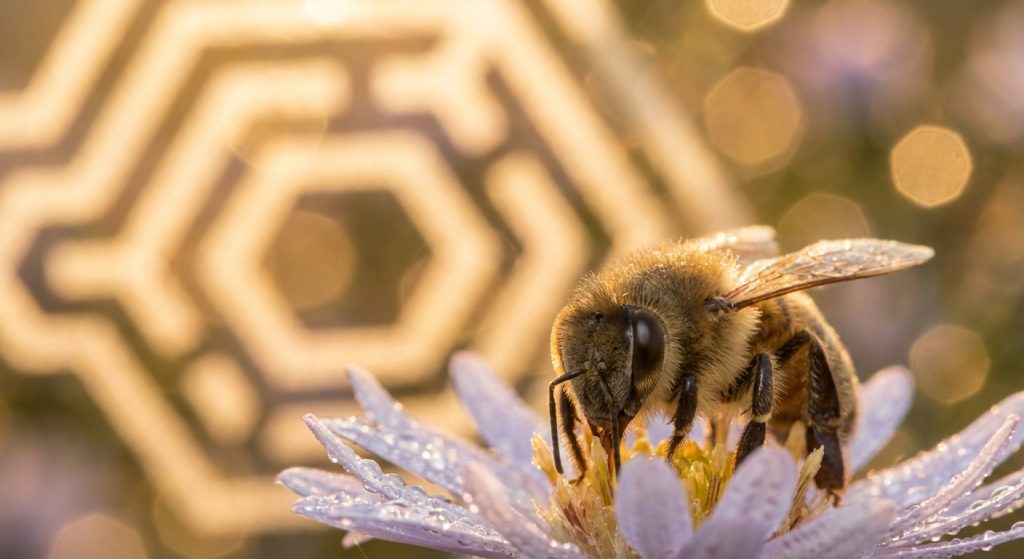
When we think of intelligence, we often picture complex brains. However, many invertebrates display remarkable problem-solving skills. Bees, in particular, are a fascinating example. Their cognitive abilities challenge our traditional views. This article explores the surprising intelligence of bees. We will delve into their problem-solving capabilities.
The Social Brain of a Bee Colony
Bees are highly social insects. Their intelligence is not just individual. It is also collective. A bee colony functions as a superorganism. Each bee plays a specific role. They communicate and cooperate effectively. This social structure is key to their survival. It also drives their problem-solving capacity.
Communication: The Waggle Dance
One of the most famous examples of bee communication is the waggle dance. This intricate dance conveys information about food sources. It tells other bees the distance and direction. Therefore, it’s a complex form of symbolic language. This dance is crucial for foraging efficiency. It helps the colony find the best nectar and pollen. Indeed, it is a sophisticated communication system.
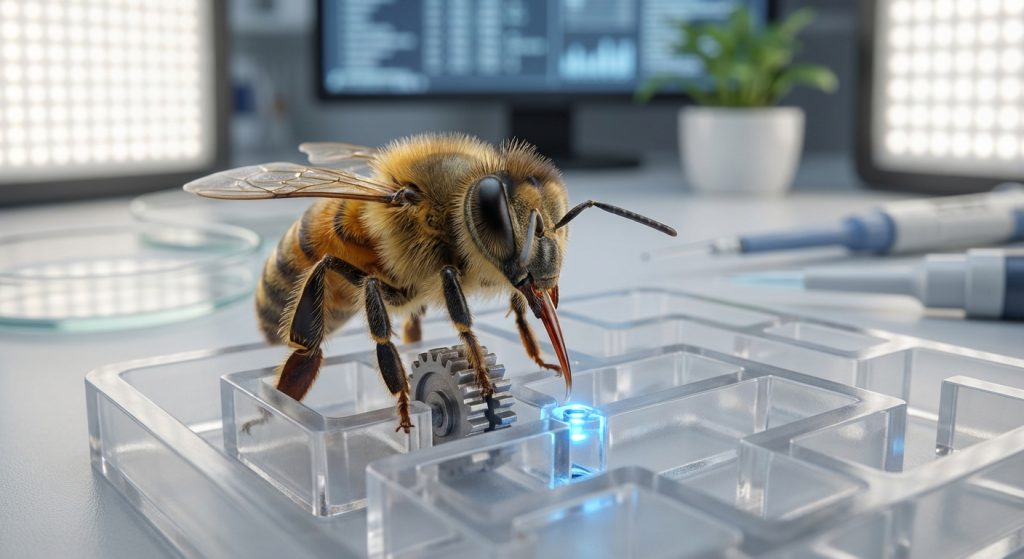
Furthermore, bees use other signals. They employ pheromones. These are chemical signals. They convey alarm, attraction, and colony status. Thus, a bee’s life is rich with communication methods.
Problem-Solving in Foraging
Bees are excellent foragers. They face many challenges. Finding food is one of them. They must navigate complex environments. They also need to adapt to changing conditions. Therefore, they have developed sophisticated problem-solving strategies.
Route Optimization
Bees don’t just fly randomly. They optimize their foraging routes. This minimizes energy expenditure. It also maximizes the amount of food collected. They learn and remember profitable paths. Consequently, they become very efficient over time. This ability to optimize is a sign of advanced cognition.
Tool Use (Surprisingly!)
While not as obvious as primate tool use, some bee behaviors suggest rudimentary tool use. For instance, some bees have been observed using mud to seal entrances. This protects their hive from predators. They also use it to regulate temperature. This shows a level of planning and resourcefulness. It is an unexpected behavior for an insect.
Learning and Memory
Bees possess impressive learning and memory capabilities. They learn to associate colors, shapes, and scents with food. They can remember these associations for days. Moreover, they can transfer this learned information. For example, a bee can teach others about a new flower type. This learning is essential for adapting to new food sources.
Cognitive Abilities Beyond Foraging
Bee intelligence extends beyond just finding food. Scientists have discovered more complex cognitive skills. These abilities highlight their sophisticated minds.
Numerical Cognition
Remarkably, bees can understand quantities. Studies have shown they can distinguish between different numbers of objects. For instance, they can learn to approach a target with five dots over one with three. This demonstrates a basic understanding of numerosity. Thus, they possess rudimentary numerical abilities.
Concept Formation
Some research suggests bees can grasp abstract concepts. They can learn to associate a learned concept with a new task. For example, they can learn the concept of “same” or “different.” This is a significant cognitive feat. It indicates a level of abstract thinking. Therefore, their minds are more complex than previously thought.
Social Learning and Innovation
Bees learn from each other. This social learning is vital for colony survival. They can also innovate. If a problem arises, they can devise new solutions. This collective problem-solving is a hallmark of intelligent societies. It allows the colony to adapt to new challenges.
Challenges and Future Research
Despite significant advances, much remains unknown about bee intelligence. Scientists continue to explore their cognitive world. Several areas require further investigation.
Understanding the Neural Basis
Researchers are working to understand the neural mechanisms. How do bee brains process information? What are the underlying neural circuits? Understanding this can shed light on insect cognition generally. It may also offer insights into brain function itself.
Impact of Environmental Factors
Environmental factors can affect bee cognition. Pesticides are a major concern. They can impair learning and memory. Habitat loss also impacts their foraging abilities. Therefore, conservation efforts are crucial for maintaining their cognitive health. Protecting pollinators is vital for our ecosystems. You can learn more about the importance of pollinators in articles discussing the complex symbiotic relationship between pollinators and plant life.
The Role of Experience
Individual bees’ experiences shape their behavior. Learning and memory play a significant role. How does accumulated experience influence their problem-solving strategies? This is an ongoing area of study. It highlights the dynamic nature of their intelligence.
Why Bee Intelligence Matters to Agriculture
The intelligence of bees has direct implications for agriculture. As crucial pollinators, their efficiency directly impacts crop yields. Understanding their cognitive abilities helps us optimize their role.
Enhanced Pollination Strategies
By understanding how bees learn and communicate, we can design better pollination strategies. For example, we can strategically place hives. We can also manage landscapes to provide better foraging opportunities. This leads to more effective pollination. Ultimately, this boosts agricultural productivity. This is especially important for crops that rely heavily on insect pollination. For instance, understanding plant needs is crucial for successful pollination. You can explore this further in articles on pollinator garden layouts.
Pesticide Impact Assessment
Research into bee cognition also highlights the dangers of certain pesticides. Sublethal doses can impair their navigation and learning. This reduces their effectiveness as pollinators. Therefore, promoting bee-friendly agricultural practices is essential. This includes careful pesticide use. It also involves creating diverse floral resources. Indeed, safeguarding these vital insects benefits everyone.
Frequently Asked Questions (FAQ)
Are bees the most intelligent insects?
While bees exhibit remarkable intelligence, it’s difficult to definitively rank insect intelligence. Other insects, like ants and wasps, also display complex social behaviors and problem-solving skills. Bees are particularly well-studied due to their importance in agriculture and their complex communication systems.
Can bees feel emotions?
The question of insect emotions is complex and debated. While bees can exhibit behaviors that might seem emotional, such as distress when separated from their colony, current scientific understanding suggests they do not experience emotions in the same way humans do. Their responses are likely more instinctual and driven by survival mechanisms.
How do bees learn to navigate so well?
Bees use a combination of cues for navigation. These include the sun’s position (even on cloudy days, they can detect polarized light), memorized landmarks, and their famous waggle dance, which communicates the direction and distance to food sources. They also have an innate sense of direction and can learn new routes.
What is the most surprising aspect of bee intelligence?
Many researchers find their ability to grasp abstract concepts, like numerical cognition and the association of “same” or “different,” to be particularly surprising. These abilities were once thought to be exclusive to much more complex brains.
Conclusion
In conclusion, bees are far more intelligent than commonly perceived. Their problem-solving skills, communication methods, and cognitive abilities are truly impressive. From the intricate waggle dance to numerical understanding, bees showcase a sophisticated form of intelligence. This intelligence is crucial for their survival and for the ecosystems they inhabit. For entomologists and agriculturalists, understanding bee cognition offers valuable insights. It helps us improve pollination, protect these vital insects, and support sustainable agriculture. Further research will undoubtedly reveal even more about the fascinating minds of these essential pollinators.