
AI Tech: The New Frontier in Wildlife Smuggling Detection
Published on February 7, 2026 by Admin

Wildlife smuggling is a serious global crime. It threatens biodiversity. It also fuels organized crime. Customs officials and international police face a constant battle. They must intercept illegal animal parts. Traditional methods are often insufficient. However, new technologies are emerging. Artificial intelligence (AI) offers powerful solutions. This article explores how AI can revolutionize detection. It focuses on using AI at ports.
The Scale of the Wildlife Smuggling Problem
The illegal wildlife trade is massive. It is a multi-billion dollar industry. Many species are pushed to the brink of extinction. This trade funds criminal networks. It also destabilizes economies. Therefore, effective countermeasures are vital. Ports are major entry and exit points. They handle vast amounts of goods daily. This makes them prime targets for smugglers.
Smugglers use various methods. They hide illegal items in legitimate cargo. They also use sophisticated concealment techniques. Detecting these items is challenging. It requires keen observation and advanced tools. Moreover, the sheer volume of trade makes manual inspection impossible.
Introducing AI for Wildlife Part Detection
AI offers a new paradigm. It can process large datasets quickly. It can also identify subtle patterns. This makes it ideal for detecting anomalies. AI algorithms can be trained. They learn to recognize specific features of illegal wildlife parts. This includes bone structures, scales, and even DNA markers.
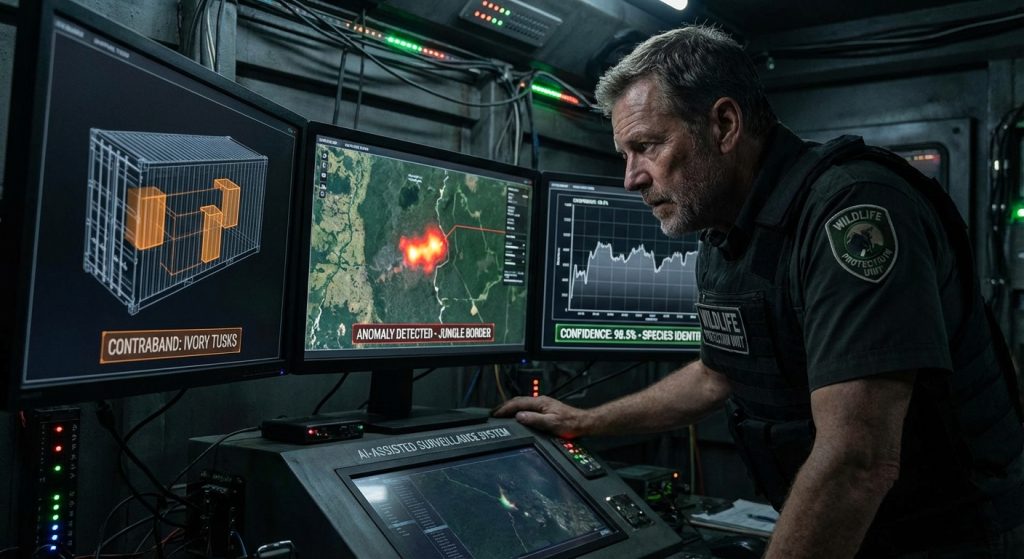
Machine learning models are key. They analyze images, sounds, and other data. They can distinguish between legal and illegal items. For example, AI can analyze X-ray or CT scans. It can identify unusual shapes or densities. This helps flag suspicious shipments.
How AI Works in Practice
AI-powered systems can be integrated into existing port infrastructure. This includes:
- Image Recognition: AI can analyze images from scanners. It can detect the presence of animal parts. For instance, it can identify ivory tusks or pangolin scales.
- Data Analysis: AI can sift through shipping manifests. It looks for suspicious patterns or keywords. This helps prioritize inspections.
- Behavioral Analysis: In some cases, AI can analyze non-verbal cues. This might apply to human interactions or animal vocalizations.
- DNA Analysis: Emerging AI tools can speed up DNA analysis. This allows for faster identification of species.
Furthermore, AI can learn and adapt. As new smuggling methods emerge, AI models can be retrained. This ensures ongoing effectiveness.
Specific AI Technologies for Detection
Several AI technologies are particularly useful. These include:
Computer Vision
Computer vision is essential. It enables machines to “see” and interpret images. This is crucial for analyzing scanner data. Algorithms can be trained on vast libraries of images. These libraries contain images of legal goods and illegal wildlife parts. As a result, AI can quickly spot discrepancies.
For example, a trained AI can differentiate between wood products and ivory. It can also identify processed animal products. This technology is constantly improving. It can now detect even small or fragmented items.
Natural Language Processing (NLP)
NLP helps analyze text data. This includes shipping documents and cargo descriptions. AI can identify suspicious language. It can also flag inconsistencies. For instance, if a shipment is described as “decorative wood” but contains ivory, NLP can flag this discrepancy.
Moreover, NLP can analyze communications. This might help uncover smuggling rings. It is a powerful tool for intelligence gathering. It helps in combating the global fight against illegal wildlife trade. You can learn more about related tech in biometrics for animal tracking, which also leverages AI.
Machine Learning and Deep Learning
These are the core of AI detection systems. Machine learning algorithms learn from data. Deep learning uses neural networks. These networks can process complex, multi-layered data. This allows for highly accurate detection.
For instance, deep learning models can analyze subtle textures and patterns. This is vital for identifying camouflaged items. They can also predict the likelihood of illegal content. Therefore, they help focus enforcement efforts.
Benefits of Using AI in Wildlife Smuggling Detection
The advantages of AI are numerous. They directly address the challenges faced by authorities. Firstly, AI significantly increases detection rates. It can identify items that human eyes might miss. Secondly, it speeds up the inspection process. This is critical given the volume of cargo. Faster inspections mean more efficient port operations.
Thirdly, AI reduces the reliance on human expertise for initial screening. While human oversight remains crucial, AI can handle the bulk of the work. This frees up skilled officers for more complex tasks. Fourthly, AI systems can operate 24/7. They do not suffer from fatigue. This ensures consistent vigilance. Finally, AI can analyze data from multiple sources. This provides a more holistic view of potential threats.
The use of AI aligns with broader efforts to protect biodiversity. For example, advancements in eDNA technology are also revolutionizing species monitoring.
Challenges and Future Directions
Despite its promise, AI implementation faces hurdles. Developing accurate AI models requires extensive, high-quality data. Obtaining such data for illegal wildlife parts can be difficult. Furthermore, smugglers constantly adapt their methods. This necessitates continuous model updates.
The cost of implementing advanced AI systems can also be a barrier. Training personnel to operate and maintain these systems is also important. Ethical considerations are also paramount. Ensuring data privacy and avoiding bias in algorithms is crucial.
The Road Ahead
The future of AI in wildlife smuggling detection is bright. Continued research and development are key. Collaboration between tech companies, governments, and NGOs is essential. This will help create more robust and accessible AI solutions.
We can expect AI to become even more sophisticated. Future systems might integrate multiple data streams. This could include satellite imagery, drone surveillance, and even acoustic monitoring. Ultimately, AI will be a critical tool. It will help protect endangered species. It will also disrupt illicit trade networks.
Conclusion
AI technology presents a powerful new weapon. It offers hope in the fight against wildlife smuggling. By leveraging computer vision, NLP, and machine learning, authorities can enhance detection capabilities. This will lead to fewer illegal items reaching markets. It will also help protect vulnerable species. As AI evolves, its role in safeguarding our planet’s biodiversity will only grow.
Frequently Asked Questions
How does AI identify illegal animal parts?
AI uses techniques like computer vision and machine learning. It is trained on vast datasets of images and data. This allows it to recognize specific visual or data patterns associated with illegal wildlife products, such as the shape of ivory or the texture of pangolin scales.
Can AI detect all types of wildlife smuggling?
AI is a powerful tool, but it’s not infallible. It is most effective with detectable physical characteristics or patterns. For very well-concealed items or those with no unique identifiers, human expertise remains critical. However, AI significantly enhances the overall detection capacity.
What are the main challenges in implementing AI for this purpose?
Key challenges include the need for large, accurate datasets of illegal wildlife products for training AI models. Smugglers’ evolving tactics require continuous model updates. Additionally, the cost of implementation and the need for specialized training for personnel are significant factors.
Will AI replace human customs officers?
No, AI is designed to augment, not replace, human officers. It automates repetitive tasks and highlights potential threats. This allows human experts to focus on complex investigations and decision-making. Human oversight and judgment remain indispensable.
What is the role of data in AI-powered wildlife smuggling detection?
Data is fundamental. High-quality, diverse datasets are essential for training AI models. This includes images of legal goods, various illegal wildlife parts, and data on smuggling patterns. The more comprehensive and accurate the data, the more effective the AI will be.
