
Artificial Light Disrupts Sea Turtle Nesting Beaches
Published on February 7, 2026 by Admin
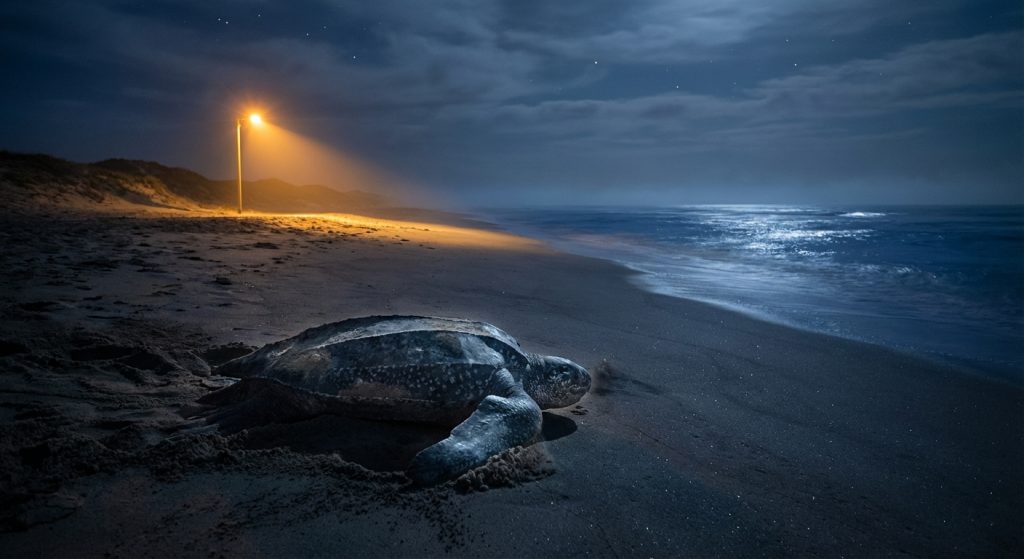
Sea turtles are ancient mariners. They have navigated our oceans for millions of years. However, modern life presents new challenges. One significant threat is light pollution. This artificial light disrupts their natural behaviors. It particularly impacts nesting beaches. Coastal developers and biologists must understand this issue. Protecting these vital nesting grounds is crucial for their survival.
Artificial light at night (ALAN) is a growing problem. It emanates from various sources. These include streetlights, buildings, and homes. This light spills onto beaches. It disorients both adult female turtles and their hatchlings. Consequently, it affects reproduction and survival rates.
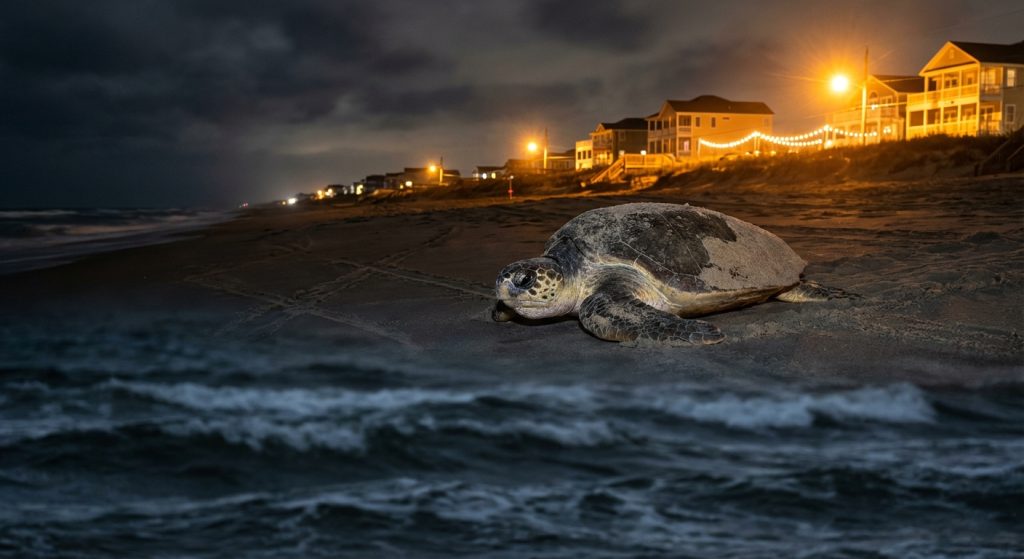
The Ancient Journey of Sea Turtles
Female sea turtles undertake a remarkable journey. They return to the same beaches where they were born. This instinct drives them to nest. They emerge from the sea, often under the cover of darkness. This is a critical phase. They must find a suitable spot. Then, they dig a nest. They lay their eggs. Finally, they cover the nest and return to the ocean.
This entire process is finely tuned. It relies on natural cues. The moon and stars provide ambient light. This helps them orient themselves. It guides their movements. It also helps them find safe nesting locations. For hatchlings, emergent light signals the sea. They instinctively move towards the brightest horizon, which is usually the ocean.
How Light Pollution Disrupts Nesting
Artificial lights create a false horizon. They confuse nesting females. They may be deterred from coming ashore. This is known as nesting exclusion. Sometimes, they nest in suboptimal locations. These might be too close to the water. This increases the risk of nest inundation. Or, they might nest too far inland. This can lead to dehydration or exposure.
Furthermore, the artificial light can cause females to expend excessive energy. They may undertake multiple nesting attempts. This is called false crawling. It exhausts them. It also reduces the number of successful nests. This directly impacts the reproductive output.
Disorientation of Hatchlings
The hatchlings face an even greater peril. Once they emerge from the nest, they are vulnerable. They need to reach the sea quickly. They use the natural light gradient. This helps them find their way. Artificial lights draw them inland. They may head towards brightly lit roads or buildings. This is a death sentence for many. They can become prey for predators. They may also die from dehydration or exhaustion.
This disorientation is a major cause of hatchling mortality. It significantly reduces the number of young turtles that reach the ocean. This has long-term implications for sea turtle populations. Understanding the amazing science of animal navigation can help us appreciate these challenges.
Impact on Different Sea Turtle Species
Different sea turtle species have varying nesting habits. However, all are affected by light pollution. For example, Green Sea Turtles are known to nest on beaches with some ambient light. However, excessive artificial light can still deter them. Loggerhead Sea Turtles are also sensitive. Leatherback Sea Turtles often nest on more open beaches. These can be more exposed to light pollution.
The impact is not uniform. It depends on the intensity, spectrum, and duration of the light. It also depends on the species and the specific beach environment.
Coastal Development and Mitigation Strategies
Coastal development is a primary driver of light pollution. As human populations grow, so does the demand for coastal properties. This leads to increased lighting. However, responsible development is possible. Developers can implement mitigation strategies. These are essential for protecting nesting beaches.
Best Practices for Coastal Lighting
Several strategies can minimize the impact of artificial light. Firstly, use downward-shielded fixtures. These direct light downwards. They prevent light from spilling onto the beach. Secondly, use low-pressure sodium vapor or amber/red LED bulbs. These have less impact on sea turtles. They are less disruptive than white or blue light. Thirdly, reduce the intensity of lighting. Use the lowest intensity necessary. Finally, turn off unnecessary lights. Motion sensors can help. Timers are also useful.
Coastal communities can adopt lighting ordinances. These regulations guide responsible lighting practices. They protect natural habitats. They also enhance the aesthetic of coastal areas. It is important for developers to collaborate with conservationists. This ensures effective protection measures are in place.
The Role of Biologists and Conservationists
Biologists and conservationists play a vital role. They conduct research. They monitor sea turtle populations. They identify critical nesting areas. They also educate the public. Their work informs policy decisions. It guides mitigation efforts.
Monitoring nesting success is key. Biologists track nesting activity. They also monitor hatchling emergence. This data helps assess the effectiveness of lighting strategies. They can identify problem areas. They can then recommend improvements. Their dedication is crucial for the long-term survival of sea turtles.
Community Involvement and Education
Public awareness is essential. Many people are unaware of the impact of lighting. Educational campaigns can inform coastal residents and tourists. Simple actions can make a big difference. This includes closing curtains at night. It also means using turtle-friendly lighting. Engaging local communities fosters a sense of stewardship. It encourages collective action for conservation.
Citizen science initiatives can also help. Volunteers can participate in beach cleanups. They can also help monitor nesting activity. This direct involvement strengthens conservation efforts. It builds a connection to these ancient creatures.
Scientific Research and Future Directions
Ongoing research is vital. Scientists are studying the specific effects of different light types. They are also developing new technologies. These might include bioluminescent pathways. They could also involve advanced light shielding. Understanding the full ecological impact is crucial. This includes impacts on other nocturnal coastal species.
The development of smart lighting systems is promising. These can adapt to natural light conditions. They can also respond to the presence of wildlife. This technology offers a future where human needs and wildlife protection can coexist. The science of animal navigation is also being explored to better understand these behaviors.
Frequently Asked Questions (FAQ)
What is light pollution and how does it affect sea turtles?
Light pollution is excessive, misdirected, or obtrusive artificial light. For sea turtles, it disorients nesting females, causing them to avoid beaches or nest in unsuitable locations. It also leads hatchlings inland, away from the sea, increasing their mortality rate.
Why do sea turtles return to the same nesting beaches?
Sea turtles exhibit a strong homing instinct. They return to the natal beaches where they themselves hatched to lay their own eggs. This is a critical part of their life cycle.
What are the most effective ways to reduce light pollution on nesting beaches?
Effective methods include using downward-shielded light fixtures, employing amber or red-colored bulbs, reducing light intensity, and turning off lights when not needed. Implementing lighting ordinances is also crucial for coastal areas.
Are all sea turtle species equally affected by light pollution?
While all species are affected, the degree of impact can vary. It depends on their nesting behavior, habitat preference, and sensitivity to different light spectra.
What can I do as a coastal resident or visitor to help?
As a resident or visitor, you can help by using turtle-friendly lighting, closing curtains at night, participating in beach cleanups, and educating others about the issue. Staying informed and advocating for protective measures is also important.
Conclusion
Light pollution poses a significant threat to sea turtle nesting beaches. It disrupts their ancient migratory and reproductive behaviors. This leads to decreased nesting success and increased hatchling mortality. Coastal developers have a responsibility to implement responsible lighting practices. Biologists and conservationists are vital for research, monitoring, and education. By working together, we can mitigate the impact of artificial light. We can ensure that these magnificent creatures continue their journey for generations to come. Protecting nesting beaches is not just about saving turtles; it’s about preserving a vital part of our planet’s natural heritage.
