
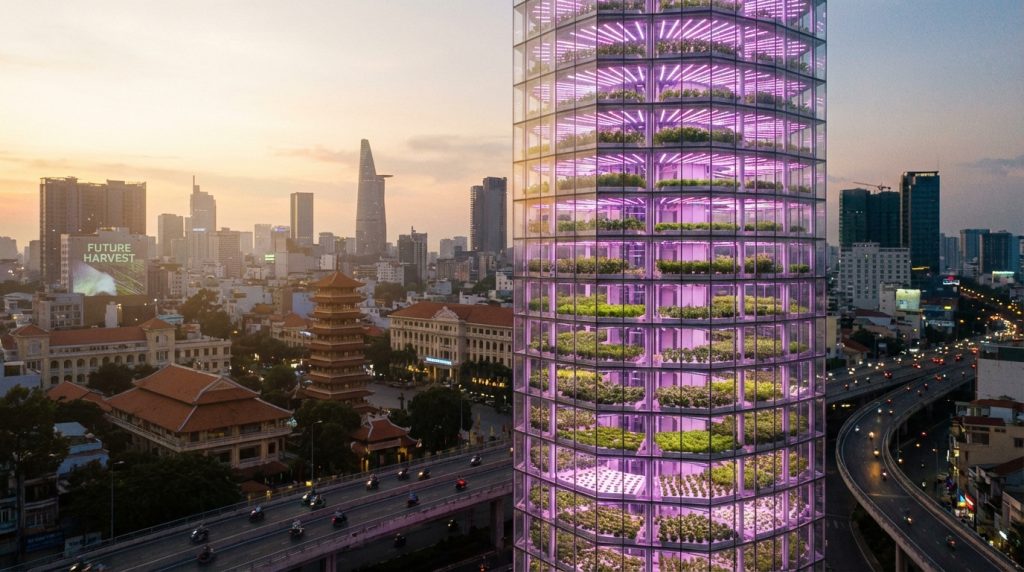
Vietnam’s urban centers are growing rapidly. So is the demand for fresh, organic food. Traditional agriculture faces challenges. Land is scarce. Water resources are strained. Climate change adds further pressure. Therefore, innovative solutions are needed. Vertical farming offers a promising answer. It allows growing organic vegetables in skyscrapers. This method uses less space and water. It also reduces transportation needs.
This article explores vertical farming in Vietnam. We will look at its potential. We will also discuss its benefits for startups and urban planners. Furthermore, we will examine the challenges involved. Finally, we will consider the future outlook.
The Rise of Vertical Farming
Vertical farming is a revolutionary approach. It grows crops in vertically stacked layers. These farms are often in controlled environments. This means precise control over light, temperature, and humidity. Hydroponics, aeroponics, or aquaponics systems are common. These systems use nutrient-rich water. They eliminate the need for soil. As a result, crops can grow year-round. They are also protected from pests and diseases.
The global vertical farming market is expanding. It is projected to grow significantly. This growth is driven by several factors. Increasing urbanization is one. Consumer demand for pesticide-free produce is another. Furthermore, technological advancements are making it more viable. For instance, LED lighting and AI automation are key enablers.
Why Vietnam Needs Vertical Farms
Vietnam faces unique challenges. Its dense population strains agricultural resources. Coastal areas are vulnerable to rising sea levels. Inland areas grapple with water scarcity. Traditional farming practices can be resource-intensive. Vertical farming offers a sustainable alternative. It can be implemented in urban areas. This reduces the need for long-distance food transport. Consequently, it lowers carbon emissions. It also ensures a consistent supply of fresh produce.
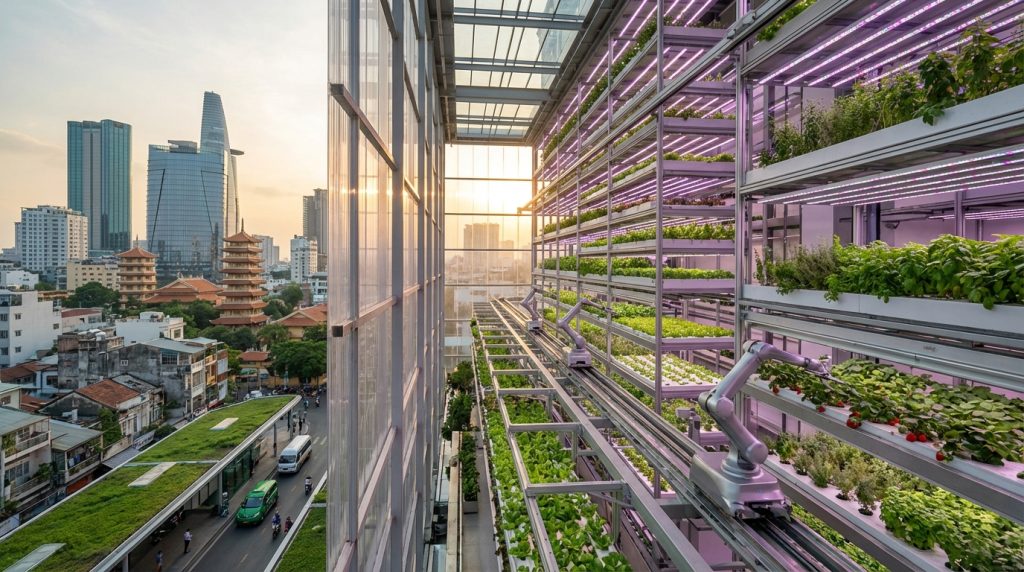
Moreover, vertical farms can utilize non-arable land. This includes rooftops and abandoned buildings. They can be integrated into new building designs. This makes them a perfect fit for urban planning. Imagine skyscrapers with integrated farms. They would not only feed the city but also enhance its aesthetics. It is a vision of a greener, more sustainable urban future.
Benefits for Agri-tech Startups
Agri-tech startups have a unique opportunity. Vertical farming presents a lucrative market. It requires innovation and technological expertise. Startups can develop advanced systems. They can also offer specialized growing solutions. For example, they can create AI-powered climate control. Or they can design energy-efficient LED lighting. This creates a competitive edge.
Furthermore, vertical farming aligns with sustainability goals. This attracts investors and consumers. Startups can focus on niche markets. They can grow high-value organic produce. This includes herbs, leafy greens, and specialty fruits. They can also cater to specific dietary needs. This diversification is key to success.
Economic Advantages
The economic benefits are substantial. Vertical farms can achieve higher yields. They use less land and water than conventional farms. This leads to lower operational costs. Reduced transportation costs are another factor. Year-round production provides a stable income stream. This is unlike traditional farming, which is seasonal.
Additionally, vertical farming creates new jobs. It requires skilled labor in technology and agriculture. This contributes to economic development. It can also boost local economies. By providing fresh produce locally, it reduces reliance on imports. This strengthens food security.
Urban Planning and Vertical Farming
Urban planners can integrate vertical farms into city design. This is a crucial step towards smart cities. These farms can be part of mixed-use developments. They can be integrated into residential buildings. They can also be stand-alone facilities. This provides fresh food access to urban dwellers.
Moreover, vertical farms can improve urban aesthetics. They can transform sterile urban landscapes into green oases. This enhances the quality of life. It also contributes to urban biodiversity. Imagine green walls on buildings. These are not just decorative. They are productive food sources.
Space Optimization
Cities are characterized by limited space. Vertical farms maximize vertical space. They can be built in dense urban areas. This is where land is most expensive. Therefore, they offer a solution to land scarcity. They can be integrated into existing infrastructure. This makes them adaptable. They can also be designed as modular units. This allows for scalability.
The ability to grow food within city limits is powerful. It significantly shortens the supply chain. This leads to fresher produce. It also reduces the environmental impact of food distribution. Therefore, urban planners should prioritize their integration.
Technological Innovations Driving Growth
Several technologies are fueling vertical farming’s rise. LED lighting is a prime example. It allows for optimized light spectrums. This enhances plant growth and yield. Automated systems are also crucial. Robots can handle tasks like planting, monitoring, and harvesting. This reduces labor costs. It also increases efficiency.
Artificial intelligence (AI) plays a key role. AI can analyze vast amounts of data. It monitors environmental conditions. It predicts crop yields. It also optimizes resource usage. For example, AI can precisely control nutrient delivery. This ensures optimal plant health. Furthermore, sensors collect real-time data. This allows for immediate adjustments.
Controlled Environment Agriculture (CEA)
Vertical farms are a form of CEA. This ensures optimal growing conditions. It means plants are shielded from external factors. These include pests, diseases, and harsh weather. Consequently, crop loss is minimized. Pesticide use is also eliminated. This results in healthier, organic produce. This is a significant advantage for consumers.
CEA also allows for precise resource management. Water usage can be reduced by up to 95%. This is a major benefit in water-scarce regions. Energy efficiency is also improving. Innovations in LED lighting and automation are key. For instance, by recycling water and nutrients, waste is minimized. This aligns with sustainable practices. You can learn more about how plants interact with their environment in articles about mycorrhizal networks and plant communication networks.
Challenges and Considerations
Despite its promise, vertical farming has challenges. The initial setup cost can be high. This includes infrastructure and technology. Energy consumption is another concern. While efficient, lighting and climate control require significant power. Therefore, sourcing renewable energy is vital.
Skilled labor is also needed. Operating and maintaining these systems requires expertise. This includes horticulture, engineering, and data analysis. Furthermore, consumer perception is important. Some consumers may still prefer traditionally grown produce. Building trust and education are key. Overcoming these hurdles is essential for widespread adoption.
Energy Consumption and Sustainability
Energy is a major operational cost. Lighting, climate control, and pumps all consume power. Therefore, integrating renewable energy sources is paramount. Solar panels, wind turbines, or geothermal energy can power these farms. This significantly reduces their carbon footprint. It also lowers operating expenses.
Water recycling systems are also crucial. Closed-loop hydroponic systems minimize water waste. Nutrient management is also optimized. This reduces fertilizer runoff. Overall, a focus on circular economy principles is essential. This ensures long-term sustainability. For example, exploring circular water systems can offer further efficiencies.
The Future of Vertical Farming in Vietnam
The future of vertical farming in Vietnam looks bright. Government support is increasing. Policies are being developed to encourage agri-tech innovation. This includes incentives for startups. Furthermore, investor interest is growing. The demand for organic, locally sourced food will only increase.
Vietnam’s tropical climate offers advantages. It can reduce heating costs in winter. However, cooling needs in hot months are significant. Innovations in cooling technologies are important. Also, research into crop varieties suitable for vertical farms is ongoing. As technology advances, vertical farming will become more accessible. It will play a vital role in Vietnam’s food security.
Integration with Smart City Initiatives
Vertical farms can be a cornerstone of smart city development. They contribute to food security. They also enhance sustainability. They can be integrated with smart grids. They can also connect with urban water management systems. This creates a synergistic urban ecosystem.
Furthermore, these farms can serve educational purposes. They can be sites for research and development. They can also offer urban farming workshops. This promotes sustainable living. It also inspires the next generation of farmers and innovators. Ultimately, vertical farms represent a paradigm shift. They are transforming how we grow food in cities.
Frequently Asked Questions (FAQ)
What is vertical farming?
Vertical farming is a method of growing crops in vertically stacked layers. It typically occurs in controlled environments using soilless farming techniques like hydroponics or aeroponics.
What are the main benefits of vertical farming for Vietnam?
Vertical farming offers solutions for Vietnam’s land scarcity and water challenges. It enables year-round production of fresh, organic produce in urban areas, reducing transportation needs and enhancing food security.
What are the biggest challenges facing vertical farming?
The primary challenges include high initial setup costs, significant energy consumption, and the need for specialized labor. Consumer perception and the adoption of new technologies also play a role.
How can vertical farms contribute to sustainability?
Vertical farms use significantly less water and land. They eliminate the need for pesticides. Integrating renewable energy sources further enhances their sustainability.
What role does technology play in vertical farming?
Key technologies include LED lighting, AI for climate control and monitoring, automation for tasks like planting and harvesting, and advanced sensor systems for precise environmental management.
Conclusion
Vertical farming is more than just an agricultural trend. It is a vital component of sustainable urban development. For Vietnam, it offers a path to greater food security. It also presents significant opportunities for agri-tech startups. Urban planners can leverage this technology. They can create greener, more resilient cities. While challenges remain, ongoing innovation is paving the way. The future of food is looking up – quite literally, towards the sky.
