Algae Facades: Greening Buildings for Oxygen and Fuel
Published on February 8, 2026 by Admin
The Rise of Bio-Integrated Architecture
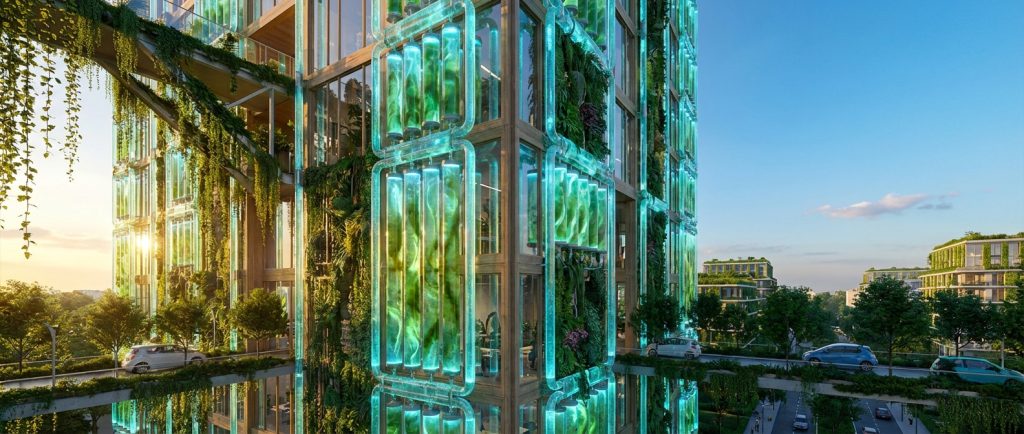
Traditional buildings consume vast amounts of energy and contribute to pollution. However, a new wave of bio-integrated architecture seeks to change this paradigm. These designs incorporate living organisms into the building’s structure. Algae, in particular, are emerging as a powerful solution. They are highly efficient at photosynthesis. This means they absorb carbon dioxide and release oxygen.
Why Algae?
Algae are microscopic powerhouses. They grow rapidly and require minimal resources. They can thrive in diverse conditions. This makes them ideal for urban environments. Furthermore, they can be cultivated on vertical surfaces. This is where building facades come into play. Algae bioreactors can be seamlessly integrated into these facades. This creates a living skin for our buildings.
How Algae Facades Work
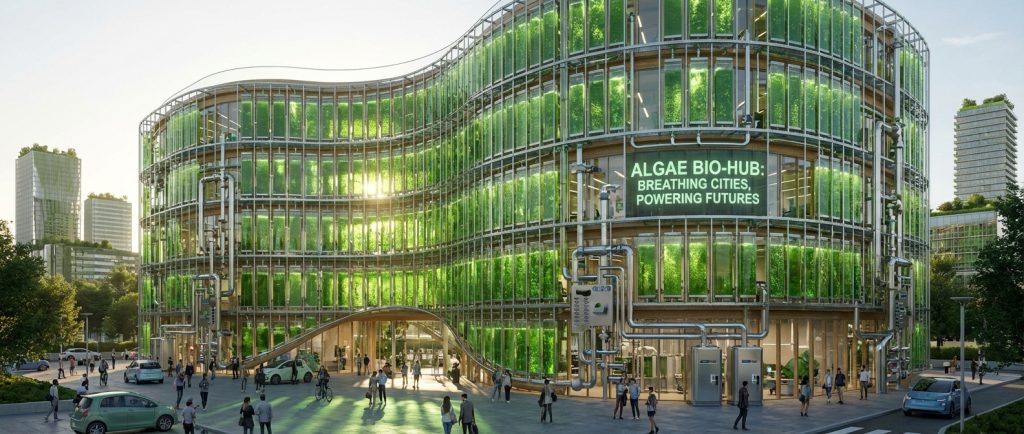
Algae bioreactors are essentially transparent panels or tubes. These contain a culture of microalgae suspended in water. Sunlight powers their photosynthetic process. The algae absorb CO2 from the surrounding air. They then release oxygen. This process actively improves local air quality. It also helps mitigate the urban heat island effect.
Oxygen Production
The oxygen produced by algae is a significant benefit. It directly contributes to cleaner air in cities. This is especially important in densely populated areas. Moreover, it helps offset the carbon footprint of the building itself. It’s a passive yet potent form of air purification.
Fuel Generation
Beyond oxygen, algae can be harvested for biofuel. After cultivation, the algae biomass can be processed. This yields various biofuels, such as biodiesel and biogas. Therefore, buildings can become small-scale energy producers. This reduces reliance on fossil fuels. It also contributes to a more sustainable energy landscape.
The Benefits for Architects and the Environment
For architects, algae facades offer a unique aesthetic. They provide a dynamic, living element to building design. This moves beyond static materials like concrete and glass. The visual appeal is undeniable. It can also enhance the building’s sustainability credentials. This is increasingly important for clients and city planners.
Environmental Advantages
The environmental benefits are substantial. They include:
- Improved air quality through CO2 absorption and oxygen release.
- Reduced building energy consumption due to the insulating properties of the algae panels.
- Potential for on-site renewable energy generation from harvested algae.
- Aesthetic enhancement of urban spaces.
- Contribution to a circular economy by utilizing waste CO2 and producing valuable biomass.
Furthermore, this technology aligns with the growing demand for ESG integration strategies in construction.
Challenges and Future Prospects
Despite the exciting potential, challenges remain. These include the cost of installation and maintenance. Ensuring optimal light and nutrient supply for the algae is also crucial. Additionally, developing efficient harvesting and processing methods for the algae biomass is an ongoing area of research.
Technological Advancements
Researchers are continuously working on improving bioreactor design. They are also focusing on optimizing algae strains for specific climates. Furthermore, advancements in automation and monitoring systems are making maintenance more manageable. For instance, smart systems can regulate nutrient flow and harvest cycles. This ensures consistent performance.
Economic Viability
The economic viability of algae facades is improving. As the technology matures, costs are expected to decrease. The dual benefit of environmental services and energy production makes them attractive investments. Moreover, government incentives for green building technologies can further support adoption.
Case Studies and Examples
Several pioneering projects have already demonstrated the viability of algae facades. The BIQ House in Hamburg, Germany, was one of the first. It showcased a building clad in algae-filled panels. These panels generated heat for the building. Other projects are exploring different applications. Some focus on air purification. Others prioritize biofuel production.
The Future is Algae-Powered
The integration of algae into building facades represents a significant step forward. It demonstrates how nature can be harnessed to create more sustainable and resilient urban environments. As technology advances, we can expect to see more buildings adopting this living architecture. This will undoubtedly contribute to healthier cities and a more sustainable planet. It’s a revolution growing on our walls.
Frequently Asked Questions
What exactly are algae facades?
Algae facades are building exterior systems that integrate bioreactors filled with microalgae. These systems utilize photosynthesis to absorb carbon dioxide and release oxygen, while also offering potential for biofuel production.
Are algae facades expensive to install and maintain?
Currently, installation and maintenance can be more costly than traditional facade materials. However, as the technology matures and economies of scale are achieved, costs are expected to decrease. Ongoing research aims to simplify maintenance procedures.
Can algae facades really produce enough fuel to power a building?
While it’s unlikely that algae facades alone can power an entire large building, they can significantly contribute to its energy needs. They can provide a portion of the heating or electricity through biofuel conversion, reducing overall energy consumption and reliance on external sources.
What are the environmental benefits beyond oxygen production?
Besides oxygen production, algae facades offer insulation benefits, reducing a building’s heating and cooling demands. They also utilize waste CO2, contributing to carbon capture. Furthermore, the biomass can be used for various applications, promoting a circular economy.
Are there any drawbacks to using algae facades?
Potential drawbacks include the initial cost, the need for specialized maintenance, and ensuring adequate sunlight and nutrient supply for optimal algae growth. Aesthetic concerns or public perception can also be factors, though this is changing as the technology becomes more recognized.
Conclusion
The algae revolution in architecture is more than just a trend. It’s a vital innovation for creating sustainable urban environments. By integrating living organisms into our buildings, we can transform them from energy consumers into active contributors to a healthier planet. Algae facades offer a tangible solution for producing oxygen and fuel, making our cities more livable and our future more sustainable. This synergy between nature and design is paving the way for a greener built environment.