
Atmospheric Water Harvesting: Feeding Plants in Dry Regions
Published on February 8, 2026 by Admin
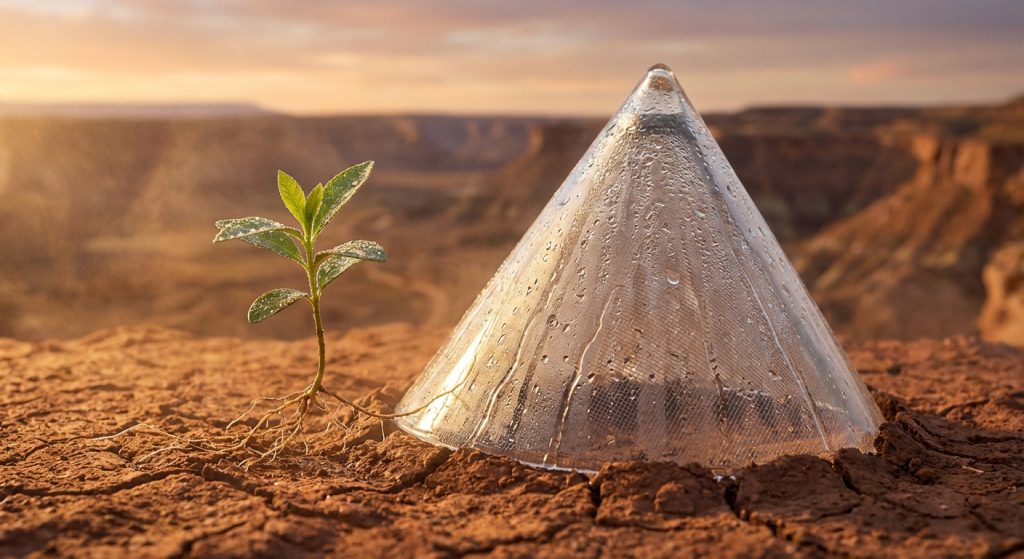
Water is life. Plants need it to grow. But many regions face severe water scarcity. This makes farming difficult. It also impacts rural development. Fortunately, innovation offers solutions. One such solution is atmospheric water harvesting. This technology pulls water from the air. It can help water plants in the driest places. Therefore, it offers new hope for agriculture.
This article explores atmospheric water harvesting. We will discuss how it works. We will also look at its benefits. Furthermore, we will examine its challenges. Finally, we will consider its future potential. This is crucial for hydrologists and rural developers.
Understanding Atmospheric Water Harvesting
Atmospheric water harvesting is not new. Humans have collected dew for centuries. However, modern technology takes it further. It uses advanced methods. These methods capture water vapor. They then condense it into liquid water. This can be done in various ways. Some systems are large-scale. Others are small and portable.
Key Technologies and Methods
Several technologies enable atmospheric water harvesting. They often rely on condensation principles. Here are some common methods:
- Desiccant-Based Systems: These systems use materials that absorb moisture. They are called desiccants. Common examples include silica gel or specialized polymers. The desiccant absorbs water vapor from the air. Then, a process heats the desiccant. This releases the trapped water as vapor. Finally, this vapor is condensed into liquid water.
- Condensation Systems: These systems use a cooling mechanism. They create a surface colder than the dew point. Air passes over this cold surface. Water vapor in the air condenses. It then drips into a collection container. Refrigeration cycles or passive cooling methods can be used.
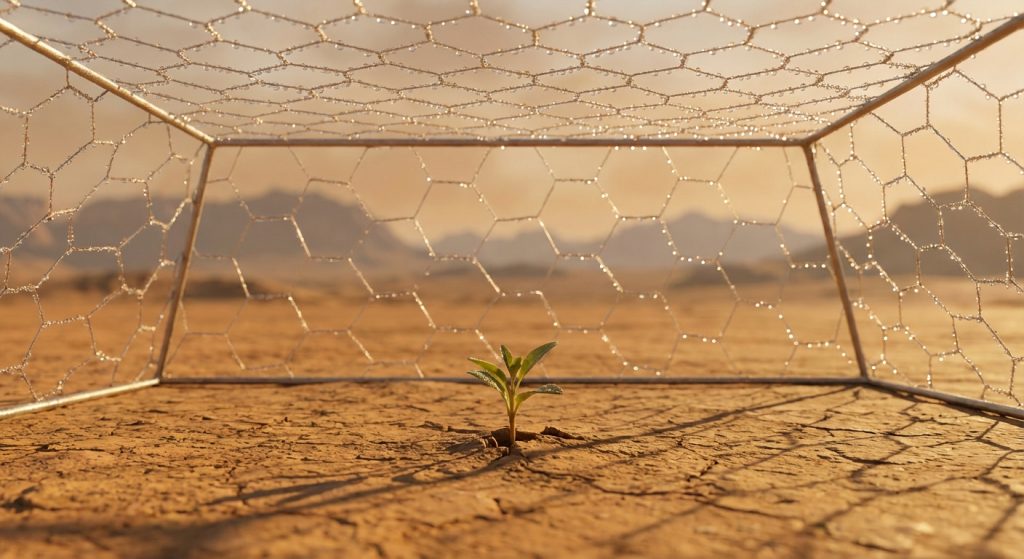
- Fog Harvesting: In foggy regions, special nets can capture water droplets. These nets are placed in the path of fog. The fine mesh traps water. This water then drips down for collection. This method is effective in coastal or mountainous areas with frequent fog.
Each method has its own advantages. The best choice depends on local conditions. Factors like humidity, temperature, and fog frequency matter. For example, fog harvesting is ideal where fog is common. Desiccant systems work well even in low humidity. Therefore, adaptability is a key strength.
The Science Behind Water Capture
The process relies on basic physics. Air always contains some amount of water vapor. This is humidity. The amount of vapor air can hold depends on temperature. Warmer air can hold more water vapor. When humid air is cooled, its ability to hold vapor decreases. Eventually, it reaches its saturation point. This is called the dew point. At this point, excess vapor turns into liquid water. This is condensation.
Atmospheric water generators (AWGs) create these conditions. They use cooling coils or desiccant materials. The goal is to induce condensation efficiently. Then, the collected water is purified. This is essential for safe drinking or irrigation. Therefore, purification is a vital step.
Benefits for Arid Regions
Arid and semi-arid regions face immense water challenges. Atmospheric water harvesting offers significant benefits:
- Water Security: It provides a reliable water source. This is independent of rainfall. It can secure water for drinking and agriculture. This reduces reliance on scarce groundwater or distant sources.
- Reduced Drought Impact: During droughts, conventional water sources dry up. AWGs can continue to function. This provides a lifeline for communities and crops.
- Decentralized Water Supply: Systems can be deployed where needed. This is especially useful in remote rural areas. It avoids the need for extensive pipe networks.
- Sustainable Agriculture: By providing water, it enables plant growth. This supports local food production. It can help combat desertification.
- Reduced Environmental Strain: It lessens the pressure on over-exploited rivers and aquifers. This helps preserve natural ecosystems.
Consider a small village in a desert. Traditional wells are drying up. The community struggles to grow food. Implementing atmospheric water harvesting can change this. It can provide enough water for a community garden. This improves nutrition and livelihoods. Thus, the impact is profound.
Challenges and Limitations
Despite its promise, atmospheric water harvesting faces hurdles:
- Energy Consumption: Many AWGs require electricity. This can be a significant cost. It is especially true for refrigeration-based systems. Solar power can offset this. However, initial setup costs are higher.
- Efficiency Varies: The amount of water collected depends heavily on humidity. In very dry conditions (low humidity), efficiency drops significantly. For example, systems may produce less water in arid deserts compared to humid coastal areas.
- Cost of Equipment: Advanced AWGs can be expensive. This limits their accessibility for many individuals and communities. Scaling up production can also be costly.
- Water Quality: Collected water needs purification. Airborne pollutants or contaminants can be present. Ensuring potability or suitability for irrigation requires filtration and treatment.
- Maintenance: Like any technology, AWGs need regular maintenance. This includes cleaning filters and checking components. Access to spare parts and skilled technicians can be an issue in remote areas.
Therefore, careful planning is crucial. Understanding local climate data is essential. Also, assessing energy availability and maintenance capacity is important. These factors will determine the success of any deployment.
Applications in Rural Development
For rural developers, AWG technology offers exciting possibilities:
Supporting Smallholder Farmers
Smallholder farmers often lack access to reliable irrigation. AWGs can provide a localized water source. This allows them to grow high-value crops. It also helps them diversify their produce. For instance, they could grow vegetables where only drought-resistant grasses grew before. This directly improves their income and food security. This is vital for poverty reduction.
Community Water Projects
Community-level AWG installations can serve entire villages. This is particularly useful for drinking water. It can also support communal gardens. These projects foster self-sufficiency. They empower local communities. Furthermore, they can reduce the burden on women and children who often travel long distances for water. It is important to involve the community in the design and maintenance. This ensures long-term sustainability.
Emergency Water Supply
In disaster-stricken areas, water infrastructure is often destroyed. AWGs can be deployed quickly. They provide a vital source of clean water. This is crucial for relief efforts. They can operate off-grid. This makes them ideal for emergency situations. For example, after a flood or in a drought-affected region, they can be a lifesaver.
Case Studies and Innovations
Several projects showcase the potential of atmospheric water harvesting. Companies are developing innovative solutions. Some use renewable energy sources. Others focus on low-cost designs. For instance, some devices are designed for household use. They can provide drinking water for a family. Larger units can support small farms. Research is ongoing to improve efficiency. New materials are being tested. These materials can absorb more moisture. They also require less energy to release water.
Innovations also focus on making the technology more affordable. Open-source designs are emerging. This allows local communities to build and repair systems themselves. This is a significant step towards wider adoption. Furthermore, integration with smart technology can optimize water collection. It can also monitor water quality remotely.
The Future of Atmospheric Water Harvesting
The future looks promising for atmospheric water harvesting. Climate change is increasing water scarcity. This makes such technologies more critical. Continued research and development will improve their efficiency. Costs are expected to decrease. This will make them more accessible globally. As solar power technology advances, energy consumption will become less of a barrier.
We may see widespread adoption. This could transform agriculture in arid regions. It could also provide clean drinking water to millions. For rural developers, understanding this technology is key. It offers a powerful tool for building resilience. It also supports sustainable development goals. Thus, it holds immense potential for the future.
Frequently Asked Questions (FAQ)
How much water can an atmospheric water harvester produce?
The amount varies greatly. It depends on the unit’s size and efficiency. It also depends on local humidity and temperature. Some small units produce a few liters per day. Larger systems can produce hundreds or even thousands of liters daily. For example, a system operating in high humidity can yield much more water than one in a dry desert.
Is the harvested water safe to drink?
Most AWGs produce water that is initially very pure. However, it’s crucial to have filtration and purification systems. This ensures the water is safe for consumption. Airborne contaminants can affect the collected water. Therefore, regular testing and maintenance are vital.
What is the energy source for these devices?
Many AWGs run on electricity. Often, they are connected to the grid. However, for off-grid or remote locations, solar power is the most common solution. Battery storage is also used. This allows for continuous operation, even at night or on cloudy days.
Are atmospheric water harvesters suitable for all dry regions?
They are most effective in regions with moderate to high humidity. While some advanced systems work in low humidity, their output will be significantly lower. Therefore, understanding the local climate is essential before deployment. Extremely arid environments might still find them challenging.
How do they compare to other water-saving techniques like drip irrigation?
Atmospheric water harvesting is a primary water source. Drip irrigation is a method of water *delivery*. They are complementary. AWGs create water where none exists. Drip irrigation then conserves that water when irrigating plants. For example, you might use an AWG to supply water to a drip irrigation system. This is a highly efficient approach. You can learn more about advanced irrigation in our article on Drip Irrigation AI: Saving Every Drop in the Highlands.
Conclusion
Atmospheric water harvesting is a groundbreaking technology. It offers a viable solution for water scarcity. It empowers communities and farmers in arid regions. By tapping into the atmosphere’s moisture, it provides a renewable water source. While challenges remain, ongoing innovation is making it more efficient and affordable. Hydrologists and rural developers should explore its potential. It can foster greater water security. It can also drive sustainable development. Ultimately, it helps feed plants, and people, in the driest corners of our planet.
“`
