Greenwashing: Spotting Fake Eco-Claims in Vietnam
Published on February 9, 2026 by Admin

Consumers and regulators alike are increasingly concerned about environmental issues. Companies often respond by making claims about their products and services being “green” or “eco-friendly.” However, not all these claims are genuine. This practice, known as greenwashing, misleads consumers and damages the credibility of legitimate sustainability efforts. Therefore, understanding how to identify greenwashing is crucial. This article will guide you on how to spot fake environmental claims in Vietnam.
What is Greenwashing?
Greenwashing is a deceptive marketing tactic. Companies use it to portray themselves as more environmentally friendly than they actually are. This can involve misleading advertising, unsubstantiated claims, or a focus on minor eco-friendly aspects while ignoring larger environmental harms. For example, a company might highlight a small recycled component in their packaging. However, the product itself might be produced using highly polluting methods. Consequently, consumers are led to believe they are making an ethical choice. This erodes trust and makes it harder for truly sustainable businesses to stand out.
Moreover, greenwashing can take many forms. It might be vague language that sounds good but means little. It could also be the use of misleading imagery or symbols. Sometimes, companies cherry-pick data to support their claims. Therefore, a critical eye is always necessary when evaluating environmental marketing.
Why is Greenwashing a Problem?
Greenwashing presents several significant problems. Firstly, it misleads consumers. People genuinely want to make sustainable choices. They are willing to pay more for eco-friendly products. Greenwashing exploits this desire. It causes consumers to waste money on products that don’t deliver on their environmental promises. This also undermines the market for genuine sustainable goods. When fake claims are prevalent, consumers become cynical. They may start to doubt all environmental claims, including those that are valid.
Secondly, greenwashing harms the environment. Companies that greenwash may continue harmful practices. They avoid making substantial changes to their operations. This delays real progress on critical environmental issues. Furthermore, it can lead to regulatory challenges. Regulators need to identify and penalize misleading claims to protect consumers and the environment. It also creates an uneven playing field. Businesses genuinely investing in sustainability face unfair competition from those using deceptive tactics. This can disincentivize innovation in green technologies and practices.
Common Greenwashing Tactics
Several common tactics are used in greenwashing. Understanding these can help you identify them. These tactics are often subtle but reveal a lack of genuine commitment to sustainability.
Vague or Unsubstantiated Claims
One of the most frequent tactics is using broad, undefined terms. Phrases like “eco-friendly,” “natural,” or “green” are often used without specific evidence. For example, a product might be labeled “all-natural” even if it contains synthetic ingredients. Therefore, it is important to look for specific details. What makes the product natural? What environmental benefits does it offer? Without clear definitions and supporting data, such claims are often meaningless.
Irrelevant Claims
Another tactic is to make a truthful claim that is irrelevant to the product’s overall environmental impact. For instance, a product might boast about being “CFC-free.” This is good, but CFCs have been banned for decades. So, this claim is not a sign of current environmental leadership. It is merely stating compliance with existing regulations. Consequently, it distracts from more significant environmental considerations.
Hidden Trade-offs
Companies might highlight one small green attribute. However, they hide a larger environmental cost associated with the product. For example, a product made from recycled materials might still be manufactured using energy-intensive processes. Or it might have a short lifespan. This creates a misleading impression of overall sustainability. It is essential to consider the entire lifecycle of a product.
Lesser of Two Evils
This tactic involves claims that, while possibly true, are designed to make consumers feel better about an otherwise environmentally damaging product. For example, claiming a product is “greener” than other similar, highly polluting products. While technically true, it doesn’t make the product itself truly sustainable. It simply positions it as less harmful within a problematic category. This is common in industries with significant environmental footprints.
Fibbing and Outright Lies
Less common, but still present, is outright fabrication. This involves making false claims or even faking certifications. For example, a company might claim to have an eco-certification from a non-existent organization. Or they might falsify data to support their environmental assertions. These are the most blatant forms of greenwashing and are often easier to detect with due diligence.
How to Spot Greenwashing in Vietnam
Vietnam’s growing economy and increasing consumer awareness of environmental issues make it a fertile ground for both genuine sustainability initiatives and greenwashing. Here are practical steps to help you identify fake environmental claims in Vietnam:
Look for Specifics, Not Just Buzzwords
Be wary of vague terms. Instead, look for concrete data and specific actions. For example, instead of “eco-friendly packaging,” look for “made from 80% post-consumer recycled plastic.” Or instead of “reduces carbon emissions,” look for “our manufacturing process uses 30% less energy, resulting in a reduction of X tonnes of CO2 annually.” Specifics provide verifiable information. They show a company has taken measurable steps.
Check for Certifications
Look for reputable third-party certifications. These are awarded by independent organizations. They verify that a product or company meets specific environmental standards. Examples include certifications for organic products, energy efficiency, or sustainable forestry. However, be aware that some certifications can be misleading. Research the certifying body. Is it credible? Does it have a strong reputation for rigorous standards? For instance, understanding Vietnam’s ESG imperative is crucial for businesses aiming for genuine sustainability.
Investigate the Company’s Overall Practices
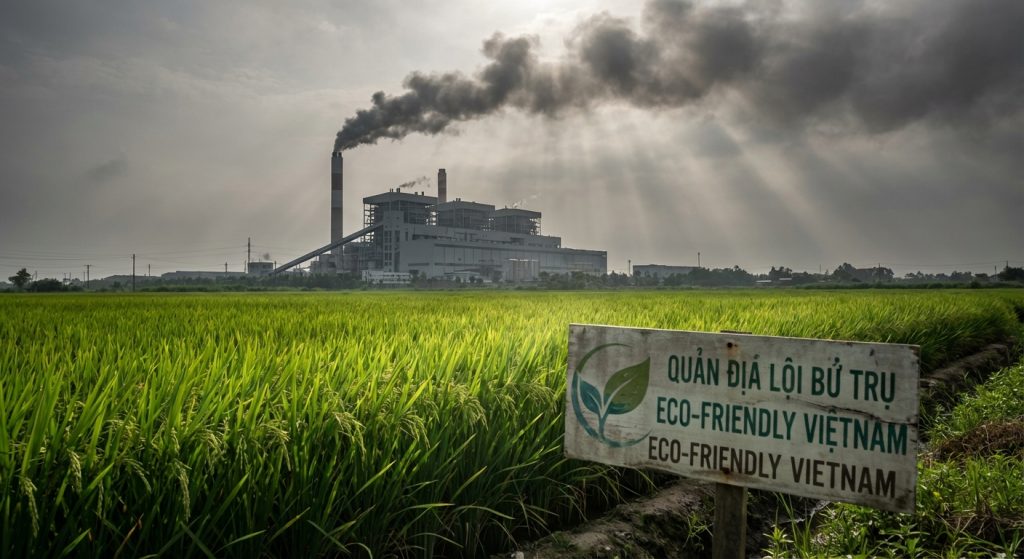
A single “green” product doesn’t make a company sustainable. Research the company’s broader environmental record. Do they have transparent sustainability reports? Do they invest in renewable energy? Do they manage their waste and emissions responsibly? For example, companies committed to Net Zero Vietnam 2050 are likely to have more comprehensive sustainability efforts. Conversely, a company that pollutes heavily in one area but boasts about a minor green initiative is likely greenwashing.
Consider the Product Lifecycle
Think about the environmental impact of a product from its creation to its disposal. This includes sourcing raw materials, manufacturing, transportation, use, and end-of-life. For example, the production of some “biodegradable” plastics can still be energy-intensive. Also, consider the infrastructure needed for proper disposal. A truly green product considers its entire lifecycle. This is related to the broader concept of circular economy principles.
Be Skeptical of Overly Enthusiastic or Emotional Language
Marketing often uses emotional appeals. However, when it comes to environmental claims, excessive enthusiasm or guilt-tripping can be red flags. Genuine environmental efforts are often backed by data and facts, not just emotional slogans. If a claim feels too good to be true, it often is. For instance, claims of “saving the planet with this one purchase” are usually exaggerated.
Check for Transparency
Transparent companies are open about their environmental performance. They provide detailed reports and readily answer questions. If a company is secretive about its environmental practices, it might be hiding something. Look for information on their website, sustainability reports, or public statements. For instance, understanding sustainable supply chain auditing is key to transparency.
The Role of Regulators and Consumers
Both regulators and consumers play vital roles in combating greenwashing. Regulators need to establish clear guidelines and enforce them. This includes setting standards for environmental claims and imposing penalties for violations. In Vietnam, as in many countries, there is a growing need for robust regulations governing green marketing. Consumers, on the other hand, have the power of choice. By educating themselves and demanding transparency, they can drive market change.
Furthermore, consumer advocacy groups and watchdog organizations can help expose greenwashing. They can investigate companies and raise public awareness. This collective action puts pressure on businesses to adopt genuine sustainability practices. The push towards green finance initiatives also signals a broader shift where financial institutions are scrutinizing environmental claims more closely.
Case Studies (Hypothetical Examples)
To illustrate, let’s consider a couple of hypothetical scenarios in Vietnam:
Scenario 1: The “Natural” Coffee Brand
A Vietnamese coffee brand launches a new line of coffee. The packaging prominently features images of lush green mountains and the word “Natural” in large font. The marketing highlights that the beans are “grown with nature’s bounty.” However, a quick investigation reveals that the coffee plantation uses significant amounts of synthetic pesticides and herbicides. Furthermore, the processing plant discharges wastewater without adequate treatment. The brand is greenwashing by focusing on the picturesque origin while ignoring harmful agricultural and processing practices.
Scenario 2: The “Eco-Friendly” Fashion Item
A clothing retailer in Vietnam advertises a new dress made from “recycled materials.” The ad shows a model in a serene natural setting. Upon closer inspection, the dress is made from a blend of recycled polyester and virgin cotton. The recycled polyester content is only 20%. The manufacturing process relies heavily on water and energy, and the dyes used are not eco-certified. This is a case of greenwashing by highlighting a minor recycled component while downplaying the overall environmental impact and the use of less sustainable materials. For those interested in truly sustainable materials, exploring options like eco-leathers from pineapple and mushroom could be a more accurate representation of ethical fashion.
Conclusion
Greenwashing is a pervasive issue that requires vigilance. As consumers and regulators in Vietnam, it is essential to be informed and critical. By looking beyond marketing buzzwords, demanding specific evidence, and researching company practices, we can make more informed choices. Supporting genuinely sustainable businesses is crucial for protecting our planet. Therefore, let’s commit to spotting fake environmental claims and championing true environmental responsibility.
Frequently Asked Questions (FAQ)
What is the main goal of greenwashing?
The main goal of greenwashing is to create a false perception of environmental responsibility to attract customers and enhance brand image, often without making significant environmental improvements.
How can I verify if a company’s environmental claims are true?
Look for specific data, certifications from reputable third-party organizations, transparency in reporting, and investigate the company’s overall environmental practices beyond just one product.
Are there any official bodies in Vietnam that regulate green claims?
While specific regulations are evolving, general consumer protection laws and environmental agencies can address misleading advertising. It’s advisable to check with the Ministry of Natural Resources and Environment (MONRE) or the Vietnam Competition and Consumer Authority (VCCA) for specific guidance.
What should I do if I suspect a company is greenwashing?
You can report misleading claims to consumer protection agencies, share your findings on social media to raise awareness, and choose to support businesses that demonstrate genuine commitment to sustainability.
How does greenwashing affect truly sustainable businesses?
Greenwashing creates an unfair competitive advantage for dishonest companies, erodes consumer trust in all environmental claims, and can make it harder for genuinely sustainable businesses to stand out and gain market share.