
Transparency is key in investing. It builds trust. It helps investors make informed decisions. Environmental, Social, and Governance (ESG) factors are now crucial. Investors want to know how companies perform. They look beyond just profits. They consider their impact on the world. The Ho Chi Minh Stock Exchange (HOSE) plays a vital role. It champions transparency in ESG reporting.
This commitment is essential. It aligns with global trends. It also meets growing investor demand. HOSE aims to create a responsible market. This benefits companies, investors, and society. Therefore, understanding HOSE’s role is important.
The Growing Importance of ESG
ESG investing is not new. However, its prominence has surged. Investors now see ESG as a risk management tool. They also see it as a source of alpha. Companies with strong ESG practices often perform better. They are more resilient. They face fewer regulatory risks. They also attract better talent. Furthermore, they often have stronger stakeholder relationships.
The market is demanding this shift. For example, many institutional investors now integrate ESG. They have mandates to do so. This pressure trickles down. It pushes companies to improve their ESG performance. Consequently, stock exchanges must facilitate this. They need to provide the right framework. This is where HOSE steps in.
HOSE’s Commitment to ESG Transparency
HOSE recognizes its responsibility. It is actively promoting ESG. This involves several key initiatives. Firstly, it encourages listed companies to disclose ESG data. This disclosure is crucial for transparency. It allows investors to compare companies. It also helps them identify leaders and laggards.
Moreover, HOSE is developing guidelines. These guidelines help companies report consistently. This standardization is vital. It reduces confusion. It makes data more reliable. For instance, the exchange may adopt international best practices. This ensures comparability across markets.
Mandatory Reporting and Voluntary Disclosure
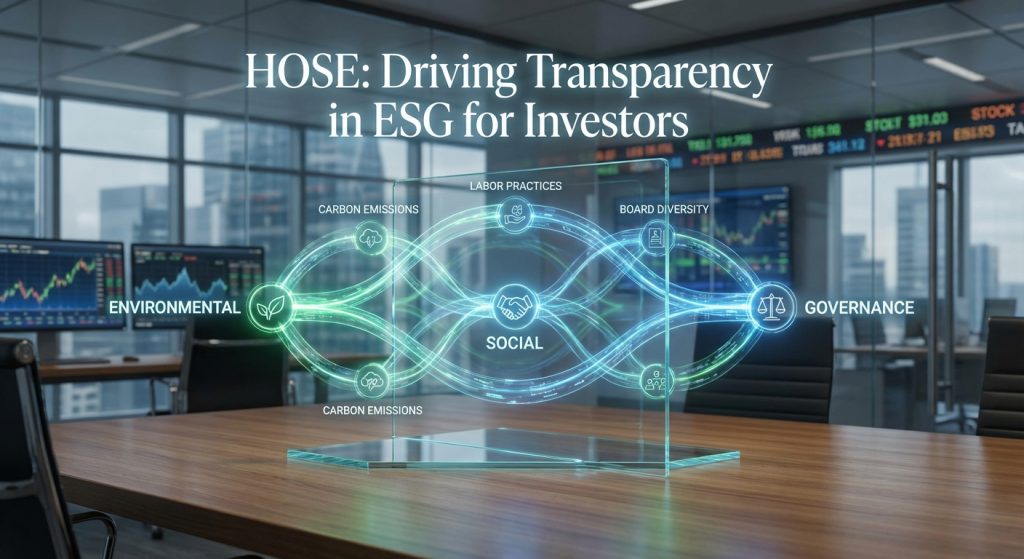
HOSE has taken steps towards mandatory reporting. This is a significant move. It ensures a baseline level of transparency. Companies will have to report certain ESG metrics. This covers key areas like carbon emissions and labor practices. However, voluntary disclosure is also encouraged. This allows companies to go above and beyond. It showcases their commitment. It also provides richer data for investors.
This dual approach is strategic. It ensures broad participation. It also allows for gradual improvement. Companies can start with what they can manage. Then, they can expand their reporting over time. Therefore, it fosters a culture of continuous improvement.
Developing ESG Frameworks and Guidelines
Creating clear frameworks is essential. HOSE is working on this. It aims to provide actionable guidance. Companies need to know what to report. They also need to know how to report it. This includes defining key performance indicators (KPIs). It also involves setting reporting standards. For example, HOSE might align with frameworks like GRI or SASB.
These guidelines help companies build their ESG strategies. They also help investors interpret the data. This clarity is a win-win. It benefits both issuers and investors. It creates a more efficient market. You can find more on related topics in our article about Transparent ESG Reporting: A Compliance Imperative.
Benefits of Enhanced ESG Transparency
The push for greater ESG transparency yields many benefits. For investors, it means better risk assessment. They can identify companies with sustainable business models. This can lead to more stable long-term returns. For example, companies with strong environmental policies might be less exposed to climate change risks. This is an important consideration for any portfolio.
Companies also benefit. Enhanced transparency can attract more capital. Investors are often willing to pay a premium for strong ESG performers. Furthermore, it improves corporate reputation. It fosters trust with stakeholders. This can lead to stronger brand loyalty. It also helps in attracting and retaining top talent. Indeed, a strong ESG profile is becoming a competitive advantage.
Attracting Responsible Investors
HOSE’s efforts are crucial for attracting responsible investors. These investors prioritize ESG factors. They seek companies aligned with their values. By providing transparent ESG data, HOSE becomes a more attractive venue. It signals a commitment to sustainability. This can draw foreign direct investment. It also encourages domestic investors to participate more actively.
This influx of capital can fuel growth. It supports companies committed to sustainability. It also drives innovation in the market. Therefore, HOSE’s role is catalytic for sustainable finance.
Improving Corporate Governance and Accountability
Transparency in ESG reporting naturally leads to better governance. When companies have to disclose their environmental and social impact, they become more accountable. This encourages better decision-making. It means boards of directors pay closer attention. They are more aware of their company’s broader impact. This can lead to more robust risk management. It also strengthens ethical conduct.
For instance, when a company must report on its carbon footprint, it is more likely to implement measures to reduce it. This proactive approach is far better than reactive damage control. It also aligns with broader goals like Crafting Your Net Zero Strategy Roadmap.
Challenges and the Path Forward
Despite progress, challenges remain. Data quality is a significant concern. Companies may struggle to collect accurate and reliable ESG data. Smaller companies might lack the resources for robust reporting. Furthermore, greenwashing remains a risk. This is when companies falsely claim to be environmentally friendly. HOSE must actively combat this.
The path forward involves continuous improvement. HOSE needs to keep refining its guidelines. It should also provide training and support to listed companies. Education is key. Investors also need to be educated. They must understand how to interpret ESG data. They should learn to spot genuine commitment versus superficial claims. Learning to spot Greenwashing: Spotting Fake Eco-Claims in Vietnam is an essential skill.
Data Standardization and Verification
Standardizing ESG data is a major goal. Without it, comparisons are difficult. HOSE’s efforts in developing frameworks are vital. Verification is the next step. Independent third-party assurance can lend credibility. This ensures that reported data is accurate. It builds investor confidence. Therefore, HOSE might explore partnerships for verification services.
This process takes time. It requires collaboration. However, the long-term benefits are substantial. A trusted ESG data landscape is a hallmark of a mature financial market.
Capacity Building for Listed Companies
Many companies, especially SMEs, may need support. They might not have dedicated ESG teams. HOSE can play a role in capacity building. This could involve workshops and seminars. It could also include providing tools and resources. Sharing best practices is also important. This helps companies understand the ‘how’ and ‘why’ of ESG reporting.
This investment in companies pays dividends. It leads to better quality disclosures. It also encourages more companies to embrace ESG. Ultimately, it strengthens the entire market ecosystem.
HOSE’s Vision for a Sustainable Financial Future
HOSE’s commitment to ESG transparency is more than just compliance. It is a strategic vision. It is about building a sustainable financial future for Vietnam. By fostering a transparent ESG landscape, HOSE is positioning itself as a leader. It is creating an environment where responsible businesses can thrive. This, in turn, drives economic growth that is inclusive and sustainable.
The exchange’s role is multifaceted. It acts as a regulator, an educator, and an enabler. Its ongoing efforts are critical. They are shaping the future of investment in Vietnam. This proactive stance ensures that financial markets contribute positively. They contribute to both economic prosperity and societal well-being. It is a journey that requires continuous effort. However, the destination is a more resilient and responsible economy.
Frequently Asked Questions (FAQ)
What is ESG and why is it important for investors?
ESG stands for Environmental, Social, and Governance. It refers to the three central factors in measuring the sustainability and societal impact of an investment in a company or business. Investors use ESG criteria to screen potential investments. This is because companies with strong ESG performance are often seen as less risky and more likely to achieve long-term financial success.
How does the Ho Chi Minh Stock Exchange (HOSE) promote ESG transparency?
HOSE promotes ESG transparency by encouraging listed companies to disclose ESG data. It also develops guidelines and frameworks for consistent reporting. In some cases, mandatory reporting on key ESG metrics is being implemented. This helps create a more standardized and reliable data environment for investors.
What are the benefits for companies that improve their ESG transparency?
Companies benefit from improved ESG transparency in several ways. They can attract more responsible investors, which can lead to increased capital. Enhanced transparency also improves their corporate reputation, fosters trust with stakeholders, and helps in attracting and retaining top talent. Furthermore, it often leads to better governance and accountability.
What challenges does HOSE face in promoting ESG transparency?
Challenges include ensuring data quality and consistency. Smaller companies may lack the resources for comprehensive ESG reporting. Additionally, preventing greenwashing, where companies falsely claim environmental credentials, is an ongoing concern. HOSE must work to ensure the integrity of the reported data.
What is the role of investors in driving ESG transparency?
Investors play a crucial role by demanding ESG data. Their investment decisions signal to companies the importance of sustainability. As more investors incorporate ESG factors into their analysis, companies are incentivized to improve their transparency and performance. This creates a feedback loop that drives progress.
Conclusion
Transparency in ESG is no longer optional; it is a necessity. The Ho Chi Minh Stock Exchange (HOSE) is at the forefront of this movement in Vietnam. By championing clear and consistent ESG reporting, HOSE is building a more responsible and sustainable investment ecosystem. This commitment benefits investors seeking ethical and resilient assets. It also empowers companies to integrate sustainability into their core strategies. Ultimately, HOSE’s efforts pave the way for a future where financial success and positive societal impact go hand in hand.