Pteropus Bat Ecology: Tracking for Conservation Success
Published on February 12, 2026 by Admin

Bats are vital. They play many roles in ecosystems. Pteropus bats, also known as fruit bats or flying foxes, are especially important. They are large and widespread. Understanding their ecology is crucial for conservation. This requires careful tracking and study. Therefore, Pteropus bat ecology tracking is a key area for wildlife conservationists.
The Importance of Pteropus Bats
Pteropus bats are excellent pollinators. They also disperse seeds. This helps forests regenerate. Many plants rely on them for survival. For example, they are vital for fig trees. They are also important for other fruit-bearing plants. Without them, many ecosystems would change drastically. Their role is often underestimated. Thus, their conservation is a high priority.
Furthermore, these bats are indicators. Their health reflects the health of their habitat. If Pteropus bat populations decline, it signals environmental problems. This could be habitat loss or pesticide use. Therefore, monitoring them helps us understand broader ecological issues.
Challenges in Tracking Pteropus Bats
Tracking large, mobile animals presents challenges. Pteropus bats can fly long distances. They roost in large colonies. This makes individual tracking difficult. Traditional methods like banding have limitations. They are often recaptured. This can be labor-intensive. It also requires significant resources.
Moreover, their nocturnal habits add complexity. Pteropus bats are most active at night. This makes direct observation hard. Researchers must use specialized equipment. This includes night vision and acoustic detectors. These tools help gather data. However, they require skilled operators. Also, they can be expensive.
Modern Tracking Technologies
Fortunately, technology offers new solutions. Advanced tracking methods are improving our understanding. These technologies are revolutionizing bat research. They provide more detailed data than ever before.
Satellite and GPS Tracking
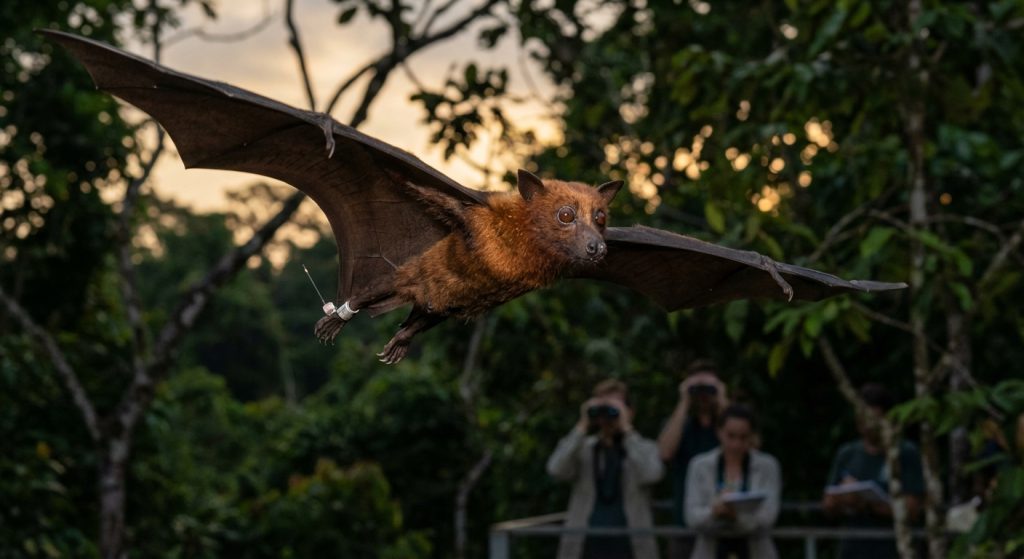
Satellite and GPS trackers are invaluable tools. Small, lightweight devices can be attached to bats. These devices record location data. This allows researchers to map flight paths. They can also identify foraging areas. Furthermore, they reveal roosting sites. This information is vital for conservation planning. For instance, understanding migration routes helps protect them across borders. This is especially important for species that travel long distances.
However, these devices have limitations. They can be costly. Battery life is also a concern. Device attachment must be done carefully. It should not harm the bat. Researchers are constantly improving these technologies. They aim for smaller, more efficient trackers.
Acoustic Monitoring
Pteropus bats use echolocation. They also produce social calls. Acoustic monitors can record these sounds. Different species have unique calls. This helps identify species present. It also helps estimate population sizes. Acoustic arrays can cover large areas. This provides a wider view of bat activity. It is a non-invasive method. Therefore, it is highly beneficial for conservation.
Data from acoustic monitors can be complex. Analyzing the recordings requires expertise. Sophisticated software is often used. This helps distinguish calls. It also identifies patterns of activity. Thus, acoustic monitoring is a powerful tool.
Stable Isotope Analysis
Stable isotopes in bat tissues provide clues. These isotopes come from their diet. They also reflect the local environment. Analyzing isotopes in fur or blood can reveal diet composition. It also shows geographic origins. This is because different regions have distinct isotopic signatures. Therefore, this method helps understand foraging ecology. It also tracks movements over time. For example, it can show if bats are feeding on native or introduced fruits. This is important for understanding their impact on native flora.
This method is also non-invasive. It requires sample collection. These samples are then analyzed in a lab. The results offer deep insights. They complement other tracking methods. It helps build a comprehensive picture.
Key Ecological Data from Tracking
Tracking Pteropus bats yields critical data. This data informs conservation strategies. It helps us protect these animals effectively. Several key areas benefit from this research.
Foraging Behavior and Diet
Tracking reveals where bats feed. It shows what they eat. This includes native fruits and flowers. It also identifies non-native food sources. Understanding their diet is vital. It helps manage landscapes for their benefit. For example, protecting important fruiting trees is essential. It also helps assess their impact on agriculture. Therefore, this data is crucial for human-wildlife coexistence.
Roosting Site Selection
Pteropus bats need safe roosting sites. These are often large trees. They may also use caves or cliffs. Tracking helps identify these critical locations. Many roosts are communal. They can host thousands of bats. Protecting these sites is paramount. It ensures bats have a safe place to rest. It also provides a base for foraging trips. Thus, roost site protection is a core conservation action.
Movement Patterns and Migration
Understanding bat movements is key. Some species migrate seasonally. Others have smaller home ranges. Tracking reveals their migratory routes. It also shows daily foraging movements. This information is vital. For instance, it helps establish protected corridors. It also informs habitat management plans. Therefore, tracking movements is essential for landscape-level conservation.
Furthermore, it helps understand connectivity. It shows how different populations are linked. This is important for genetic diversity. It also helps predict how they might respond to environmental changes. For example, climate change can alter migration patterns. Tracking helps us anticipate these shifts. It allows for proactive conservation measures.
Population Dynamics
Tracking data contributes to population estimates. It helps monitor population trends. Are populations increasing or decreasing? This is a fundamental conservation question. It guides resource allocation. It also helps assess the effectiveness of conservation efforts. Therefore, consistent tracking is vital for long-term monitoring.
Moreover, it can reveal population structure. It shows how individuals interact. It helps identify critical life stages. For example, tracking breeding sites is important. It ensures protection during sensitive periods. This comprehensive data allows for informed decisions.
Conservation Implications and Strategies
The data gathered through tracking directly informs conservation. It leads to practical strategies. These strategies aim to protect Pteropus bats and their habitats. Therefore, effective tracking is the foundation of successful conservation.
Habitat Protection and Restoration
Protecting key foraging and roosting sites is critical. This often involves land acquisition. It also includes conservation easements. Restoring degraded habitats is equally important. This might involve planting native fruit trees. It also means managing land to reduce threats. For example, reducing pesticide use is crucial. It directly benefits bat diets. Thus, habitat management is a cornerstone of Pteropus conservation. Protecting these areas ensures the bats have what they need to survive.
Mitigating Human-Wildlife Conflict
Pteropus bats can sometimes conflict with humans. They may raid fruit crops. This can lead to conflict with farmers. Tracking helps understand these interactions. It can identify crop types that attract bats. It also shows when bats are most active. This knowledge allows for mitigation strategies. For instance, installing deterrents or providing alternative food sources can help. Also, education campaigns are important. They help communities understand the bats’ ecological value. Therefore, conflict mitigation is vital for coexistence. It fosters a more harmonious relationship.
Furthermore, understanding their role in pollination and seed dispersal highlights their benefits. This can shift local perspectives. It can encourage conservation rather than eradication. Therefore, communication and education are key components. They build support for bat conservation efforts.
Policy and Legislation
Conservation data informs policy. It can lead to stronger legal protections. This might include listing species as endangered. It also involves regulating activities that harm bats. For example, restrictions on habitat destruction are important. Also, international cooperation is necessary. Many Pteropus species cross national borders. Therefore, coordinated conservation efforts are essential. Policy frameworks must be science-based. They need to reflect the ecological needs of bats. This ensures long-term survival.
Moreover, policy can support research. It can fund crucial tracking initiatives. It also promotes best practices in land management. Therefore, effective policy is a powerful tool. It translates scientific knowledge into action. It creates a supportive environment for conservation.
The Future of Pteropus Bat Tracking
The field of bat ecology tracking is evolving. New technologies are constantly emerging. These advancements promise even greater insights. For example, miniaturized sensors are becoming more sophisticated. Drones are being used for aerial surveys. AI is helping analyze vast datasets. These innovations will further enhance our ability to monitor Pteropus bats. Therefore, the future of Pteropus bat conservation looks promising.
Additionally, citizen science initiatives can play a role. Engaging the public can expand data collection. It also raises awareness. Therefore, collaborative efforts will be key. They will ensure the long-term survival of these remarkable creatures. Ultimately, understanding and protecting Pteropus bats benefits us all. Their ecological contributions are invaluable. Thus, continued research and conservation are vital.
Frequently Asked Questions
What are the primary ecological roles of Pteropus bats?
Pteropus bats are crucial pollinators and seed dispersers. They help regenerate forests and support plant diversity.
Why is tracking Pteropus bats challenging?
Their large size, long-distance flight, nocturnal habits, and tendency to roost in colonies make them difficult to track using traditional methods.
What new technologies are being used for bat tracking?
Modern technologies include satellite and GPS trackers, acoustic monitoring devices, and stable isotope analysis.
How does tracking help protect Pteropus bats?
Tracking data reveals foraging behaviors, roosting sites, movement patterns, and population dynamics. This information is vital for habitat protection, conflict mitigation, and policy development.
Can Pteropus bats pose a threat to humans?
Pteropus bats are generally not aggressive towards humans. However, like all wild animals, they should be observed from a distance. They can carry diseases, so direct contact should be avoided. Their primary impact is on agriculture, which can lead to human-wildlife conflict.
Conclusion
Pteropus bat ecology tracking is fundamental. It provides the data needed for effective conservation. Advanced technologies are revolutionizing our understanding. This allows for targeted strategies. These strategies protect bats and their habitats. They also promote coexistence with humans. By continuing to invest in tracking and research, we can ensure the future of these vital flying mammals. Their ecological contributions are essential for healthy ecosystems. Therefore, their conservation is a shared responsibility. It benefits biodiversity and human well-being alike.