

Bats are vital to ecosystems. However, they also host many viruses. Some of these can infect humans. Therefore, monitoring bat pathogens is crucial. New technologies are transforming this field. This article explores bat pathogen surveillance tech. It covers its importance, methods, and future. Epidemiology analysts must understand these advancements.
Why Monitor Bat Pathogens?
Bats are natural reservoirs for many viruses. These include coronaviruses, filoviruses, and henipaviruses. For instance, Nipah virus is a significant concern. It can cause severe illness and death in humans. Early detection is key to preventing outbreaks. This is where bat pathogen surveillance comes in. It acts as an early warning system. By understanding the pathogens bats carry, we can predict risks. This also helps in developing countermeasures.
Furthermore, bats play a crucial role in pollination and insect control. Their health impacts ecosystem balance. Monitoring them helps protect these vital services. It’s part of a broader “One Health” strategy. This approach recognizes the interconnectedness of human, animal, and environmental health. Understanding bat pathogens is a key component of this strategy. Indeed, understanding animal health is crucial for global well-being. You can learn more about the One Health Strategy.
Traditional Surveillance Methods
Historically, surveillance involved capturing bats. Researchers would collect biological samples. These samples included blood, saliva, and guano. Then, laboratory tests would identify pathogens. This method is effective but has limitations. It is labor-intensive and can be risky for both researchers and bats. Also, it requires specialized facilities. Finally, it might not capture the full diversity of pathogens. It often relies on known threats.
The Rise of Advanced Bat Pathogen Surveillance Tech
New technologies are making surveillance faster, safer, and more comprehensive. These tools allow for real-time monitoring. They also reduce direct contact with bats. This is a significant improvement. It minimizes disturbance to bat populations. Moreover, it enhances researcher safety. These advancements are crucial for effective epidemiology.
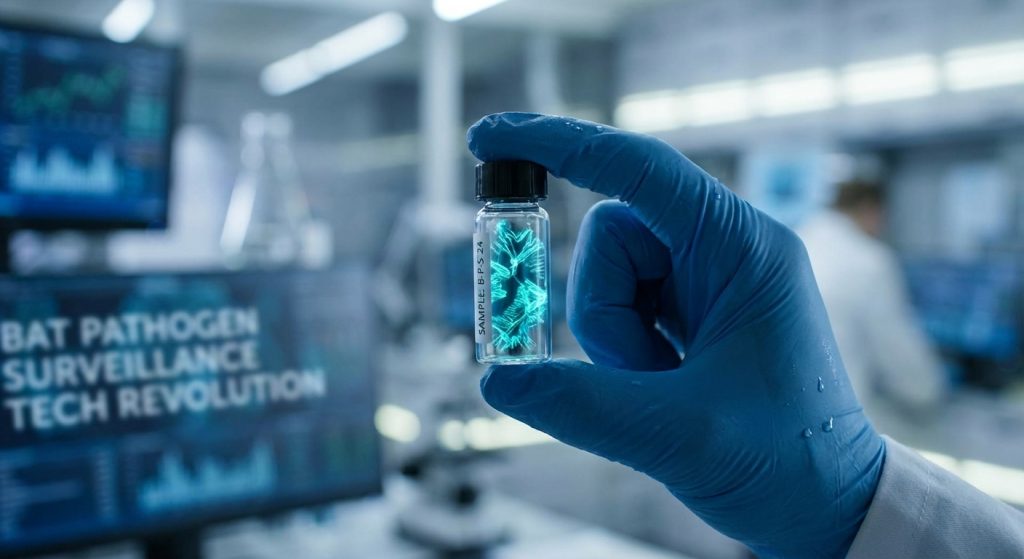
Environmental DNA (eDNA) Analysis
Environmental DNA is a game-changer. Bats shed DNA in their droppings, urine, and saliva. This DNA can be collected from the environment. For example, researchers can sample guano piles or water sources. Then, they analyze the eDNA. This technique allows pathogen detection without direct contact. It’s less invasive for the animals. Therefore, it provides a more naturalistic snapshot. This method is particularly useful for elusive species. It also helps survey large areas efficiently.
The eDNA approach can detect a wide range of pathogens. It can identify known and unknown viruses. This broadens the scope of surveillance significantly. It also offers a cost-effective solution in many cases. Hence, eDNA analysis is becoming a standard tool. It is revolutionizing how we track diseases.
Next-Generation Sequencing (NGS)
Next-Generation Sequencing is powerful. It allows for rapid identification of genetic material. Researchers can sequence DNA or RNA from samples. This helps identify viral genomes. NGS can detect novel viruses. It can also track genetic changes in known pathogens. This is vital for understanding evolution. For instance, tracking the genomic evolution of Nipah virus is critical. This helps anticipate new strains and their potential impact. You can find more on Nipah Virus Genomic Evolution.
NGS also enables detailed phylogenetic analysis. This helps trace the origins of outbreaks. It can identify transmission pathways. Therefore, it is a cornerstone of modern molecular epidemiology. It provides a deep genetic insight into pathogens. This information is invaluable for public health responses.
Real-Time PCR and Isothermal Amplification
Real-time PCR is a standard molecular technique. It detects specific pathogen DNA or RNA. It is fast and highly sensitive. Isothermal amplification methods offer similar benefits. They can often be performed at a single temperature. This makes them suitable for field use. These techniques allow for rapid on-site testing. This is crucial for immediate response. For example, quick identification of Nipah virus can save lives. The field is seeing breakthroughs in Nipah Diagnostic Breakthroughs.
These methods are essential for rapid screening. They provide quantitative data. This means researchers can determine pathogen load. This information can be vital for risk assessment. Therefore, these technologies are indispensable. They form the backbone of many surveillance programs.
Remote Sensing and AI for Bat Colony Monitoring
Technology extends beyond sample analysis. Remote sensing tools can monitor bat colonies. Drones equipped with thermal cameras can detect bat roosts. Artificial intelligence can analyze this data. AI can estimate population sizes. It can also track changes in colony behavior. This provides valuable ecological context. Understanding bat ecology is key to surveillance. Tracking Pteropus Bat Ecology is vital.
Furthermore, AI can integrate diverse data streams. This includes weather patterns, land use, and pathogen prevalence. It can identify hotspots for potential spillover. This predictive modeling is a significant advancement. It allows for proactive rather than reactive measures. Therefore, AI is transforming how we manage zoonotic risks.
Benefits of Advanced Surveillance Tech
The adoption of these technologies brings many benefits. Firstly, it improves early detection. This allows for quicker intervention. Secondly, it enhances biosafety. Reduced direct contact minimizes risks. Thirdly, it increases surveillance coverage. eDNA and remote sensing cover larger areas. Fourthly, it provides more comprehensive data. NGS reveals novel pathogens and genetic variations. Finally, it supports a preventative approach to zoonotic disease spillover.
Challenges and Future Directions
Despite advancements, challenges remain. Data analysis can be complex. Integrating diverse data types requires sophisticated platforms. Furthermore, cost can be a barrier. Advanced technologies can be expensive. Training personnel is also essential. Ethical considerations are also important. Minimizing disturbance to wildlife is paramount. Responsible data sharing is crucial for global collaboration.
The future of bat pathogen surveillance tech is promising. We can expect further miniaturization of equipment. This will enable more field-based diagnostics. AI will play an even larger role. It will enhance predictive capabilities. Furthermore, integration with other surveillance systems will grow. This includes human and livestock health monitoring. Ultimately, this integrated approach is key. It will lead to a more robust defense against future pandemics.
Conclusion
Bat pathogen surveillance technology is rapidly evolving. Advanced methods like eDNA, NGS, and AI are transforming our ability to detect and understand zoonotic threats. These technologies offer enhanced early warning capabilities. They also improve biosafety and expand surveillance coverage. While challenges exist, the future holds immense potential. For epidemiology analysts, staying abreast of these innovations is critical. It ensures we can effectively protect public health. Proactive monitoring is our best defense. It helps prevent outbreaks before they spread.
Frequently Asked Questions
What is bat pathogen surveillance?
Bat pathogen surveillance is the process of monitoring bats for the presence of viruses and other pathogens. This helps detect potential threats to human and animal health early on.
Why are bats important reservoirs for viruses?
Bats have unique immune systems and flight adaptations. These factors may contribute to their ability to carry a wide range of viruses without becoming severely ill themselves. They can then act as reservoirs, potentially transmitting these viruses to other species, including humans.
How does eDNA help in pathogen surveillance?
Environmental DNA (eDNA) analysis allows scientists to detect pathogens from genetic material shed by bats into their environment (like droppings or saliva). This means researchers can identify viruses without directly handling the bats, making it less invasive and safer.
What is Next-Generation Sequencing (NGS) used for in this context?
NGS is used to sequence the genetic material of pathogens found in bat samples. This helps identify known viruses, discover new ones, and track how viruses evolve over time. This genetic information is vital for understanding transmission and developing countermeasures.
Are there ethical concerns with bat pathogen surveillance?
Yes, ethical considerations are important. Researchers must minimize disturbance to bat populations and habitats. Ensuring the welfare of the animals and responsible handling of collected samples are key. Advanced technologies like eDNA help reduce direct interaction.
How can technology like AI help in monitoring bats?
AI can analyze data from remote sensing tools (like drones) to monitor bat colonies, estimate population sizes, and track behavior. It can also integrate various data sources to predict areas with higher risk of pathogen spillover, enabling targeted surveillance efforts.
What is the “One Health” approach?
The “One Health” approach recognizes that human, animal, and environmental health are interconnected. Monitoring bat pathogens is a crucial part of this approach, as it addresses potential threats originating from animal populations that can impact human health.
“`
