
Henipaviruses pose a significant threat. These viruses can cause severe disease. They also have a high mortality rate. Nipah virus and Hendra virus are well-known examples. Understanding how these viruses enter cells is crucial. This knowledge helps us develop new treatments. Specifically, it aids in creating henipavirus entry inhibitors. Therefore, this article explores these inhibitors. We will discuss their mechanisms. We will also cover their development. Furthermore, we will look at the challenges involved.
Understanding Henipavirus Entry
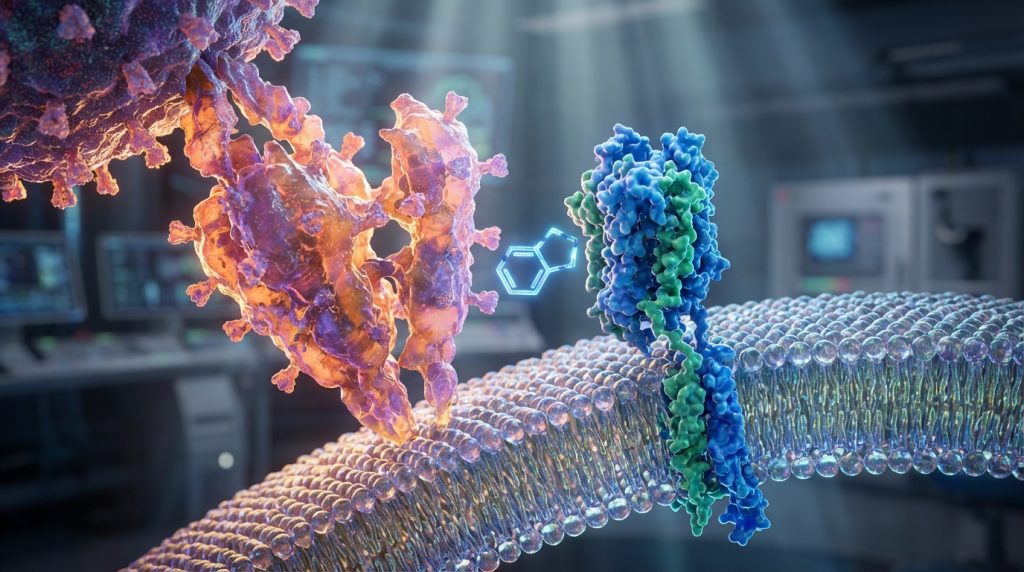
Henipaviruses are enveloped viruses. They belong to the Paramyxoviridae family. These viruses have large, single-stranded RNA genomes. Their entry into host cells is a complex process. It involves specific viral proteins. The Henipavirus glycoprotein (G) and fusion glycoprotein (F) are key. The G protein binds to host cell receptors. Common receptors include ephrin family members and heparan sulfate proteoglycans. This binding is the first step. It attaches the virus to the cell surface. Following attachment, the F protein mediates membrane fusion. This fusion allows the viral RNA to enter the cytoplasm. Therefore, targeting these proteins is essential for blocking entry.
The Role of Viral Glycoproteins
The viral G and F proteins are essential. They work together for efficient cell entry. The G protein acts as the attachment protein. It recognizes and binds to specific cellular receptors. This binding event triggers conformational changes. These changes then activate the F protein. The F protein is a class II fusion protein. It undergoes a dramatic structural rearrangement. This rearrangement drives the fusion of the viral envelope. It also fuses with the host cell membrane. As a result, the viral genetic material is released. Consequently, inhibiting either G or F can prevent infection.
Strategies for Henipavirus Entry Inhibition
Developing henipavirus entry inhibitors requires a multi-pronged approach. Scientists are exploring several strategies. These strategies target different stages of the entry process. For example, they aim to block receptor binding. They also aim to inhibit protein-protein interactions. Furthermore, they seek to disrupt the fusion machinery itself.
Blocking Receptor Binding
One strategy is to block the viral G protein’s ability to bind its receptor. This can be achieved using several methods. Monoclonal antibodies are a promising option. These antibodies can specifically target the G protein. They prevent it from interacting with host cell receptors. For instance, antibodies targeting the Nipah virus G protein have shown efficacy. Another approach involves small molecule inhibitors. These molecules can bind to the G protein. They can thereby block receptor attachment. Soluble forms of the viral G protein can also act as decoys. They can bind to cellular receptors. This prevents the virus from attaching. However, these approaches require careful design.
Inhibiting Glycoprotein Interactions
The interaction between the G and F proteins is critical. Inhibiting this interaction can halt entry. This is a more complex target. It requires understanding the precise molecular interfaces. Small molecules or peptides can be designed. These molecules can disrupt the G-F protein complex. This disruption would prevent F protein activation. Consequently, membrane fusion would not occur. This strategy is still under active investigation. More research is needed to identify effective targets.
Interfering with Membrane Fusion
The final step in entry is membrane fusion. This process is mediated by the F protein. Inhibitors can target the F protein’s fusion machinery. They can prevent the structural changes needed for fusion. For example, small molecules or peptides can bind to the F protein. They can stabilize it in a pre-fusion state. This prevents it from undergoing the conformational changes. As a result, the viral and cellular membranes cannot fuse. This approach offers a direct way to block entry. However, the F protein is a challenging target due to its complex conformational changes.
Therapeutic Approaches and Development
The development of henipavirus entry inhibitors is ongoing. Several promising therapeutic avenues are being explored. These include small molecules, peptides, and biologics.
Small Molecule Inhibitors
Small molecules offer several advantages. They are generally easier to synthesize and administer. Researchers are screening large libraries of compounds. They are looking for molecules that can inhibit G or F protein function. For example, compounds that bind to the receptor-binding domain of the G protein are of interest. Likewise, molecules that interfere with F protein oligomerization are being investigated. The development of effective small molecule inhibitors is challenging. It requires high specificity and low toxicity. Therefore, extensive preclinical testing is necessary.
Peptide-Based Inhibitors
Peptides can also be designed to target viral glycoproteins. They can mimic natural protein interactions. For instance, peptides can be engineered to bind to the F protein. They can prevent its activation or fusion activity. Peptide inhibitors can be highly specific. However, they often suffer from poor bioavailability and rapid degradation. Therefore, strategies like peptide modification or encapsulation are explored. This helps improve their therapeutic potential. The field of peptide therapeutics is rapidly advancing.
Monoclonal Antibodies and Biologics
Monoclonal antibodies (mAbs) are a powerful class of biologics. They can be highly specific. They can neutralize viruses by blocking entry. Several studies have demonstrated the potential of mAbs. These target either the Nipah virus G protein or the F protein. For instance, a cocktail of neutralizing antibodies has shown promise. It can protect against Nipah virus infection in animal models. Other biologics, such as fusion protein inhibitors, are also being developed. These can mimic cellular proteins that interact with viral glycoproteins. As a result, they can interfere with the entry process. However, biologics can be expensive to produce. They also require specialized administration methods.
Challenges and Future Directions
Despite promising progress, significant challenges remain. Developing effective henipavirus entry inhibitors is difficult. Several factors contribute to this difficulty.
Viral Diversity and Resistance
Henipaviruses exhibit genetic diversity. Different strains may have slightly different glycoproteins. This can lead to variations in receptor binding. It can also affect susceptibility to inhibitors. Therefore, inhibitors must be effective against a broad range of henipaviruses. There is also the potential for viral resistance. Viruses can evolve. They can develop mutations. These mutations might allow them to escape inhibition. Continuous monitoring and development of new inhibitors are crucial. This is to stay ahead of viral evolution. Understanding Nipah virus genomic evolution is key to this effort.
Delivery and Bioavailability
Effectively delivering inhibitors to the site of infection is another challenge. Many potential inhibitors are large molecules. They may have poor oral bioavailability. They might also struggle to cross cellular membranes. Therefore, innovative delivery systems are needed. These could include nanoparticles or liposomes. These systems can help protect the drug. They can also target it to specific tissues. Furthermore, developing effective routes of administration, such as intranasal delivery, is important. This is especially true for respiratory viruses. This is similar to how some early warning systems operate. Discovering early warning viral systems is also vital.
Clinical Translation and Safety
Translating promising preclinical findings into clinical success is a major hurdle. Inhibitors must be safe and effective in humans. Rigorous clinical trials are necessary. These trials assess both efficacy and safety. The high mortality rate of henipavirus infections means that any treatment must be highly effective. It must also have a favorable safety profile. Preventing zoonotic spillover is the ultimate goal. This is a critical aspect of global health security. Understanding zoonotic spillover prevention is paramount.
The “One Health” Approach
A comprehensive strategy is needed. This involves a “One Health” approach. This means integrating human, animal, and environmental health. Henipaviruses often originate in animal reservoirs, such as bats. Therefore, surveillance in these animal populations is crucial. Understanding bat microbe diversity helps identify potential threats. Controlling viral shedding in animals and preventing human exposure are key. This holistic strategy can reduce the risk of outbreaks. It complements the development of direct antiviral therapies. The One Health strategy is essential for long-term success.
Conclusion
Henipavirus entry inhibitors represent a vital area of research. They offer hope for treating severe and often fatal infections. By targeting the critical steps of viral entry, these inhibitors can prevent or mitigate disease. While challenges in development, delivery, and translation remain, ongoing innovation is promising. Continued investment in research and development is essential. This is to combat the threat posed by these dangerous viruses. A coordinated global effort, embracing the One Health paradigm, is our best defense. This includes robust surveillance and rapid response capabilities. Developing effective entry inhibitors is a crucial piece of this puzzle.
Frequently Asked Questions (FAQ)
What are henipaviruses?
Henipaviruses are a genus of dangerous RNA viruses. They can cause severe respiratory and neurological diseases. Nipah virus and Hendra virus are the most well-known examples. They are zoonotic, meaning they can spread from animals to humans.
How do henipaviruses enter cells?
Henipaviruses enter cells through a process involving two key viral glycoproteins: the G (glycoprotein) and F (fusion) proteins. The G protein first binds to specific receptors on the host cell surface. This binding event then triggers the F protein to mediate the fusion of the viral envelope with the host cell membrane. This fusion allows the viral genetic material to enter the cell.
What are the main strategies for developing entry inhibitors?
The main strategies focus on blocking key steps in the entry process. These include:
- Blocking the G protein’s ability to bind to host cell receptors.
- Inhibiting the interaction between the G and F proteins.
- Interfering with the F protein’s membrane fusion machinery.
What types of therapies are being developed?
Current research focuses on several therapeutic approaches. These include small molecule inhibitors, peptide-based inhibitors, and biologics like monoclonal antibodies. Each has its own advantages and challenges.
Why is developing henipavirus entry inhibitors challenging?
Challenges include the diversity of henipaviruses, the potential for viral resistance, difficulties in drug delivery and bioavailability, and the need for rigorous clinical translation to ensure safety and efficacy in humans.
What is the “One Health” approach in the context of henipaviruses?
The “One Health” approach recognizes the interconnectedness of human, animal, and environmental health. For henipaviruses, this means monitoring animal reservoirs (like bats), understanding transmission pathways, and preventing spillover events, in addition to developing direct treatments for infected humans.