
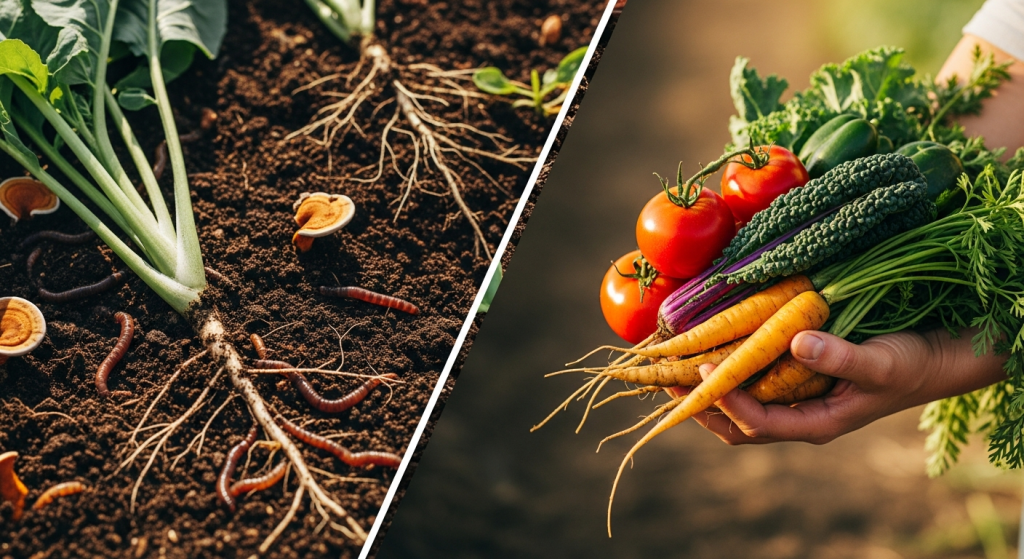
Our planet’s soil is a vibrant, living ecosystem. It’s teeming with life, a complex world beneath our feet. This intricate web of microorganisms plays a crucial role in our food’s nutritional value. Therefore, understanding soil health is vital for our own well-being. In essence, healthy soil leads to healthy food, which in turn supports healthy humans.
The Soil Microbiome: A Foundation for Life
Soils are not just dirt. They are incredibly diverse environments. They host a vast community of microorganisms. This collective is known as the soil microbiome. It’s a bustling metropolis of bacteria, fungi, and other tiny organisms. These microbes are essential for plant growth. They also significantly impact the nutrient density of our food.
Furthermore, the soil microbiome connects directly to human health. It influences how productive our crops are. It also affects how many essential nutrients they contain. Beyond that, soil is a source of compounds used in medicine. For example, some antibiotics and antioxidants originate from soil microbes.

However, soil also harbors pathogens. These can pose risks to human health. Additionally, soil can interact with contaminants. These interactions can create further health concerns.
Degradation of Soil: A Growing Concern
For decades, agricultural practices have focused on maximizing yields. This often meant using methods that depleted soil health. Practices like intensive tillage and heavy reliance on synthetic fertilizers have caused significant damage. For instance, these methods lead to a loss of soil organic matter. They also degrade soil structure and water-holding capacity. In some regions, this has also increased soil salinity.
The United States, a major global food producer, has seen substantial soil degradation. This is partly due to management practices that prioritize output over soil vitality. This degradation has a direct consequence: it reduces the nutritional quality of the food we consume.
Studies show an alarming decline in food quality over the past sixty years. Essential minerals and nutraceutical compounds have decreased. This is particularly true for fruits, vegetables, and staple crops. The shift from natural farming to chemical farming is a major contributor. High-yielding varieties, while abundant, may offer less nutrition.
For example, the protein content in wheat has decreased significantly. From 1955 to 2016, it dropped by 23% . This decline contributes to widespread nutritional loss.
Nutrient Density: What It Means for Us
Nutrient density refers to the concentration of essential vitamins, minerals, and phytonutrients in food. It’s about getting the most nutritional bang for your buck. Foods with high nutrient density provide substantial health benefits. They are crucial for overall well-being and disease prevention.
Unfortunately, industrialized farming practices have led to soil degradation. This, in turn, has diminished the nutrient levels in our crops. Consequently, many people worldwide suffer from micronutrient deficiencies. These deficiencies can lead to serious health problems, especially for children.
Globally, over two billion people face micronutrient insufficiency. This includes deficiencies in iodine, iron, folate, vitamin A, and zinc . This “hidden hunger” affects more than 50% of children under five and 66% of women worldwide . It’s a crisis where people are overfed but undernourished.
The focus on high-yielding varieties has also played a role. These crops are often less competitive economically than traditional, nutrient-dense options like millets. As a result, the cultivation of nutrient-rich crops has declined.
The Role of Soil Organic Matter
Soil organic matter (SOM) is a key indicator of soil health. Soils rich in organic matter lead to higher crop yields. More importantly, they produce food with better nutritional quality. SOM acts like a sponge, retaining water and nutrients. It also supports a diverse soil food web.
This vibrant soil food web is crucial for nutrient cycling. It makes essential minerals available to plants. These minerals are then transferred to the food we eat. Therefore, increasing soil organic matter is a direct pathway to enhancing nutrient density.
Regenerative Organic Agriculture: A Solution
In contrast to conventional methods, regenerative organic agriculture focuses on soil health. This approach emphasizes soil biodiversity, carbon sequestration, and natural nutrient cycling. It actively works to rebuild and restore soil vitality.
Regenerative practices have been shown to enhance micronutrient content in food. They promote the growth of crops that are not only abundant but also packed with essential nutrients. This movement is driving innovation in the food industry. There is a growing demand for functional foods and beverages with verified nutrient density.
Consumers are increasingly seeking transparency in food sourcing. They want to know that their food comes from farms committed to sustainable practices. This has led to advancements in nutrient testing. Consumers can now assess food quality beyond basic organic certifications.
Understanding Certifications
As the term “regenerative” gains popularity, concerns about greenwashing have emerged. Some brands use the term without fully adopting sustainable practices. To combat this, certifications like the Regenerative Organic Certification (ROC) are vital. Established by the Regenerative Organic Alliance, ROC sets rigorous standards. These standards cover soil health, animal welfare, and social fairness.
This certification helps consumers identify genuinely sustainable products. It ensures that products labeled as regenerative meet comprehensive criteria. By prioritizing regenerative organic soil health and supporting credible certifications, we can ensure our food is both healthy and sustainably produced.
The Human-Soil Microbiome Connection
Interestingly, there are parallels between soil microbiome studies and human microbiome research. Humans share many bacterial groups with soil. Studies suggest that increased physical contact with soil can positively affect the diversity of the human gut microbiota. This, in turn, can improve gut health.
A healthy gut microbiome is crucial for overall health. It plays a role in regulating mood, immune function, and mental and physical well-being. Therefore, the health of the soil directly impacts the health of our own internal ecosystems.
Mental Health and Soil Health
The link between soil health and human health extends to mental well-being. Healthy soils support the production of nutrient-rich foods. These foods are essential for optimal brain function and mood regulation.
Deficiencies in key micronutrients, often caused by poor soil health, are linked to mental health disorders. For example, deficiencies in B vitamins (B1, B6, B9) are associated with depression. Poor soil health can also lead to deficiencies in magnesium, iron, and zinc. These minerals are vital for proper neurological functioning.
Furthermore, the gut-brain axis is well-established. The connection between our gut biome and the production of neurotransmitters like serotonin and dopamine is significant. Therefore, by improving soil health and consuming nutrient-dense foods, we can positively influence our mental health.
Beyond Nutrition: Broader Health Impacts
Healthy soils provide more than just nutritious food. They are foundational to maintaining clean air and water. They also contribute to stable climates, all of which are essential for healthy living environments.
Soil degradation can lead to problems like urban heat islands and poor air quality. It also increases vulnerability to natural disasters. These factors directly impact community resilience and public health. So, soil health is inextricably linked to the health of our planet and our communities.
Farmer Wellbeing: An Often-Overlooked Link
The report also sheds light on the critical connection between soil health and farmer well-being. Farmers are often the most directly affected by soil degradation. They face economic and environmental stresses that can impact their mental health.
Studies show higher suicide rates among farmers globally compared to the general population. Improving soil health can alleviate some of these stresses. Healthier soils lead to more resilient crops and potentially more stable incomes. This can contribute to reduced anxiety and improved mental health for those who cultivate our land.
A Call to Action for Soil Health
The evidence is clear: soil health is human health. The degradation of our soils has far-reaching consequences. It impacts our food’s nutritional quality, our mental well-being, and the health of our planet.
Therefore, immediate and coordinated action is needed. Governments, farmers, and communities must work together. We need to implement sustainable soil management practices. This includes increasing soil organic matter. It also means reducing chemical inputs and promoting regenerative agriculture. These efforts will ensure our soils remain fertile and supportive of human health for generations to come.
Prioritizing soil health is an investment in our future. It’s an investment in healthier food, healthier people, and a healthier planet. By understanding and nurturing the soil beneath us, we cultivate a better future for all.
Frequently Asked Questions
What is nutrient density?
Nutrient density refers to the amount of beneficial nutrients in a food in proportion to its caloric content. Foods high in nutrient density provide a lot of vitamins, minerals, and other beneficial compounds with relatively few calories.
How does soil degradation affect food?
Soil degradation reduces the availability of essential nutrients in the soil. This means plants absorb fewer minerals and vitamins. As a result, the food grown in degraded soil is less nutritious.
What are the benefits of regenerative organic agriculture?
Regenerative organic agriculture focuses on rebuilding soil health. Benefits include increased soil organic matter, enhanced biodiversity, improved water retention, and greater nutrient density in crops. It also contributes to carbon sequestration and climate resilience.
Can touching soil improve human health?
Yes, some studies suggest that physical contact with soil can positively influence the diversity of the human gut microbiota. A diverse gut microbiome is linked to better immune function and overall health.
Why is soil health important for mental well-being?
Healthy soils produce nutrient-dense foods that are essential for brain function and mood regulation. Deficiencies in micronutrients found in poorly grown foods are linked to mental health issues like depression. Also, the gut microbiome, influenced by diet, plays a role in producing mood-regulating neurotransmitters.
