
Permaculture: Design for Self-Sufficient Ecosystems
Published on December 31, 2025 by Admin
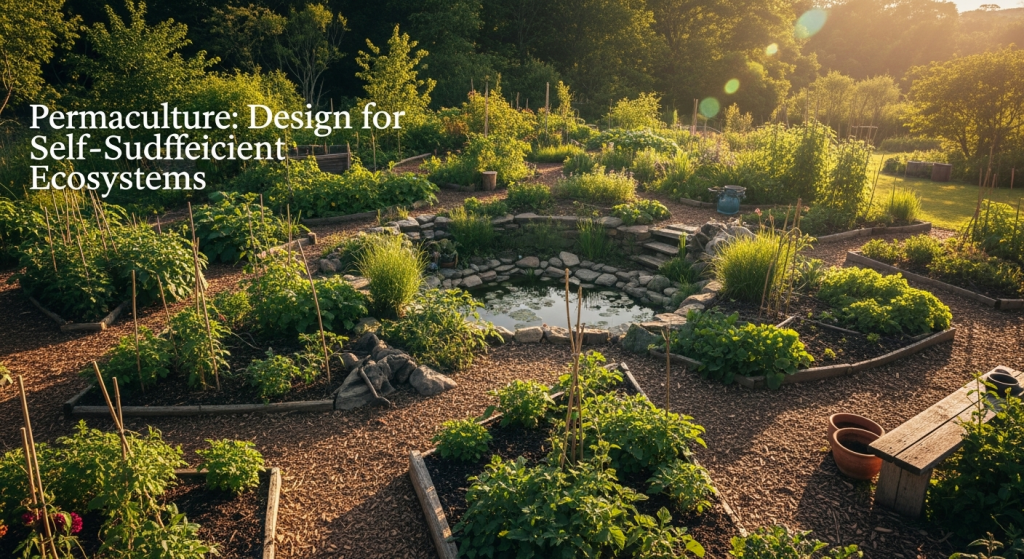
Permaculture is a design philosophy. It aims to create sustainable systems. These systems work with nature. They mimic natural ecosystems. This approach helps us live more harmoniously with the planet. It also promotes self-sufficiency. This is crucial for landscape architects and sustainability advocates.
The term “permaculture” comes from “permanent agriculture” or “permanent culture.” However, it’s much broader than just farming. It applies to land use, community building, economics, and lifestyle choices. Essentially, permaculture offers a holistic design approach. It seeks to create regenerative systems. These systems benefit both people and the environment. Permaculture is a design philosophy and approach that aims to create sustainable, productive, and regenerative systems that work harmoniously with nature.
The Roots of Permaculture
The journey of permaculture began in the 1970s. Bill Mollison and David Holmgren were key figures. They were both concerned about environmental damage. Industrial agriculture and modern lifestyles seemed unsustainable. They wanted to find better ways. Their collaboration led to the concept of permaculture. It was a design system. It went beyond just agriculture.
In 1978, Mollison and Holmgren published “Permaculture One.” This book introduced the core ideas. It laid the foundation for permaculture as a discipline. They were inspired by indigenous land management. They also looked at traditional farming and ecological systems. The goal was to create systems that were as resilient as nature. Inspired by indigenous land management practices, traditional farming methods, and ecological systems, Mollison and Holmgren sought to create a design system that emulated the patterns and resilience of natural ecosystems.
Bill Mollison taught permaculture widely. He established the Permaculture Institute in Tasmania. This helped spread the ideas globally. His 1988 book, “Permaculture: A Designer’s Manual,” was very influential. It detailed design methods for various aspects of permaculture. Over time, permaculture has adapted to many different environments. It is used in urban gardens, rural farms, and eco-villages.
The Three Ethics of Permaculture
Permaculture is guided by three core ethics. These ethics are fundamental to its practice. They provide a moral framework for design. They ensure that systems are not only productive but also ethical.
Earth Care
This ethic focuses on the planet. It emphasizes caring for the Earth and all living things. Our well-being is tied to the Earth’s health. Permaculture aims to reduce harm. It also seeks to regenerate degraded land. Promoting biodiversity is a key goal. Earth Care: This ethic emphasises the importance of caring for the Earth and all living systems.
People Care
This ethic is about human needs. It promotes fairness and equity. It involves social justice. It also focuses on meeting basic needs. Building supportive communities is important. Permaculture encourages self-reliance. Local decision-making and cooperation are also valued.
Fair Share
This ethic concerns resource distribution. It’s about sharing surplus fairly. Resources are finite. They should be shared equitably. Permaculture promotes wise resource use. It aims to reduce waste. Redistributing excess is also a part of this ethic.
Core Permaculture Design Principles
Permaculture design applies these ethics. It involves observing nature. It mimics natural patterns. The goal is to create efficient systems. Several key principles guide this design process. These principles help create resilient and productive environments.
1. Observe and Interact
Careful observation is the first step. Understand natural patterns. See how elements interact. This knowledge informs better design decisions. It means spending time in the space. You learn about sunlight, water flow, and soil. Careful observation of natural patterns and interactions is essential for effective design. Understanding the relationships between elements allows for better design decisions.
2. Catch and Store Energy
Permaculture systems capture and store resources. This includes sunlight and water. Rainwater harvesting is a common practice. Planting trees for shade also stores energy. Composting recycles organic matter. This reduces reliance on external inputs. Permaculture encourages the use of renewable resources such as solar energy, wind power, and natural materials.
3. Obtain a Yield
Systems should be productive. They should provide tangible outputs. This could be food, medicine, or fiber. A sustainable system must also be useful. It should meet human needs. While it takes time to establish, a permaculture system should yield resources consistently.
4. Apply Self-Regulation and Accept Feedback
Permaculture systems are designed to be self-regulating. They adapt to changes. They respond to feedback. This allows for continuous improvement. Recognizing limits is important. Managing resources wisely helps maintain balance. Permaculture systems are designed to be self-regulating and adaptable.
5. Use and Value Renewable Resources and Services
Prioritize renewable resources. Use solar power or wind energy. Value natural services. These include pollination and water filtration. Renewable resources are more sustainable. They have a lower environmental impact. It also emphasises valuing and utilising ecosystem services provided by nature, such as pollination, water filtration, and nutrient cycling.
6. Produce No Waste
Design systems that recycle. Every output should be an input. This minimizes waste. Composting kitchen scraps is a good example. Reusing materials is also key. A zero-waste approach is highly sustainable. Permaculture seeks to create functional connections and relationships between different elements within a system.
7. Design from Patterns to Details
Start with broad patterns. Then focus on specific details. Observe how water flows. Identify existing plant communities. Consider how elements work together. This approach creates more efficient systems. It mimics natural processes. By integrating elements, such as plants, animals, and structures, the overall efficiency and productivity…
8. Integrate Rather Than Segregate
Create functional connections. Elements should support each other. This fosters diversity. It also increases interdependence. For example, chickens can control pests. Their manure fertilizes the soil. This creates a closed-loop system. Integrate Rather Than Segregate: Create systems where elements work together, supporting each other.
9. Use Small and Slow Solutions
Small-scale changes are often best. They are easier to manage. Incremental steps lead to sustainability. Large, rapid shifts can be disruptive. This principle applies to many areas. It encourages patience and thoughtful implementation.
10. Use and Value Diversity
Diversity strengthens systems. It increases resilience. Variety in species is important. Different functions within the system are also key. This reduces vulnerability. It helps systems withstand shocks. Designing with diversity in mind increases stability, enhances ecosystem functions, and reduces vulnerability to pests and diseases.
11. Use Edges and Value the Marginal
Edges are productive areas. These are boundaries between systems. For example, the edge of a forest and a field. Valuing these transitional spaces enhances productivity. It creates unique microclimates. These can support diverse life.
12. Creatively Use and Respond to Change
Embrace change. See it as an opportunity. Innovate and adapt. Systems must evolve to thrive. This principle encourages flexibility. It helps permaculture designs remain relevant. They respond to feedback from the environment and the people interacting with them, allowing for continuous improvement and adjustment.
Creating Self-Sufficient Ecosystems
Permaculture is about more than just gardening. It’s about creating self-sufficient ecosystems. This involves integrating various elements. These elements work together harmoniously. It’s a holistic approach to living. Permaculture is a holistic design system that works with nature to create sustainable, self-sufficient ecosystems.
Building Robust Food Systems
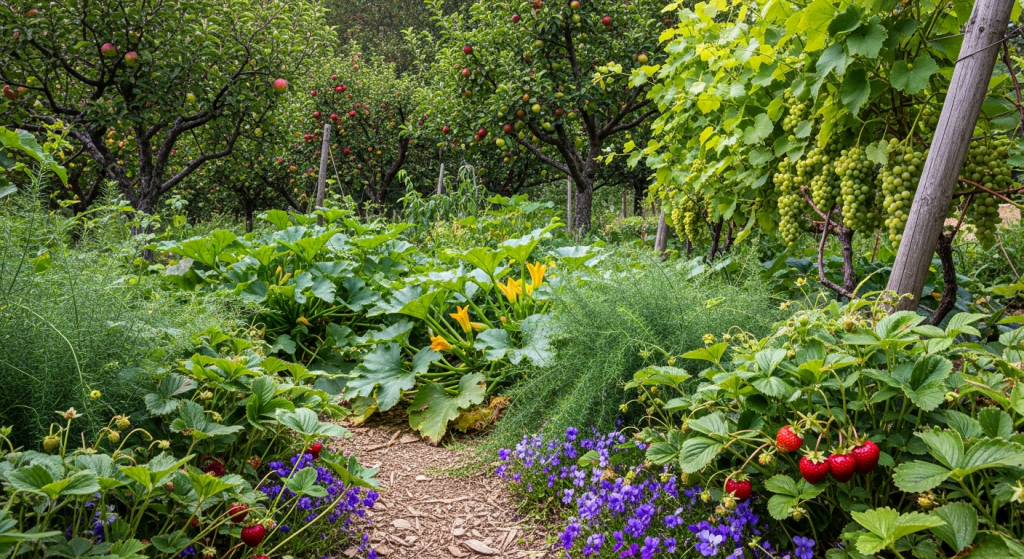
A key aspect is food security. Design for diversity. Include perennial plants. Fruit trees and food forests are excellent. They provide a steady food supply. Consider calorie-dense crops. Also, plants with long shelf lives. Root cellars can store harvests. Integrating permaculture’s renewable food and water sources can significantly enhance a prepper’s long-term sustainability. This also connects to building healthy soil, a topic explored in Soil Health is Human Health: The Nutrient Link.
Water Security and Management
Water is a precious resource. Implement rainwater harvesting. Build swales and ponds. These capture and store water. Mulching and soil building increase water retention. Natural purification methods are also vital. Biofilters and solar distillation are options. Beyond harvesting rainwater, develop a plan for purifying and filtering water using natural or low-tech methods.
Energy Independence
Design for energy efficiency. Use renewable energy sources. Solar panels and wind turbines are examples. Passive solar design in buildings helps. Create off-grid solutions for power outages. Backup generators or solar battery banks are useful. Rocket stoves can provide efficient heating. This may involve setting up backup generators, solar battery banks, or wood-fired heaters, ensuring that your permaculture homestead remains operational in all conditions.
Habitat and Soil Restoration
Focus on land health. Use regenerative practices. Cover cropping and no-till gardening are beneficial. Establish habitats for beneficial insects. Create firebreaks and windbreaks. Design landscapes to withstand extreme weather. Healthy soil is the foundation of any permaculture garden. Building soil health is crucial for long-term sustainability.
Permaculture for Landscape Architects
Landscape architects can integrate permaculture principles. This creates more sustainable and resilient designs. It moves beyond aesthetics. It focuses on ecological function. Designs can mimic natural systems. They can enhance biodiversity. They can also improve water management.
Consider zoning in designs. Zone 1 is for high-frequency use. Zone 5 is for wild areas. This optimizes resource use. It also reduces maintenance. Integrating edible plants into landscapes is possible. Food forests can be beautiful and productive. Permaculture designs have been applied to a wide range of settings, including urban gardens, rural farms, community projects, eco-villages, and regenerative land management.
Permaculture offers a powerful toolkit. It helps create spaces that are beautiful. They are also functional and regenerative. This approach benefits clients and the environment. It aligns with the growing demand for sustainable landscapes.
Frequently Asked Questions
What is the primary goal of permaculture?
The primary goal of permaculture is to create sustainable and self-sufficient systems. These systems mimic natural ecosystems and work harmoniously with nature, aiming for regeneration and resilience.
Who coined the term “permaculture”?
The term “permaculture” was coined by Bill Mollison and David Holmgren in the 1970s.
Can permaculture be applied outside of agriculture?
Yes, permaculture is not limited to agriculture. It encompasses a broader range of applications, including land use, community development, economics, and lifestyle choices.
What are the three ethics of permaculture?
The three ethics of permaculture are Earth Care, People Care, and Fair Share.
How does permaculture differ from organic gardening?
While permaculture often incorporates organic gardening practices, it is a more holistic design philosophy. It focuses on creating interconnected, self-sufficient ecosystems based on natural patterns, rather than just a method of growing plants without synthetic chemicals.
Conclusion
Permaculture offers a profound way to design. It allows us to create systems. These systems are sustainable, productive, and regenerative. By observing nature and applying its principles, we can build resilient ecosystems. These ecosystems support both human needs and the health of the planet. For landscape architects and sustainability advocates, permaculture provides a roadmap. It guides the creation of a more harmonious and self-sufficient future. Permaculture is a design philosophy and practice that aims to create sustainable and self-sufficient systems by mimicking.
