
Restoring Barren Lands: Biodiversity’s Comeback
Published on December 31, 2025 by Admin
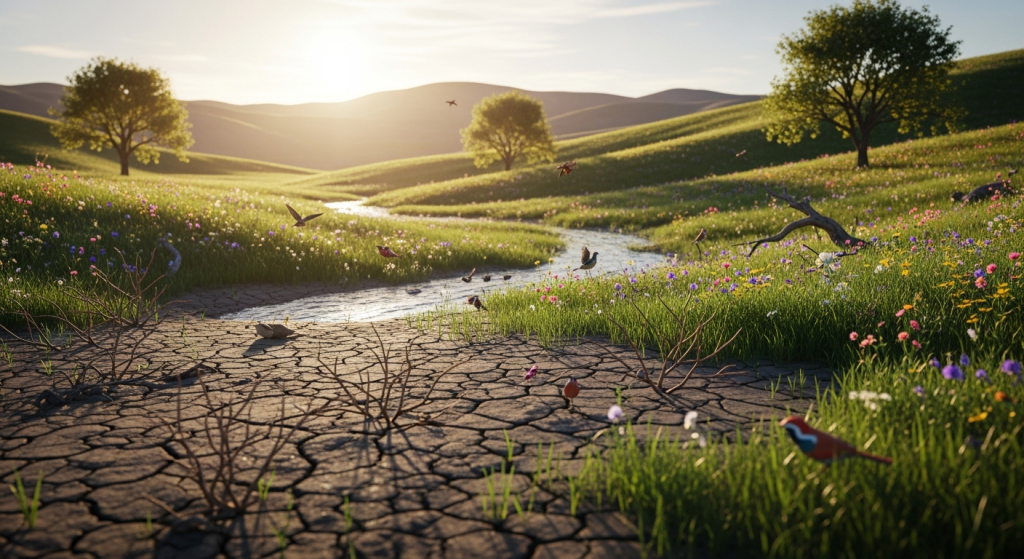
Degraded land is a global challenge. It impacts food security and livelihoods. Many areas are becoming deserts. However, nature offers powerful solutions. We can bring these barren areas back to life. This article explores methods for land restoration. It focuses on bringing back biodiversity.

The Urgency of Land Restoration
Land degradation is a serious issue. Nearly 30% of India’s land is degraded. This affects food. It also impacts water. Furthermore, it leads to migration. Degraded land increases carbon emissions. Biodiversity also declines. Addressing this is crucial for a sustainable future. It’s not just a local problem. It has worldwide effects.
Barren areas seem hopeless. But effective solutions exist. Many come directly from nature. These methods are often simple. They can transform supposedly lifeless land. They can also cool the regional climate. This benefits the environment and biodiversity. It also helps local communities.
Nature’s Toolkit: Key Restoration Methods
Restoring degraded land requires smart techniques. These methods leverage natural processes. They aim to rebuild soil health and water retention. They also encourage plant and animal life.
The Justdiggit Approach: Digging for Life
The organization Justdiggit uses a unique method. They work with local communities. In Kenya, they dig crescent-shaped holes. These are called ‘bunds’. These bunds help soil absorb more rainwater. This increases soil fertility. This simple technique can revive large areas of barren land. It’s a grassroots approach. It empowers locals to own these projects.
This method is effective. It cools the planet. It also rejuvenates communities. The core idea is simple: dig to regenerate.
The Miyawaki Method: Dense, Native Forests
Dr. Akira Miyawaki developed another powerful method. It’s called the Miyawaki Method. It focuses on rapid reforestation. It creates dense, multi-layered forests. These mimic natural ecosystems. The key is high-density planting. Many native species are planted close together. This accelerates growth. The forests become self-sustaining faster.
Native plant species are crucial. They are adapted to local conditions. This enhances their survival. Soil preparation is also important. It involves removing debris. Organic matter is added. This improves soil quality.
Miyawaki forests grow quickly. They can be up to 10 times faster. They are also 30 times denser. This method is versatile. It can be used on small urban plots. It can also cover larger degraded areas. It has been successfully implemented in India, Brazil, and Malaysia.
Seed Balls: Scattering Hope
Seed balls offer another eco-friendly solution. They are made from seeds, clay, and compost. These balls can be scattered easily. This method requires little human intervention. It’s ideal for barren or inaccessible areas. Once rain comes, the seeds germinate. This gradually restores green cover.
This approach is low-cost. It’s also nature-friendly. It combats deforestation. It improves soil and water health. Moreover, it encourages community participation. Schools and local groups can get involved. This spreads awareness about conservation.
Seed balls are effective for various targets. These include barren lands and deforested patches. They can also be used on roadsides. Community lands can also be reforested.
Regenerative Agriculture: Soil’s Best Friend
Regenerative agriculture focuses on soil health. It aims to increase soil life. It improves plant health and biodiversity. This approach revitalizes degraded soil. It brings back life and biodiversity.
Key practices include minimal tillage. They also involve cover cropping. Crop rotation is another important element. These methods enhance soil structure. They also increase organic matter. This makes the soil more resilient.
The Delfino Plough and Half-Moon Dams: Water Harvesting
In the Sahel region, traditional knowledge meets technology. The Delfino plough is a modern tool. It cuts through dry soil deeply. This is done to create large half-moon catchments. These are inspired by traditional half-moon planting methods. These structures stop rainwater runoff. They improve water infiltration. This keeps the soil moist longer.
This combination boosts rainwater harvesting. It makes the soil more permeable. Seeds and seedlings can then flourish. This method is highly efficient. It can restore millions of hectares of farmland. It also provides fodder crops. Communities benefit from livestock feed. They can also gather fruits and medicinal plants.
Community Power: The Key to Success
Local communities are vital for land restoration. Their knowledge and commitment are essential. Grassroots efforts are often the most sustainable. They build shared responsibility. They rely on traditional wisdom. Costs are kept low. Long-term results are ensured.
Empowering Local Action
When people take ownership, projects thrive. Village committees are formed. These groups manage resources. They plan restoration activities. Many women lead these committees. This empowers them. It gives them respect and agency.
Respecting local knowledge is key. Communities understand their land best. Traditional skills are invaluable. These are combined with modern techniques. This creates effective restoration strategies.
Examples of Community-Led Restoration
- Planting hardy native trees that require minimal maintenance.
- Constructing trench bunds to retain water during the monsoon season.
- Protecting areas from grazing to encourage natural regeneration.
- Building recharge wells and check dams to improve groundwater levels.
These methods are low-cost. They are also eco-friendly. They are deeply rooted in local knowledge.
Biodiversity’s Return: The Fruits of Restoration
As land is restored, life returns. Native grasses reappear. Groundwater levels improve. Birds and small wildlife make a comeback. Agriculture is revitalized. Farmers can grow crops again. Women no longer have to walk miles for water. Children learn the value of nature.
Restored areas become mini ecosystems. They support birds, insects, and small animals. This restores ecological balance. It also enhances biodiversity.
The Miyawaki Method’s Biodiversity Impact
The Miyawaki Method specifically aims for biodiversity. It recreates dense, multi-layered forests. These resemble natural ecosystems. The technique promotes a wide variety of native species. This creates habitats for diverse wildlife.
These small forests, or ‘pocket forests’, are valuable. They improve urban microclimates. They absorb carbon dioxide. They also provide much-needed green spaces. Even in busy cities, they make a difference.
Challenges and Future Outlook
Land restoration is not without challenges. Funding can be an issue. Climate change itself presents obstacles. Droughts and extreme weather can hinder progress. However, the momentum is growing. More organizations and communities are involved.
Technology also plays a role. Drones can disperse seed balls. Advanced mapping can assess degraded areas. Artificial intelligence can help optimize restoration strategies. Ecological impact assessments are becoming more sophisticated.
The future of land restoration is hopeful. It relies on a blend of traditional wisdom and modern innovation. Community involvement is paramount. It’s about empowering people. It’s about rebuilding their environment. It’s about securing a greener future.
Frequently Asked Questions (FAQ)
What is land degradation?
Land degradation is the decline in the quality of land. This makes it less productive. It can be caused by erosion, deforestation, salinization, or pollution.
Why is biodiversity important for land restoration?
Biodiversity is essential because it creates resilient ecosystems. A variety of plants and animals contribute to soil health, nutrient cycling, and pest control. This makes the restored land more stable and productive.
Can barren areas truly become fertile again?
Yes, with the right methods. Techniques like the Justdiggit approach, Miyawaki method, and regenerative agriculture focus on rebuilding soil structure, water retention, and introducing native plant species. These efforts can transform barren land into fertile ground over time.
How do methods like seed balls work?
Seed balls are a simple way to reforest degraded land. They contain seeds, clay, and compost. When scattered and exposed to rain, the seeds germinate. This method is effective for large or inaccessible areas.
What is the role of local communities in land restoration?
Local communities are central to successful land restoration. Their traditional knowledge, commitment, and ownership ensure the long-term sustainability of projects. They are often the most effective stewards of the land.
Are there any technological advancements aiding land restoration?
Yes, technology plays an increasing role. This includes tools like the Delfino plough for efficient soil preparation, drones for seed dispersal, and AI for ecological assessments. These advancements help scale up restoration efforts.
