
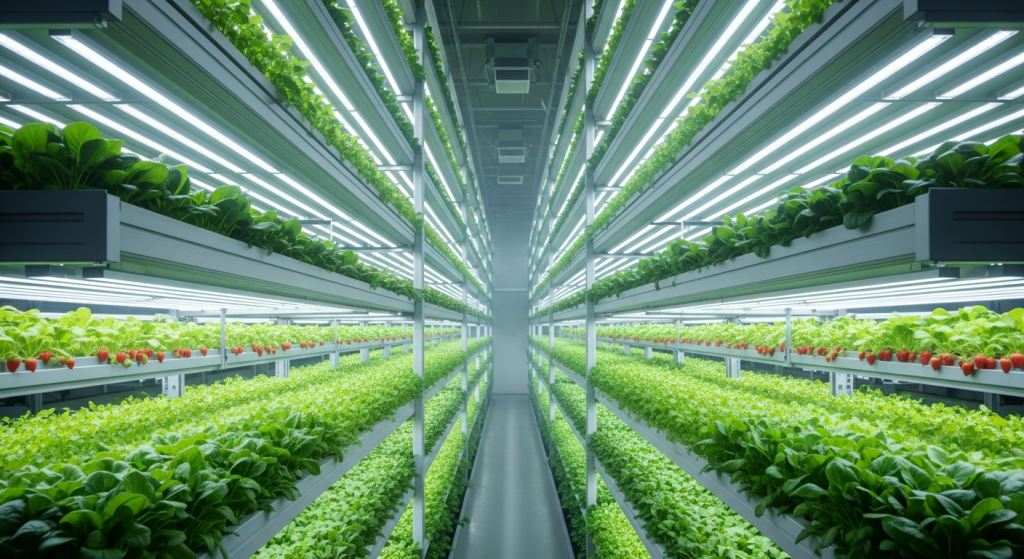
Vertical farms are changing how we grow food. They promise fresh produce in cities. However, their environmental footprint needs careful study. This article explores the impact of indoor food production.
The Rise of Indoor Vertical Farming
Urban populations are growing. This increases demand for food. It also means more food needs to travel long distances. This contributes to greenhouse gas emissions. Vertical farms offer a solution. They grow food indoors, in stacked layers. This system is called Controlled Environment Agriculture (CEA) combined with CEA.
These farms can be built anywhere. They are often in urban centers. This reduces transport needs. Therefore, downstream emissions can decrease. Packaging and transport are big contributors to emissions. Vertical farms aim to cut these down by reducing or avoiding packaging and transportation.
The goal is resilient food systems. They also aim to reduce environmental impact. This is done within an urban, indoor setting within a framework of urban, indoor, climate- controlled production.
Understanding the Environmental Footprint
Assessing the environmental impact is complex. Life Cycle Assessment (LCA) is a key tool. LCA studies look at all impacts. This includes direct and indirect effects. It covers the entire supply chain.
However, LCA results can vary. This is due to many factors. These include crop type and growing methods. Yield, technology used, and management practices all matter. Methodological choices also play a role. This makes it hard to compare studies directly.
For example, global warming potentials (GWP) for leafy greens. They can range widely. Some studies show impacts from 0.01 to 54 kg CO2e/kg. Other research found ranges from 3.3 to 63.3 kg CO2e/kg reported emissions of these assessments range from 0.01 to 54 kg CO2e/kg for leafy greens produced in UA farms.
Key Environmental Considerations
Several factors influence a vertical farm’s impact. These are crucial for sustainability.
Energy Consumption
Electricity is a major factor. It powers artificial lights and climate systems. Studies show electricity can be up to 93% of GHG emissions. This is in indoor vertical farms electricity consumption accounts for up to 93% of all GHG emissions in UA food production using IVF.
Therefore, energy efficiency is vital. Using renewable energy sources helps. Optimizing lighting and climate control is also important.
Resource Use
Vertical farms use less land. This is a significant advantage. They can produce more food on a smaller area. This reduces pressure on agricultural land. However, they require built infrastructure and ag-tech.
They also need material inputs. These include fertilizers, substrates, and seeds. Industrial CO2 is also used for enhanced growth. These contribute to upstream emissions.
Water Efficiency
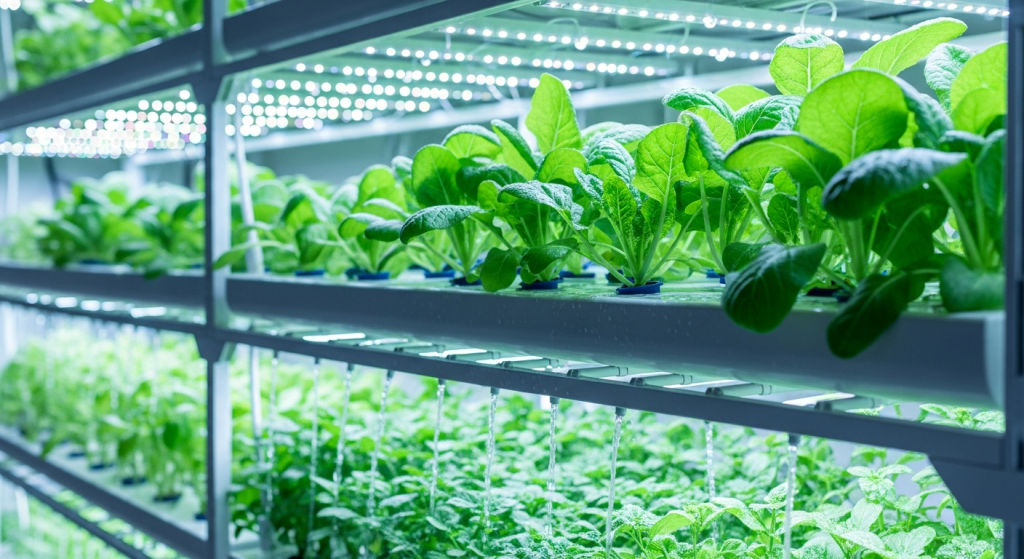
Many vertical farms use hydroponic or aeroponic systems. These systems use much less water than traditional farming. For instance, they can use up to 95% less water. This is a major benefit, especially in water-scarce regions. You can learn more about hydroponics and aeroponics here.
Operational Choices Matter
How a vertical farm is managed affects its impact. Operational choices can significantly alter outcomes. Adjusting growing conditions is essential for sustainability.
Optimizing Growing Conditions
Research shows that specific conditions can minimize environmental impact. For microgreen production, optimal conditions were identified. These include specific temperatures and CO2 levels. They also involve photoperiod adjustments.
For instance, one study found that 20°C, maximum CO2 concentration, and maximum photoperiod minimized GWP. This led to a minimum GWP of 3.3 kg CO2e/kg. It also maximized production. Intensifying production can lower impacts. This is because yield increases more than resource use increases intensification of production thus led to lower impacts because the marginal increase in yield due to increased resource use was larger than the marginal increase in impact.
System Boundaries
It’s important to define system boundaries. This means deciding what to include in the assessment. For example, studies often exclude activities after the farm gate. This includes processing and distribution System boundaries of crop production in vertical farms and high-tech greenhouses (Excludes activities after farm-gate).
This exclusion can affect the overall picture. Including downstream impacts would provide a more complete assessment.
Comparing Vertical Farms to Conventional Agriculture
Vertical farms are often compared to traditional farming. The results can be mixed. Some studies show comparable or lower impacts. Others highlight higher energy use.
GHG Emissions Comparison
For lettuce and basil grown on-site, impacts can be comparable. One study reported GHG emissions from 0.78–1.18 kg CO2-eq per kg of lettuce. For basil, it was 1.45–2.12 kg CO2-eq per kg GHG emissions ranged from 0.78–1.18 kg CO2-eq per kg lettuce and from 1.45–2.12 kg CO2-eq per kg basil from on-site production.
These figures can be competitive with conventionally sourced options. However, the source of electricity is critical. It significantly influences the environmental performance. The infrastructure for modular cabinets also needs careful consideration.
Land Use Trade-offs
Vertical farms require less land. This is a major environmental benefit. They can be built in urban areas. This frees up rural land. This land could be used for rewilding or other purposes. It helps reduce pressure on natural habitats.
The concept of land use trade-offs is important. It involves balancing food production needs with ecological preservation. This is a key area for future research.
Potential Benefits Beyond the Environment
Vertical farms offer more than just potential environmental advantages. They also contribute to food security and quality.
Food Safety and Quality
The controlled indoor environment is beneficial. It minimizes exposure to pests and diseases. Therefore, the need for pesticides is reduced or eliminated. This leads to safer produce. It also enhances quality and consistency produce from VF relate to food safety and quality, enhanced owing to a controlled indoor environment and minimal use of pesticides.
Urban Food Security
Vertical farms enhance urban food security. They provide a reliable source of fresh produce. This is independent of weather conditions or seasons. This resilience is crucial for cities. It ensures access to nutritious food year-round.
Challenges and Future Directions
Despite the promise, challenges remain. Scaling up production efficiently is one. Reducing energy consumption is another. Ensuring economic viability is also key.
Future research should focus on several areas. These include optimizing energy use. Developing more efficient lighting technologies is important. Also, exploring innovative business models is necessary.
Further studies are needed. They should provide more empirical evidence. This will help validate claims in the industry. It will also guide the development of more sustainable practices.
Frequently Asked Questions
What is Life Cycle Assessment (LCA)?
Life Cycle Assessment (LCA) is a method used to evaluate the environmental impacts of a product or process throughout its entire life cycle. This includes raw material extraction, manufacturing, use, and disposal.
How much electricity do vertical farms use?
Electricity consumption in vertical farms can be very high, often accounting for up to 93% of total greenhouse gas emissions. This is primarily due to the energy required for artificial lighting and climate control systems.
Are vertical farms always more sustainable than traditional agriculture?
Not necessarily. While vertical farms can offer benefits like reduced land and water use, their high energy consumption can sometimes lead to a larger environmental footprint, especially if the electricity is sourced from fossil fuels. The sustainability depends heavily on operational efficiency and energy sources.
What are the main environmental benefits of vertical farming?
Key benefits include significantly reduced land use, lower water consumption (especially with hydroponic/aeroponic systems), reduced transportation emissions due to urban proximity, and minimized pesticide use due to controlled environments.
What are the biggest challenges for vertical farms?
The primary challenges include high energy consumption, the initial cost of setting up advanced technology, the need for skilled labor, and ensuring economic viability while maintaining environmental sustainability.
Conclusion
Vertical farming presents an exciting future for food production. It offers potential solutions to urban food challenges. However, a thorough assessment of its environmental impact is crucial. Energy consumption remains a significant factor. Operational choices and energy sources greatly influence sustainability.
By optimizing growing conditions and embracing renewable energy, vertical farms can improve their footprint. Continued research and innovation are vital. This will help ensure that indoor food production truly contributes to a more sustainable food system. It’s about balancing innovation with environmental responsibility.
