Crop Resilience: Breeding for Heat and Drought Survival
Published on December 31, 2025 by Admin
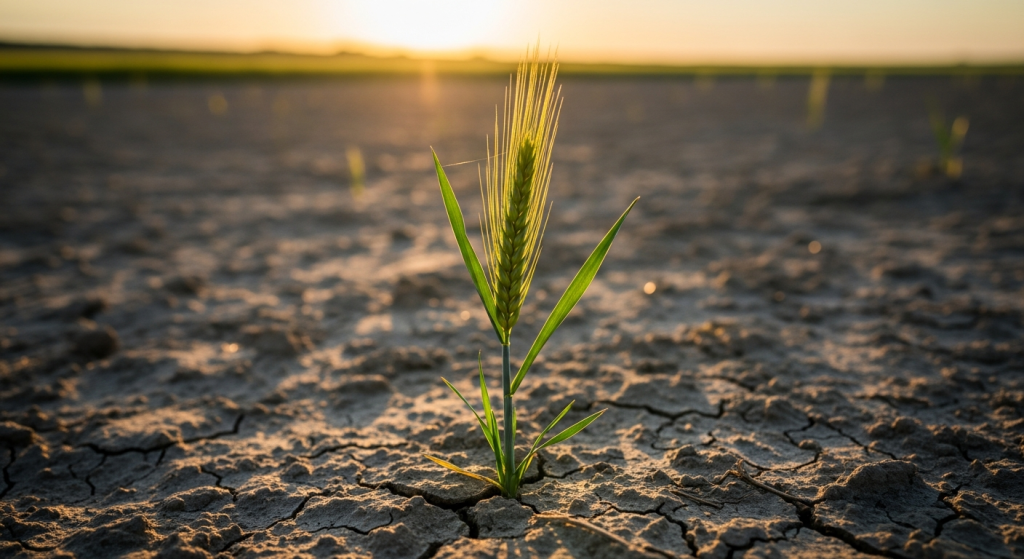
Climate change presents a significant threat to global food security. As temperatures rise and weather patterns become more erratic, crops face unprecedented challenges from heat and drought. Therefore, developing resilient crop varieties is no longer an option but a necessity for genetic engineers and agricultural planners. This article explores the critical need for, and the advanced strategies behind, breeding crops that can withstand these extreme conditions.
Understanding the intricate mechanisms of plant stress tolerance is paramount. This knowledge guides breeding programs towards developing cultivars that can ensure stable yields even in adverse environments. Consequently, this work directly contributes to safeguarding food supplies for a growing global population.

The Escalating Threat of Climate Change to Agriculture
Global temperatures are rising. Rainfall patterns are becoming unpredictable. These changes lead to more frequent and intense heatwaves and droughts. As a result, traditional crop varieties struggle to survive and produce adequate yields. For instance, maize and wheat, staple crops for millions, are particularly vulnerable.
The International Maize and Wheat Improvement Center (CIMMYT) is actively working on this challenge. They are leveraging biodiversity found in genebanks to create new climate-smart crop varieties. This endeavor aims to protect the livelihoods of small-scale farmers worldwide. Indeed, the impact of climate change on agriculture is a complex, multifaceted problem requiring innovative solutions.
The consequences extend beyond crop failure. Malnutrition and hunger are exacerbated when food production falters. Therefore, enhancing crop resilience is a direct pathway to improving food security and human well-being. This is especially true in regions already facing significant agricultural challenges.
Understanding Plant Stress Tolerance Mechanisms
Plants have evolved sophisticated mechanisms to cope with environmental stresses like heat and drought. These can be broadly categorized into physiological and molecular responses. Understanding these is key to successful breeding efforts.
Physiological Adaptations
Plants exhibit various physiological adjustments to survive heat and drought. For example, they may alter their stomatal regulation to conserve water. Stomata are small pores on leaves that control gas exchange. Closing them reduces water loss but also limits carbon dioxide intake for photosynthesis.
Root system architecture is another crucial factor. Deeper and more extensive root systems allow plants to access water from deeper soil layers during drought. Furthermore, some plants accumulate compatible solutes, such as proline and soluble sugars. These compounds act as osmolytes, helping cells maintain turgor pressure and protect cellular structures from damage under stress. For example, research into pigeonpea highlights its potential resilience, with understanding its bio-physiological mechanisms being imperative for developing better cultivars for evolving climate scenarios.
Molecular and Genetic Responses
At the molecular level, plants activate a suite of genes in response to heat and drought. Heat shock proteins (HSPs) are a classic example. They act as molecular chaperones, preventing protein denaturation and assisting in protein repair. Drought stress often triggers the production of reactive oxygen species (ROS). While damaging in excess, controlled levels of ROS can also act as signaling molecules, initiating defense responses.
The role of antioxidants is vital in mitigating ROS damage. Plants produce enzymes like superoxide dismutase and catalase, as well as non-enzymatic antioxidants like vitamin C and E. Moreover, hormonal signaling pathways, involving hormones like abscisic acid (ABA), play a critical role in coordinating drought and heat stress responses. Understanding these genetic pathways allows breeders to identify and select for desirable traits.
Breeding Strategies for Climate-Resilient Crops
Developing heat and drought-tolerant crop varieties requires a multi-pronged approach. This involves both conventional breeding techniques and advanced molecular tools.
Conventional Breeding
Conventional breeding relies on the natural variation within a species or closely related species. Breeders select plants with desirable traits, such as drought tolerance, and cross them. Over multiple generations, they select offspring that exhibit improved resilience. This process can be time-consuming but is a well-established method.
For instance, CIMMYT has seen significant grain yield progress in optimum, drought, and heat conditions through its breeding programs by enhancing crop varieties. This demonstrates the continued efficacy of these methods when applied strategically.
Marker-Assisted Selection (MAS)
MAS speeds up the breeding process. It uses DNA markers linked to specific genes or quantitative trait loci (QTLs) associated with stress tolerance. Breeders can screen large populations of seedlings for these markers, identifying promising individuals early on. This allows for more efficient selection, even before the plants exhibit the desired traits phenotypically.
Genomic and Multi-Omics Approaches
Modern genomics offers powerful tools. Genome-wide association studies (GWAS) can identify genes and genetic variations associated with heat and drought tolerance by analyzing the genomes of many individuals. Furthermore, advanced techniques like transcriptomics, proteomics, and metabolomics provide a comprehensive understanding of how plants respond to stress at different biological levels.
The integration of these “multi-omics” approaches is crucial. It allows for a deeper understanding of complex stress tolerance mechanisms. This is particularly important for crops like pigeonpea, where research into abiotic stress tolerance is still developing necessitating continuous exploration at multi-omic levels.
High-Throughput Phenotyping (HTP)
Phenotyping is the measurement of observable traits. HTP uses automated systems, sensors, and imaging technologies to rapidly collect detailed data on plant performance under various conditions. This includes measurements of plant height, leaf area, water content, and physiological stress indicators.
HTP is essential for understanding the complex interactions between genotype, environment, and management practices (GxExM). This data is invaluable for selecting superior genotypes and validating findings from genomic studies. For example, non-destructive analysis of plant physiological traits using hyperspectral imaging can provide critical insights into drought stress under controlled conditions.
Leveraging Biodiversity and Genebanks
Genebanks are vital repositories of genetic diversity. They preserve a vast array of crop accessions, including landraces and wild relatives, that possess valuable traits for adaptation. These collections represent a treasure trove for breeding climate-resilient crops.
Mining Genebank Accessions
Projects like the one led by CIMMYT focus on mining these genebanks for useful alleles. These are specific gene variations responsible for traits like heat, drought, or salt tolerance. By identifying and utilizing these genetic resources, breeders can develop climate-smart varieties more effectively for millions of small-scale farmers worldwide.
The International Treaty on Plant Genetic Resources for Food and Agriculture ensures that crop breeders globally have access to these fundamental building blocks. This collaboration is essential for widespread impact. Safeguarding global crop diversity is a critical step in ensuring future food security through robust seed banks.
Utilizing Crop Wild Relatives
Crop wild relatives (CWRs) are often more resilient to environmental stresses than their cultivated counterparts. They have evolved in harsh conditions and possess a wide range of useful genes. For example, the International Potato Center (CIP) is using wild potatoes to develop varieties with enhanced heat and drought tolerance, as well as disease resistance to combat climate change effects.
However, using CWRs can be challenging. They are often genetically distant from cultivated crops, requiring a laborious pre-breeding process. This involves a series of crosses and backcrosses to transfer desirable traits into an agriculturally useful background. Despite the effort, the genetic diversity offered by CWRs is an invaluable resource for adaptation.
The Role of Farmers in Breeding and Adaptation
Small-scale farmers are on the front lines of climate change. Their knowledge and participation are crucial for developing and deploying resilient crop varieties. Participatory plant breeding and farmer-led trials are gaining prominence.
Crowdsourcing Seed Trials
Initiatives like the “Seeds for Needs” program and farmer-managed experimental plots empower farmers to test different seed varieties in their local conditions. This “crowdsourcing” of data helps identify varieties that perform best under specific climate challenges. For example, trials in Ethiopia, Nicaragua, and India have revealed farmer-bred varieties superior to official recommendations under current climate conditions.
This approach democratizes the use of gene bank collections. It allows farmers to make more informed seed choices. It also accelerates the dissemination of suitable varieties, helping them adapt to rising temperatures and drought. Indeed, increasing diversity in farmers’ fields is a critical feature of resilience.
Integrating Local Knowledge
Farmers possess invaluable local knowledge about their environment and crop performance. Integrating this wisdom with scientific expertise leads to more effective breeding programs. It ensures that the developed varieties meet the practical needs of those who will cultivate them.
Challenges and Future Directions
Despite significant progress, challenges remain. The complexity of drought and heat tolerance requires continuous research. Integrating advanced technologies into breeding programs is essential for developing truly resilient varieties. Furthermore, scaling up these efforts to reach millions of farmers globally is a major undertaking.
The development of new resilient crop varieties requires a sustained commitment to research and development. Collaboration between international research centers, national agricultural institutions, and farmers is key. As climate change accelerates, the urgency to breed for resilience only grows. This ensures that agriculture can continue to feed the world sustainably.
Frequently Asked Questions (FAQ)
What are the main challenges posed by climate change to agriculture?
Climate change leads to increased temperatures, erratic rainfall, and more frequent extreme weather events like droughts and heatwaves. These conditions stress crops, reduce yields, and threaten food security.
How does plant breeding help crops withstand heat and drought?
Plant breeding identifies and enhances desirable traits within crop species. This includes developing varieties with better water-use efficiency, deeper root systems, improved heat tolerance mechanisms, and the ability to maintain physiological functions under stress.
What is High-Throughput Phenotyping (HTP)?
HTP uses advanced technologies like sensors and imaging to rapidly collect detailed data on plant traits. This helps breeders quickly assess how different varieties perform under various environmental conditions, accelerating the selection process.
Why are crop wild relatives important for breeding resilient crops?
Crop wild relatives often possess a wider range of genetic diversity and inherent tolerance to stresses like heat and drought, having evolved in challenging environments. They serve as a valuable source of genes that can be transferred to cultivated crops.
Can GM crops help with climate resilience?
While not explicitly detailed in the provided sources, genetic modification is a tool that can potentially introduce or enhance specific traits for climate resilience, such as drought tolerance or heat resistance, complementing other breeding strategies. However, the ethical considerations and public perception of GM crops are also important factors.