High-Tech Wildlife Corridors: Bridging the Gaps in Habitats
Published on January 12, 2026 by Admin
Habitat fragmentation is a growing problem. It breaks up natural landscapes. This makes it hard for wildlife to survive. Fortunately, technology offers new solutions. These solutions can help create and manage wildlife corridors. These corridors are vital for biodiversity. They connect isolated habitats. This allows animals to move freely. It also helps them find food and mates. Furthermore, it supports genetic diversity. This is crucial for species survival.
The Challenge of Habitat Fragmentation
Human activities are the main cause. Urban development, roads, and agriculture fragment habitats. This creates isolated patches of land. For many species, these patches are too small. They cannot support viable populations. Consequently, animals face many dangers. They struggle to find resources. They are also more vulnerable to predators. Road collisions are a major threat. This isolation leads to a decline in populations. It can even lead to local extinctions. Therefore, understanding these impacts is key.
Why Wildlife Corridors Matter
Wildlife corridors act as natural highways. They link fragmented ecosystems. This allows animals to migrate. It also enables them to disperse. They can access new territories. They can also find mates. This is essential for breeding. It helps maintain genetic diversity. Diverse gene pools make populations stronger. They are more resilient to disease. They can also adapt to environmental changes. For example, they can adapt to climate shifts. Therefore, corridors are crucial for ecological health.
The Role of Technology
Technology is revolutionizing corridor design. It provides powerful new tools. These tools help us understand wildlife movement. They also help us monitor corridor use. Furthermore, they aid in corridor maintenance. High-tech solutions make corridors more effective. They also make them more sustainable. This is a significant advancement. It offers hope for many species.
Smart Corridor Design: Data-Driven Approaches
Designing effective corridors requires data. We need to know where animals travel. We also need to know their needs. Technology provides unprecedented insights. This allows for more precise planning. It ensures corridors serve their purpose.
GPS Tracking and Telemetry
GPS collars and telemetry devices are invaluable. They track animal movements. This reveals their home ranges. It also shows their migration routes. Scientists can see where animals cross roads. They can also identify barriers. This data is critical for planning. It helps us design corridors that animals will actually use. For instance, tracking deer can show preferred crossing points. This information is vital for road crossing structures.
Geographic Information Systems (GIS)
GIS software is essential. It maps landscapes and data. It integrates various datasets. This includes habitat suitability. It also includes animal movement patterns. GIS helps identify the best locations for corridors. It can also model potential impacts. For example, it can predict how a new road might affect connectivity. This allows for informed decisions. It helps us avoid creating new problems. We can also use it to prioritize areas for protection. This is a powerful tool for conservationists.
Remote Sensing and Drones
Satellite imagery and drones provide detailed views. They map vegetation cover. They also identify habitat types. Drones can survey inaccessible areas. They can also collect high-resolution data. This helps assess habitat quality. It also helps monitor changes over time. For example, we can use drones to check if vegetation is growing in a corridor. This ensures it remains functional. It also helps identify potential threats.
Monitoring and Management with Technology
Once corridors are established, monitoring is key. We need to know if they are working. Technology makes this easier and more efficient.
Camera Traps and Acoustic Sensors
Camera traps are a common tool. They capture images of passing wildlife. This provides data on species presence. It also gives information on activity patterns. Acoustic sensors record animal sounds. This can identify species by their calls. Both methods are non-invasive. They provide valuable data without disturbing animals. For instance, camera traps can confirm if a target species is using a new underpass. This is crucial for evaluating success.
Environmental DNA (eDNA)
eDNA analysis is a newer technique. It detects traces of DNA left by animals. This can be found in soil or water. It can confirm the presence of rare species. It can also assess biodiversity. This is especially useful in hard-to-access areas. It offers a sensitive way to monitor wildlife. Therefore, it’s a valuable addition to our toolkit. You can learn more about similar DNA applications in conservation genetics using DNA to save vulnerable populations.
Smart Sensors and IoT Devices
The Internet of Things (IoT) is transforming monitoring. Sensors can track temperature. They can also monitor humidity and soil moisture. This helps assess habitat conditions. It also helps detect environmental changes. These sensors can be networked. They send data wirelessly. This allows for real-time assessment. For example, a smart sensor could alert managers to drought conditions affecting a corridor’s vegetation. This allows for timely intervention.
Innovative Corridor Infrastructure
Physical structures are also becoming more advanced. They are designed to facilitate safe passage.
Wildlife Crossings: Underpasses and Overpasses
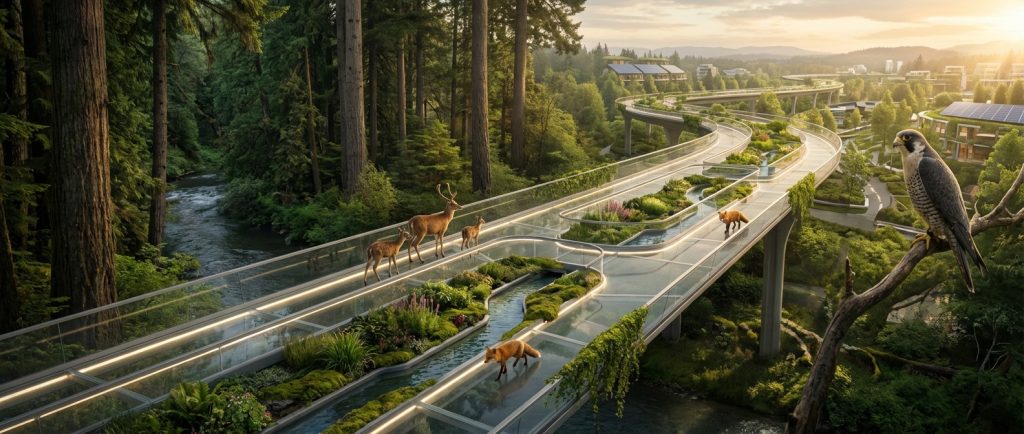
These structures allow animals to cross roads safely. Underpasses are tunnels below roads. Overpasses are bridges above roads. They are often planted with vegetation. This makes them feel like natural habitat. They are designed for specific species. For example, large mammals need wide underpasses. Smaller animals might use culverts. Effective wildlife crossings significantly reduce roadkill. This is a major conservation success. These structures are key components of many successful wildlife corridors. Research into wildlife bridge construction highlights their importance.
Green Bridges and Eco-ducts
These are essentially vegetated overpasses. They are designed to mimic natural landscapes. They provide a safe passage for arboreal species. They also offer habitat for smaller ground-dwelling animals. These structures can be very effective. They integrate seamlessly into the environment. Therefore, they offer a more aesthetically pleasing solution.
Canopy Bridges
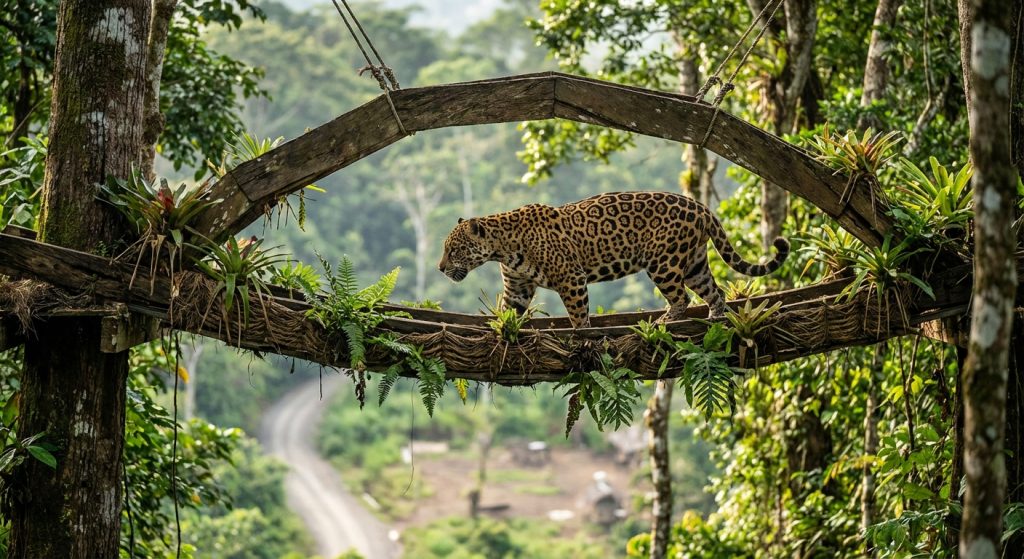
For arboreal species like primates and squirrels, canopy bridges are vital. These are structures that connect trees. They allow animals to travel above ground. They bypass terrestrial barriers. This is especially important in fragmented forests. They help maintain connectivity for tree-dwelling wildlife. This is a specialized but crucial solution.
The Future of Wildlife Corridors
The integration of technology is ongoing. We are constantly finding new ways to improve corridor effectiveness. The goal is to create resilient ecological networks. These networks can withstand future challenges.
Artificial Intelligence (AI) and Machine Learning
AI can analyze vast datasets. It can identify complex patterns. For example, AI can predict animal movement. It can also optimize corridor designs. Machine learning can improve sensor data analysis. It can detect subtle changes in animal behavior. This allows for proactive management. It can also help identify emerging threats. The potential for AI in conservation is immense.
Virtual Corridors and Connectivity Modeling
In some cases, physical corridors are not feasible. Virtual corridors can be conceptualized. These rely on sophisticated modeling. They identify key landscape features. They also map functional connectivity. This can guide land-use planning. It helps protect critical habitats. It also encourages compatible land management practices. This approach is particularly useful in large-scale planning.
Citizen Science and Public Engagement
Technology enables public participation. Apps allow citizens to report wildlife sightings. They can also report roadkill incidents. This crowdsourced data is valuable. It supplements scientific monitoring. It also raises public awareness. Engaged citizens are crucial for long-term success. They can advocate for corridor protection. Therefore, involving the public is vital.
Challenges and Considerations
Despite technological advancements, challenges remain. Cost is a significant factor. Implementation requires substantial investment. Political will and public support are also crucial. Long-term maintenance is also necessary. Ensuring corridors remain functional requires ongoing effort. Furthermore, understanding the specific needs of diverse species is complex. It requires interdisciplinary collaboration. This includes ecologists, engineers, and technologists. The “One Health” approach, which links animal, human, and environmental health, is vital in this context. We can explore the importance of the One Health approach for a holistic view.
Conclusion
Habitat fragmentation poses a severe threat. However, high-tech solutions offer powerful tools. They enable us to design, monitor, and manage effective wildlife corridors. From GPS tracking to AI analysis, technology is transforming conservation. These corridors are essential for biodiversity. They help species adapt to a changing world. By embracing these innovations, we can create a more connected and resilient planet for all life. Therefore, investing in these solutions is an investment in our future.
Frequently Asked Questions
What is habitat fragmentation?
Habitat fragmentation is the process by which a large, continuous habitat is broken down into smaller, isolated patches. This is typically caused by human activities like urbanization, agriculture, and infrastructure development.
How do wildlife corridors help animals?
Wildlife corridors act as safe passages between fragmented habitats. They allow animals to move, migrate, disperse, find food and mates, and maintain genetic diversity. This is crucial for their survival and the health of the ecosystem.
What are some examples of high-tech solutions for wildlife corridors?
High-tech solutions include GPS tracking and telemetry for monitoring animal movements, GIS for mapping and analysis, remote sensing and drones for habitat assessment, camera traps and acoustic sensors for monitoring usage, and environmental DNA (eDNA) for detecting species presence.
Are wildlife bridges effective?
Yes, wildlife bridges (overpasses) and underpasses are highly effective at reducing roadkill and allowing animals to cross roads safely. Their design is often tailored to the specific species they aim to benefit.
What are the biggest challenges in creating wildlife corridors?
The main challenges include the high cost of implementation, the need for strong political will and public support, ongoing maintenance requirements, and the complexity of understanding and meeting the diverse needs of different species.