CRISPR Revolutionizes Crops for a Changing World
Published on January 13, 2026 by Admin

Introduction: The Urgent Need for Resilient Crops
Climate change presents a significant challenge to global food security. Extreme weather events, shifting precipitation patterns, and rising temperatures stress traditional crops. Therefore, developing climate-resilient varieties is crucial. Furthermore, consumer demand for healthier food options is growing. Nutrient-dense crops are essential for improving public health. This is where revolutionary technologies like CRISPR gene editing come into play.
What is CRISPR Gene Editing?
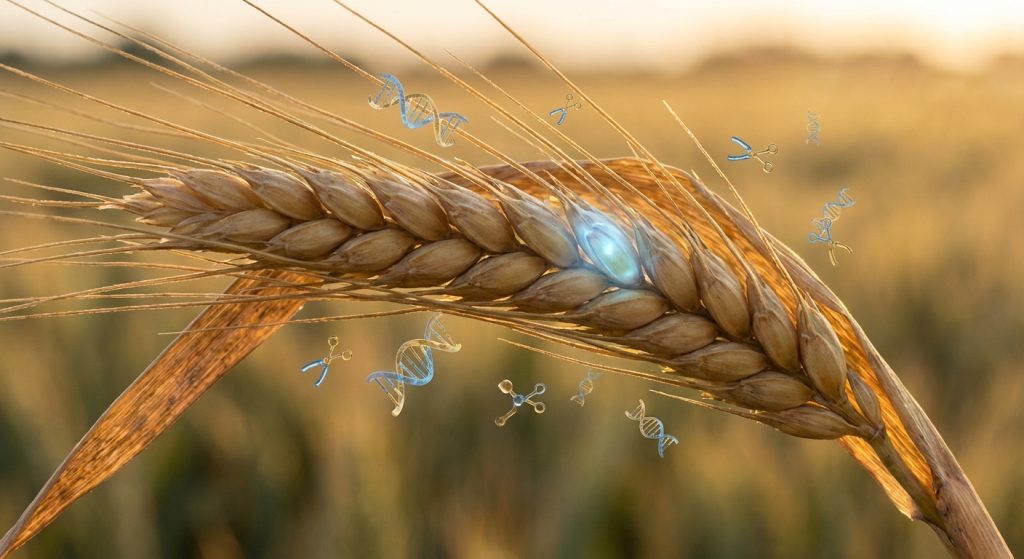
CRISPR, or Clustered Regularly Interspaced Short Palindromic Repeats, is a powerful gene-editing tool. It allows scientists to make precise changes to DNA. Think of it like a molecular scissors. It can cut and paste DNA sequences with remarkable accuracy. This technology offers a faster and more efficient way to modify plant genomes compared to traditional breeding methods. Because of its precision, it minimizes unintended genetic alterations.
Developing Climate-Resilient Crops with CRISPR
CRISPR technology enables geneticists to engineer crops that can withstand harsh environmental conditions. For instance, scientists can enhance a plant’s tolerance to drought or salinity. This is achieved by modifying genes responsible for water uptake or salt regulation. Moreover, CRISPR can help develop crops resistant to pests and diseases. This reduces the need for chemical pesticides. Consequently, this leads to more sustainable farming practices. For example, developing crops that can thrive in hotter climates is a key application. This directly addresses the challenges posed by global warming.
Enhancing Nutrient Density in Crops
Beyond resilience, CRISPR is vital for boosting the nutritional value of crops. Many staple foods lack essential vitamins and minerals. This leads to widespread micronutrient deficiencies. CRISPR can be used to increase the levels of vitamins, such as Vitamin A or iron, in crops. For example, biofortification through gene editing can create “golden rice” varieties enriched with beta-carotene. This has the potential to combat Vitamin A deficiency in regions where rice is a primary food source. Therefore, CRISPR-edited crops can play a significant role in improving global nutrition. This also aligns with the growing interest in functional foods.
CRISPR vs. Traditional Breeding and GMOs
Traditional breeding involves cross-pollinating plants over many generations. This process can be slow and may not always achieve desired traits. Genetically Modified Organisms (GMOs) involve inserting genes from different species. CRISPR, however, allows for more targeted edits within a plant’s own genome. It can make small, precise changes. In many cases, these edits mimic natural mutations. This distinction is important for regulatory and public perception. Because of its precision, CRISPR editing can sometimes result in changes that are indistinguishable from those achieved through conventional breeding.
Applications for Seed Production Companies
For seed production companies, CRISPR offers immense opportunities. It allows for the rapid development of new crop varieties with desirable traits. This includes enhanced yield, improved disease resistance, and superior nutritional profiles. Consequently, companies can bring innovative products to market faster. This can lead to a competitive advantage. Furthermore, CRISPR can help create seeds that are more adaptable to diverse growing regions. This expands market potential. For example, developing seeds that require less water is highly valuable in arid regions.
Challenges and Considerations
Despite its promise, CRISPR technology faces challenges. Public acceptance and regulatory frameworks are significant hurdles. Understanding the technology and its benefits is crucial for widespread adoption. Ethical considerations surrounding gene editing also need careful discussion. Moreover, the cost of developing and implementing CRISPR-based solutions can be substantial initially. However, as the technology matures, costs are expected to decrease.
The Future of Agriculture with CRISPR
The integration of CRISPR into agriculture is poised to transform food production. It offers a pathway to more sustainable, resilient, and nutritious food systems. Imagine crops that can thrive in challenging environments, reducing crop failures. Imagine staple foods packed with essential nutrients, combating malnutrition. The potential is vast. Moreover, this technology can help reduce agriculture’s environmental footprint. For instance, by developing crops that require fewer inputs like water and fertilizers. This is particularly relevant in light of increasing environmental concerns. You can explore related advancements in sustainable agriculture, such as regenerative agriculture.
Conclusion: A New Era for Crop Development
CRISPR gene editing represents a paradigm shift in agricultural innovation. It empowers geneticists and agricultural engineers to tackle critical global challenges. Developing climate-resilient and nutrient-dense crops is no longer a distant dream. It is a tangible reality being shaped by this groundbreaking technology. As we move forward, collaboration between researchers, industry, and policymakers will be key to unlocking CRISPR’s full potential for a healthier, more sustainable future.
Frequently Asked Questions
How is CRISPR different from GMOs?
CRISPR allows for precise edits within a plant’s own DNA, often mimicking natural mutations. Traditional GMOs typically involve inserting genes from a different species. While both modify a plant’s genetic makeup, CRISPR offers greater precision and can achieve outcomes similar to conventional breeding in some cases.
Can CRISPR technology make crops resistant to all diseases?
While CRISPR can enhance resistance to specific diseases by targeting relevant genes, it cannot make crops resistant to all possible diseases. Plant immunity is complex. However, it significantly improves a plant’s ability to fight off targeted pathogens.
What are the main benefits of CRISPR in agriculture?
The main benefits include developing crops that are more resilient to climate change (drought, heat, salinity), enhancing nutritional content, increasing pest and disease resistance, and potentially reducing the need for chemical inputs. This leads to more sustainable and secure food production.
Are CRISPR-edited crops safe to eat?
Current scientific consensus suggests that CRISPR-edited crops are as safe as conventionally bred crops. Regulatory bodies worldwide are evaluating these products on a case-by-case basis. The precision of CRISPR often results in changes that are more predictable than those from traditional methods.
How can CRISPR help address malnutrition?
CRISPR can be used to biofortify crops with essential vitamins and minerals. For instance, increasing iron or Vitamin A content in staple foods can help combat deficiencies in vulnerable populations. This makes nutritious food more accessible.