
Nanotechnology: Precision Medicine at the Molecular Level
Published on January 13, 2026 by Admin
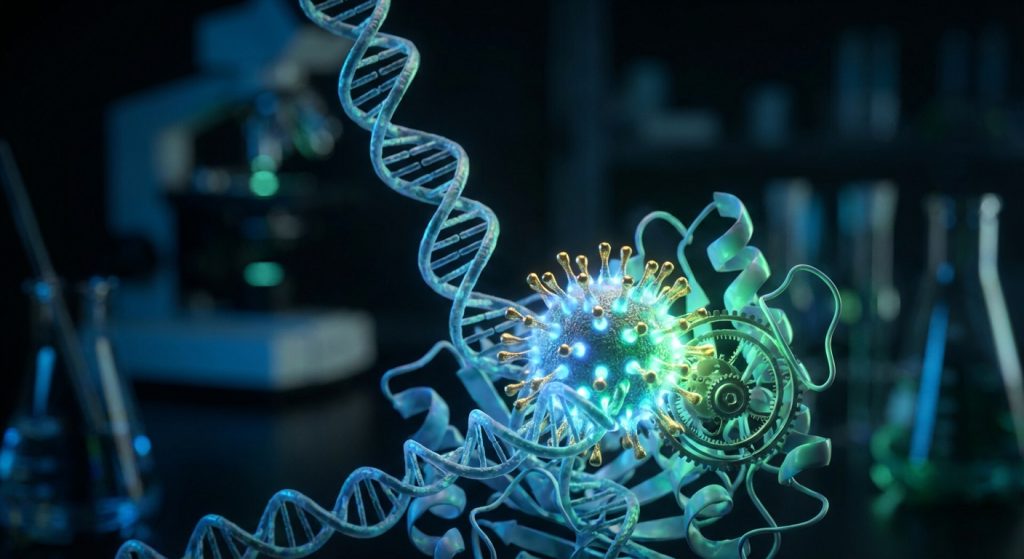
Nanotechnology is revolutionizing medicine. It offers new ways to target diseases. This approach works at the molecular level. Therefore, it promises more effective treatments. It also aims for fewer side effects.
This article explores nanotechnology in drug delivery. We will discuss its potential for various diseases. Pharmacologists, researchers, and patients will find this information valuable. It is a rapidly advancing field. It holds great promise for the future of healthcare.
Understanding Nanotechnology in Medicine
Firstly, let’s define nanotechnology. It involves working with materials at the nanoscale. This is typically between 1 and 100 nanometers. For context, a human hair is about 80,000 nanometers wide. At this tiny scale, materials exhibit unique properties. These properties can be harnessed for medical applications.
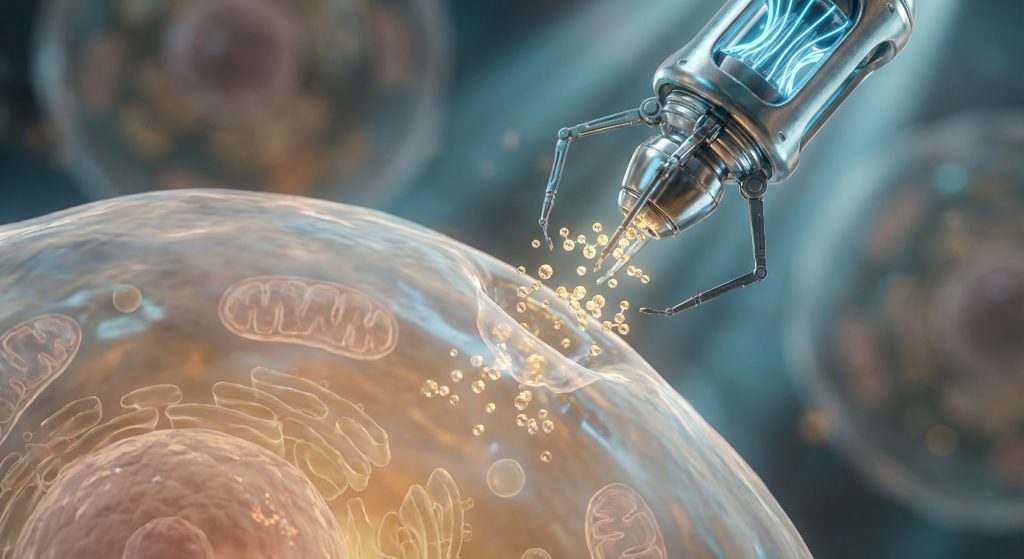
In drug delivery, nanoparticles act as carriers. They can encapsulate drugs. Then, they transport these drugs to specific sites in the body. This targeted approach is a major advantage. It differs significantly from traditional drug administration. Traditional methods often distribute drugs widely. This can lead to unwanted side effects in healthy tissues.
The Power of Targeted Drug Delivery
Targeted drug delivery is key to nanotechnology’s success. Nanoparticles can be engineered. They can be designed to recognize and bind to specific cells. For example, cancer cells often have unique surface markers. Nanoparticles can be coated with molecules. These molecules attach to these specific markers. As a result, the drug is delivered directly to the tumor.
This precision minimizes exposure of healthy cells. Therefore, it reduces side effects like nausea and hair loss. This is particularly important in cancer therapy. It also enhances the drug’s effectiveness. More drug reaches the target site. This means a lower overall dose might be needed. Thus, it offers a more efficient treatment strategy.
Nanoparticles for Oncology
Oncology is a major area benefiting from nanomedicine. Nanoparticles can deliver chemotherapy drugs directly to tumors. This targeted delivery can improve treatment outcomes. It also reduces the debilitating side effects of chemotherapy. For instance, liposomes are a common type of nanoparticle used. They can encapsulate drugs and release them slowly at the tumor site.
Furthermore, some nanoparticles can be designed to respond to stimuli. They might release their payload when they encounter the acidic environment of a tumor. Others can be triggered by external factors like heat or light. This controlled release mechanism adds another layer of precision. It ensures the drug is released only when and where it is needed. This advancement is crucial for developing less toxic and more effective cancer treatments.
Addressing Chronic Diseases with Nanotechnology
Beyond cancer, nanotechnology offers hope for chronic diseases. Conditions like diabetes, cardiovascular disease, and inflammatory disorders can benefit. For diabetes, nanoparticles can encapsulate insulin. They can then release it in response to blood glucose levels. This could lead to more stable blood sugar control.
In cardiovascular medicine, nanoparticles can deliver drugs to damaged heart tissues. They can also help clear blockages in arteries. For inflammatory diseases, nanoparticles can deliver anti-inflammatory agents directly to affected areas. This targeted approach can reduce systemic inflammation. It offers a promising path for managing these complex conditions. The ability to precisely deliver therapeutics is a game-changer. It allows for more personalized and effective treatment strategies. This is especially relevant for conditions requiring long-term management.
Types of Nanocarriers
Several types of nanoparticles are used in drug delivery. Each has unique properties and applications.
- Liposomes: These are spherical vesicles made of lipid bilayers. They are excellent for encapsulating both hydrophobic and hydrophilic drugs.
- Polymeric Nanoparticles: These are made from biocompatible polymers. They offer tunable drug release profiles.
- Dendrimers: These are highly branched, tree-like macromolecules. Their well-defined structure allows for precise drug loading.
- Micelles: These are self-assembling structures formed by amphiphilic molecules. They are good for delivering poorly soluble drugs.
- Nanocrystals: These are drug particles reduced to the nanoscale. This increases their surface area and dissolution rate.
The choice of nanocarrier depends on the drug and the target disease. Researchers are constantly developing new types. They aim to improve delivery efficiency and biocompatibility. The field is dynamic and innovative.
Challenges and Future Directions
Despite its immense potential, nanotechnology in drug delivery faces challenges. One significant hurdle is large-scale production. Manufacturing nanoparticles consistently and affordably is complex. Another concern is long-term safety. While generally considered safe, more research is needed on potential accumulation in organs over time. Rigorous preclinical and clinical testing is essential.
Regulatory approval processes are also evolving. Ensuring the safety and efficacy of these novel therapies is paramount. However, the future looks bright. Nanotechnology is poised to transform medicine. Personalized medicine will become more attainable. We might see treatments tailored to an individual’s genetic makeup and disease profile. The integration of AI in healthcare, for instance, could further refine these personalized approaches. This synergy between nanomedicine and AI promises even greater precision.
Furthermore, advancements in imaging and diagnostics are complementary. They allow for better monitoring of nanoparticle distribution. This helps in optimizing treatment regimens. The synergy between diagnostics and therapeutics is a key trend. It moves us toward a more proactive and precise healthcare system. For patients, this means hope for more effective treatments. It also means a better quality of life with fewer side effects. The field is rapidly advancing. Many breakthroughs are on the horizon.
Frequently Asked Questions (FAQ)
What is nanotechnology in drug delivery?
Nanotechnology in drug delivery uses tiny particles, called nanoparticles, to carry medications. These nanoparticles are designed to deliver drugs precisely to specific cells or tissues in the body. This targeted approach aims to increase drug effectiveness and reduce side effects compared to traditional methods.
How does nanotechnology help treat cancer?
In cancer treatment, nanocarriers can deliver chemotherapy drugs directly to tumor cells. This minimizes damage to healthy cells, thereby reducing side effects like hair loss and nausea. Some nanoparticles can also be engineered to release their drug payload only when they reach the tumor environment.
Are there any risks associated with nanotechnology in medicine?
While nanomedicine shows great promise, potential long-term risks are still being studied. These include how nanoparticles might accumulate in the body over time. Extensive research and clinical trials are conducted to ensure the safety and efficacy of nanomedicines before they are approved for patient use.
Can nanotechnology help manage chronic diseases like diabetes?
Yes, nanotechnology can help manage chronic diseases. For instance, it can be used to create smart insulin delivery systems for diabetes. These systems can release insulin in response to blood glucose levels. This offers better control and reduces the need for frequent injections.
What is the difference between nanotechnology and traditional drug delivery?
Traditional drug delivery often disperses medication throughout the body, potentially affecting healthy tissues and causing side effects. Nanotechnology, however, uses engineered nanoparticles to target specific sites, delivering the drug more precisely where it is needed. This targeted action is the primary advantage.
Conclusion
Nanotechnology in drug delivery represents a significant leap forward. It allows us to target diseases at the molecular level. This precision offers enhanced efficacy and reduced toxicity. For pharmacologists and oncology researchers, it opens new avenues for treatment development. For patients, it brings hope for more effective and kinder therapies. As research continues, nanomedicine will undoubtedly play an even larger role in shaping the future of healthcare. The potential to precisely target diseased cells is transforming how we approach treatment. It is truly a molecular revolution in medicine.
