
Agroforestry: Grow More Than Crops for Diverse Income
Published on January 14, 2026 by Admin
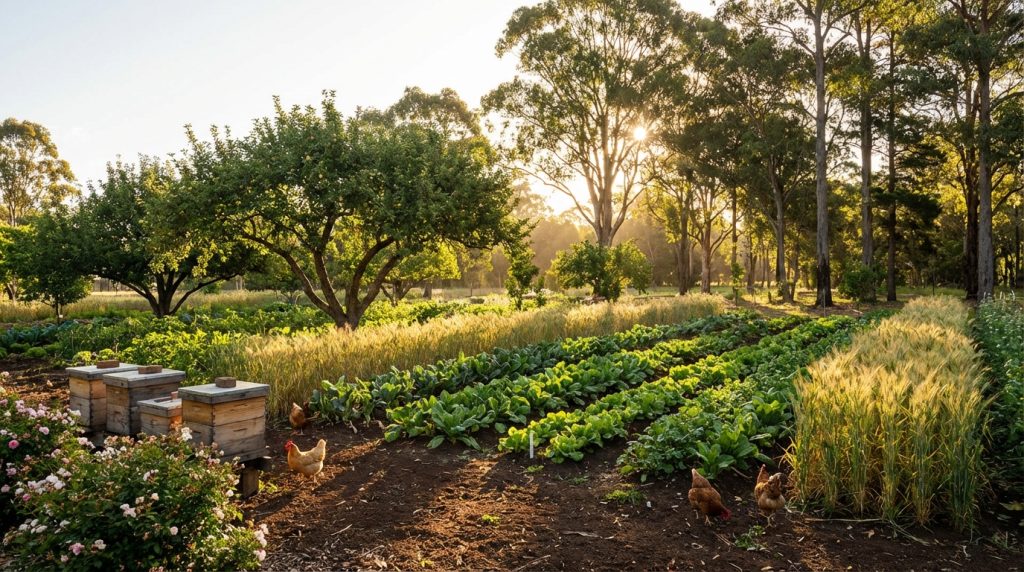
Smallholder farmers often face unpredictable markets and climate challenges. This can lead to income instability. However, there is a sustainable solution. Agroforestry offers a way to diversify farm income. It integrates trees with crops and livestock. This practice is not new. It has been used for centuries. Today, it is gaining renewed attention. This is because of its many benefits. It improves soil health. It enhances biodiversity. It also provides multiple income streams.
In this article, we will explore how agroforestry can transform farming. We will look at its economic and environmental advantages. We will also discuss practical implementation for farmers. Agricultural economists and rural developers will find valuable insights here. This approach can lead to more resilient and profitable farming systems.
What is Agroforestry?
Agroforestry is a land-use system. It intentionally combines trees and shrubs with crops and/or livestock. This integration can happen on the same land. It can also occur in the same management unit. The goal is to create a more sustainable and productive system. It mimics natural ecosystems. It leverages the unique benefits of each component.
Essentially, it’s about bringing trees back into the farming landscape. This is done in a planned and beneficial way. It’s not just about planting a few trees randomly. It’s about strategic integration. This creates a synergy between the different elements. For example, trees can provide shade. They can also protect crops from wind. Their roots can improve soil structure.
Key Components of Agroforestry Systems
Agroforestry systems are diverse. They can be categorized based on their structure and function. However, most share common components:
- Trees and Shrubs: These are the woody perennials. They can be fruit trees, timber trees, nitrogen-fixing trees, or multipurpose trees.
- Crops: These are the annual or perennial plants grown for food, fiber, or other uses.
- Livestock: This can include cattle, sheep, goats, poultry, or other farm animals.
The interaction between these components is crucial. For instance, livestock can graze under trees. This helps manage undergrowth. It also provides manure for soil fertilization. In turn, the trees can provide fodder for the animals.
Economic Benefits for Smallholder Farmers
The primary driver for adopting agroforestry is often economic. It offers multiple avenues for income generation. This diversifies risk. It also increases overall farm profitability. Smallholder farmers can benefit significantly from this diversification.
Diversified Income Streams
One of the most compelling aspects of agroforestry is income diversification. Farmers are no longer solely reliant on a single crop. They can earn from several sources simultaneously. This provides a buffer against market fluctuations or crop failures.
- Timber and Firewood: Many tree species yield valuable timber. This can be harvested for construction or furniture. Fast-growing trees can also provide firewood. This is often a critical resource in rural areas.
- Fruits and Nuts: Fruit trees are a common component. They provide fresh produce for local markets. They can also be processed into jams, juices, or dried goods. Nut-producing trees also offer valuable products.
- Medicinal Plants: Many trees and understory plants have medicinal properties. These can be harvested and sold to local apothecaries or larger pharmaceutical companies.
- Non-Timber Forest Products (NTFPs): This category includes items like resins, gums, essential oils, and fibers. These can all be valuable sources of income.
- Improved Crop Yields: While not direct income, improved soil fertility and pest control from trees can lead to higher yields of cash crops. This indirectly boosts income.
- Livestock Products: If livestock are integrated, farmers can earn from milk, meat, eggs, and manure.
For example, a farmer might grow maize as a primary crop. They can intercrop it with nitrogen-fixing leguminous trees. These trees enrich the soil. They also provide fodder. Additionally, the farmer can harvest fruits from other trees on the farm. This multi-pronged approach creates greater financial security.
Reduced Input Costs
Agroforestry systems can significantly reduce the need for external inputs. This lowers production costs. It also makes farming more sustainable.
- Natural Fertilization: Nitrogen-fixing trees replenish soil nutrients. This reduces the need for costly synthetic fertilizers. The leaf litter from trees also adds organic matter to the soil. This improves soil structure and water retention.
- Pest and Disease Management: Diverse agroforestry systems can attract beneficial insects. These insects prey on crop pests. Certain trees also have natural pest-repelling properties. This reduces reliance on expensive and potentially harmful pesticides.
- Water Conservation: Tree cover helps retain soil moisture. It also reduces evaporation. This is especially beneficial in arid or semi-arid regions.
Consider the impact on fertilizer costs alone. For many smallholders, fertilizers represent a significant expense. By reducing this need through practices like intercropping with legumes, farmers can save substantial amounts of money. This directly increases their net profit. The concept of soil health is paramount here. For a deeper understanding of how plants engineer soil, one can explore the hidden architecture of roots.
Environmental Benefits of Agroforestry
Beyond economic gains, agroforestry offers substantial environmental advantages. These are crucial for long-term sustainability and climate resilience.
Soil Health and Fertility Improvement
Trees play a vital role in maintaining and improving soil health. Their root systems penetrate deep into the soil. This helps break up compacted layers. It also improves aeration and water infiltration. Furthermore, falling leaves and branches decompose. They add organic matter to the soil. This organic matter is essential for soil structure. It also enhances nutrient availability. The presence of mycorrhizal networks, the “hidden internet” connecting plants, also plays a role in nutrient cycling. You can learn more about these fascinating underground connections here.
Nitrogen-fixing trees, such as those in the legume family, are particularly valuable. They convert atmospheric nitrogen into a form that plants can use. This process is known as biological nitrogen fixation. It naturally fertilizes the soil. This reduces the need for synthetic nitrogen fertilizers. Synthetic fertilizers can have negative environmental impacts. They can contribute to water pollution and greenhouse gas emissions. For example, synthetic fertilizers can be a threat to long-term soil health.
Biodiversity Enhancement
Agroforestry systems create habitats. They support a wide range of plant and animal species. This is in stark contrast to monoculture farming systems. These systems often have very low biodiversity.
- Habitat for Wildlife: Trees provide shelter and food for birds, insects, small mammals, and other wildlife. This can include pollinators essential for crop production.
- Support for Beneficial Insects: The diverse flora in an agroforestry system attracts a variety of insects. Many of these are beneficial predators or parasitoids. They help control agricultural pests naturally.
- Microbial Diversity: Healthy soils in agroforestry systems teem with microbial life. These microbes are essential for nutrient cycling and decomposition.
Increased biodiversity contributes to a more resilient ecosystem. It also provides ecosystem services like pollination and pest control. These are invaluable for sustainable agriculture. The protection of pollinators is critical. The mysterious bee decline, for instance, highlights the ecological threat posed by loss of biodiversity.
Climate Change Mitigation and Adaptation
Agroforestry plays a dual role in addressing climate change. It helps mitigate its effects. It also aids in adapting to its impacts.
- Carbon Sequestration: Trees absorb carbon dioxide (CO2) from the atmosphere. They store it in their biomass (wood, leaves, roots) and in the soil. Agroforestry systems, with their increased tree cover, can sequester significant amounts of carbon. This helps reduce greenhouse gas concentrations. Old-growth forests are known carbon capture champions, but managed agroforestry systems also contribute significantly.
- Reduced Greenhouse Gas Emissions: By reducing the need for synthetic fertilizers and fossil-fuel-based machinery, agroforestry can lower a farm’s carbon footprint.
- Increased Resilience: The diversified nature of agroforestry systems makes them more resilient to climate-related shocks. For example, trees can provide shade during heatwaves. They can also help prevent soil erosion during heavy rainfall. This makes farms better equipped to handle extreme weather events.
The ability to sequester carbon makes agroforestry a key strategy in climate change mitigation. It is also a vital tool for adaptation. Farmers can better withstand droughts, floods, and extreme temperatures. This topic of climate resilience is complex. For a broader perspective on how we simulate climate change impacts, one can look into digital twins for ecosystems.
Types of Agroforestry Systems
Agroforestry systems are highly adaptable. They can be designed to suit local conditions and farmer needs. Here are some common types:
1. Alley Cropping
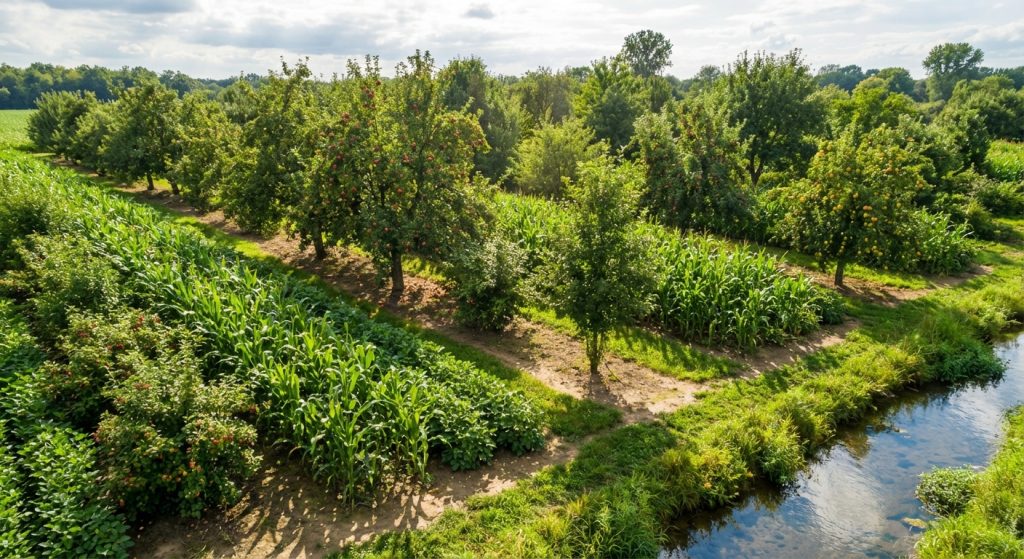
This system involves planting rows of trees or shrubs. These rows are spaced apart. Crops are then planted in the “alleys” between the tree rows. The trees can be pruned regularly. Their wood can be used for fuel or timber. The leaves can be used as mulch or animal feed. This system provides shade and wind protection. It also improves soil fertility.
2. Silvopasture
Silvopasture combines trees with livestock grazing. Animals graze among the trees. The trees provide shade and shelter for the animals. They can also provide fodder. In turn, the animals can help manage vegetation. They can also fertilize the soil with their manure. This system is ideal for livestock farmers. It can improve animal welfare and productivity.
3. Forest Farming
This involves cultivating valuable forest crops under a woodland canopy. These crops can include medicinal plants, mushrooms, or specialty greens. The existing forest provides shade and a unique microclimate. This allows for the cultivation of species that cannot grow in full sun. It’s a way to generate income from existing forest resources.
4. Riparian Buffers
These are strips of trees and shrubs planted along rivers, streams, and lakes. They help protect water bodies from agricultural runoff. They also stabilize stream banks. This prevents erosion. Riparian buffers can also provide habitat for wildlife. They can offer additional income from timber or other forest products.
Implementing Agroforestry on Your Farm
Adopting agroforestry requires planning and knowledge. However, the long-term benefits are substantial. Here are some steps for implementation:
1. Assess Your Farm and Goals
First, understand your farm’s soil type, climate, and topography. Identify your primary income goals. Do you need quick returns from fruits? Or are you looking for long-term timber income? Consider your available resources and labor.
2. Choose Appropriate Tree Species
Select tree species that are well-suited to your local environment. Consider their growth habits, market demand, and ecological functions. For example, nitrogen-fixing trees are great for soil improvement. Fruit trees offer direct income. Timber trees provide long-term investment.
3. Design Your System
Plan the layout of your trees, crops, and livestock. Consider spacing, row orientation, and management practices. For instance, in alley cropping, the spacing between tree rows is critical for crop growth. In silvopasture, the density of trees should allow adequate light for forage growth.
4. Start Small and Scale Up
It’s often wise to start with a small pilot project. Test a particular agroforestry design on a portion of your farm. This allows you to learn and adapt. As you gain experience and see positive results, you can gradually expand the system.
5. Seek Knowledge and Support
Connect with local agricultural extension services, experienced agroforestry practitioners, or research institutions. They can provide valuable guidance and technical support. Learning from others’ successes and failures is crucial. Regenerative agriculture practices, which often overlap with agroforestry, aim to heal the earth. You can learn more about regenerative agriculture.
Challenges and Considerations
While agroforestry offers many benefits, there are challenges to consider.
- Initial Investment: Establishing trees takes time. The initial investment in seedlings and planting can be a barrier for some farmers.
- Management Complexity: Agroforestry systems can be more complex to manage than monocultures. They require knowledge of both forestry and agriculture.
- Land Tenure: Secure land tenure is important for long-term tree planting investments.
- Market Access: Ensuring access to markets for diverse products is crucial for realizing the full economic potential.
However, with proper planning and support, these challenges can be overcome. The long-term rewards in terms of income, environmental sustainability, and resilience are significant.
Conclusion
Agroforestry is a powerful approach. It empowers smallholder farmers to build more resilient and profitable livelihoods. By integrating trees into farming systems, farmers can diversify their income. They can also improve soil health, enhance biodiversity, and contribute to climate change mitigation. It is a holistic system that benefits both the farmer and the environment. For rural developers and agricultural economists, agroforestry presents a sustainable pathway for development. It fosters ecological stewardship alongside economic prosperity.
Frequently Asked Questions (FAQ)
Is agroforestry suitable for all types of farms?
Agroforestry can be adapted to many different farming contexts. The specific design will vary based on climate, soil, and available resources. However, the core principles of integrating trees can be applied broadly.
How long does it take to see economic benefits from agroforestry?
The timeframe for economic returns varies. Fruit trees can provide income within a few years. Timber trees may take longer, often 10-20 years or more. However, other benefits like improved soil fertility and reduced input costs begin sooner.
What are the most profitable tree species for agroforestry?
Profitability depends heavily on local market demand and species suitability. Common profitable species include fruit trees (mango, avocado), timber trees (teak, mahogany), and trees producing valuable non-timber products (e.g., certain types of rattan or medicinal plants). Researching local markets is key.
Can agroforestry help with soil erosion?
Yes, absolutely. The roots of trees bind the soil together. Tree canopies also reduce the impact of raindrops on the soil surface. This combination effectively prevents soil erosion, especially on sloped land. For understanding how plants engineer soil, you can look into the hidden architecture of roots.
What is the role of government or NGOs in promoting agroforestry?
Governments and NGOs play a crucial role. They can provide subsidies, training, and technical assistance. They can also help establish markets for agroforestry products. Their support is often vital for the successful adoption of these systems by smallholder farmers.
