
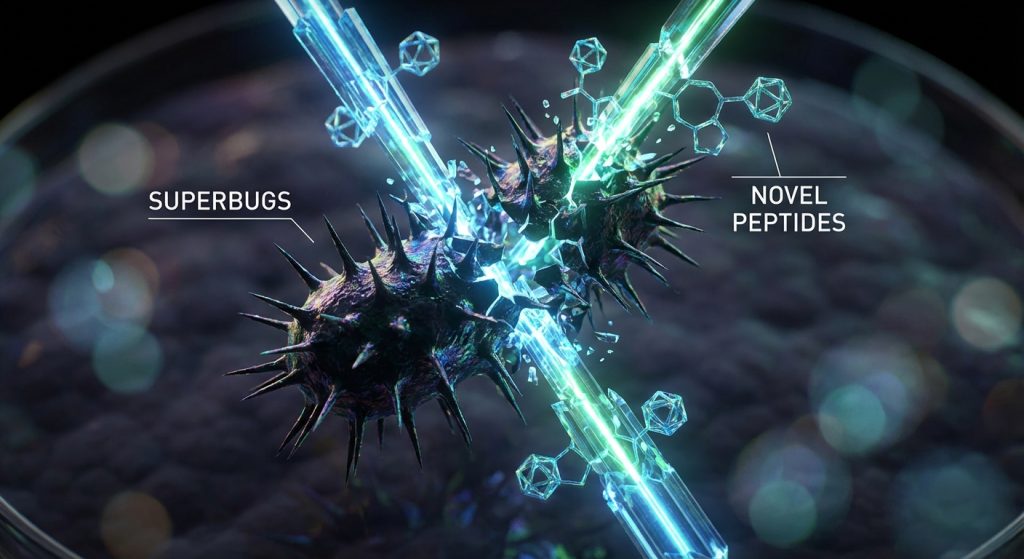
Antibiotic resistance is a growing global threat. It makes infections harder to treat. This is especially true for bacteria that are resistant to many drugs. Therefore, researchers are exploring new ways to fight these superbugs. Novel peptides are showing great promise. These small protein fragments offer unique mechanisms of action. They could be key to overcoming drug resistance.
The Challenge of Antibiotic Resistance
For decades, antibiotics have been essential. They save millions of lives each year. However, bacteria evolve. They develop ways to survive antibiotic treatments. This process is called antibiotic resistance. It leads to infections that are difficult or impossible to cure. As a result, common infections can become life-threatening again.
Several factors contribute to this crisis. Firstly, overuse and misuse of antibiotics in medicine and agriculture accelerate resistance. Secondly, a lack of new antibiotic development leaves us with fewer options. Moreover, the spread of resistant bacteria is a global concern. This is why finding new therapeutic strategies is urgent. Indeed, the World Health Organization lists antimicrobial resistance as one of the top global public health threats.
What Are Novel Peptides?
Peptides are short chains of amino acids. In contrast, proteins are longer chains. Novel peptides are specifically designed or discovered peptides. They have unique properties that make them effective against bacteria. Many of these peptides are naturally occurring. They are produced by various organisms, such as bacteria, fungi, and even plants. For example, antimicrobial peptides (AMPs) are part of the innate immune system of many species.
These peptides work in different ways than traditional antibiotics. Instead of targeting specific metabolic pathways, many peptides disrupt bacterial cell membranes. Thus, they can kill bacteria quickly. Furthermore, their mechanisms are often less prone to resistance development. This is a significant advantage. As a result, they represent a promising new class of therapeutics.
Mechanisms of Action for Peptide Therapeutics
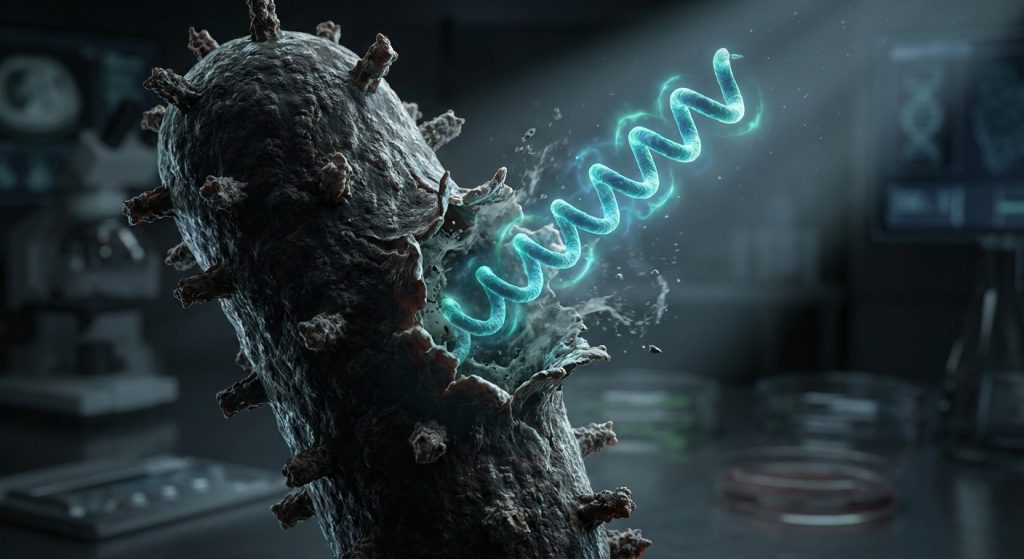
Peptides combat bacteria through several key mechanisms. One primary method is membrane disruption. Many antimicrobial peptides have a positive charge. They are attracted to the negatively charged bacterial cell membrane. Once attached, they insert themselves into the membrane. This creates pores. Consequently, the cell’s contents leak out, leading to cell death. This is a rapid and often bactericidal effect.
Another mechanism involves intracellular targets. Some peptides can enter the bacterial cell. Once inside, they can interfere with essential processes. This might include inhibiting DNA replication or protein synthesis. Additionally, certain peptides can modulate the host immune response. They can help recruit immune cells to the site of infection. Therefore, they can enhance the body’s own defense mechanisms. This dual action makes them very effective.
Advantages of Peptide-Based Therapies
Peptides offer several advantages over conventional antibiotics. One major benefit is their specificity. Many peptides target bacterial cells specifically. They do this by interacting with bacterial cell membrane components. As a result, they often have low toxicity to human cells. This reduces the risk of side effects.
Another advantage is their rapid action. Because they disrupt cell membranes, peptides can kill bacteria very quickly. This is crucial for treating severe infections. Furthermore, their unique modes of action mean that bacteria are less likely to develop resistance. Indeed, resistance to membrane-disrupting peptides is generally slow to emerge. This makes them a valuable tool against multidrug-resistant organisms.
Examples of Promising Peptide Candidates
Researchers are investigating many novel peptides. For instance, defensins are a class of naturally occurring AMPs. They play a vital role in the immune system. Scientists are modifying these natural peptides to improve their efficacy and stability. Another area of focus is synthetic peptides. These are peptides designed in the lab with specific properties. One such example is LL-37, a human cathelicidin peptide.
Moreover, researchers are exploring peptides derived from venom. Venoms often contain potent antimicrobial compounds. For example, melittin from bee venom has shown broad-spectrum activity. Of course, careful modification is needed to reduce toxicity. The field is rapidly advancing. New peptide scaffolds are being discovered and engineered constantly.
Challenges in Peptide Drug Development
Despite their promise, peptide therapeutics face challenges. One significant hurdle is their stability. Peptides can be degraded by enzymes in the body. This can limit their effectiveness and duration of action. Therefore, researchers are developing strategies to enhance peptide stability. This includes chemical modifications and encapsulation techniques. For example, using non-natural amino acids can improve resistance to enzymatic breakdown.
Another challenge is delivery. Getting peptides to the site of infection can be difficult. For systemic infections, intravenous administration is often required. However, for localized infections, topical or inhaled delivery might be possible. Furthermore, the cost of production can be a factor. Large-scale synthesis of peptides can be expensive. Nevertheless, ongoing research aims to make production more efficient.
Overcoming Delivery and Stability Issues
Scientists are employing innovative approaches to tackle these issues. For stability, researchers are exploring peptide cyclization. This involves forming a ring structure within the peptide. This can significantly increase resistance to degradation. Additionally, conjugating peptides to larger molecules, like polymers, can improve their half-life in the body. This is an active area of research.
Regarding delivery, nanotechnology offers solutions. Nanoparticles can encapsulate peptides. They can protect the peptide from degradation. They can also target specific tissues or cells. This improves efficacy and reduces systemic exposure. For example, liposomes or polymer-based nanoparticles are being investigated. These advances are crucial for translating peptide potential into clinical reality.
The Future of Peptide Therapies
The development of novel peptides is transforming the fight against superbugs. As traditional antibiotics lose their effectiveness, these new agents offer hope. They provide diverse mechanisms of action that bacteria struggle to overcome. Therefore, they are essential for our future arsenal. Moreover, their potential extends beyond bacterial infections. Peptides are also being explored for antiviral, antifungal, and even anticancer applications.
In conclusion, novel peptides represent a vital frontier in pharmaceutical research. Their ability to combat resistance mechanisms makes them invaluable. Further research and development will undoubtedly unlock their full therapeutic potential. Ultimately, this could lead to more effective treatments for a range of diseases. This work is critical for public health security.
Frequently Asked Questions
Are peptides safe for human use?
Many peptides are naturally part of the human body, like hormones and immune system components. Antimicrobial peptides, in particular, are designed to target bacterial cells, often with minimal impact on human cells. However, like any therapeutic, safety is rigorously assessed during clinical trials. Side effects are possible but often less severe than with some traditional antibiotics due to their targeted action.
How quickly do bacteria develop resistance to peptides?
Resistance development to peptides is generally slower than to conventional antibiotics. This is because many peptides disrupt the bacterial cell membrane, a fundamental structure that is difficult for bacteria to alter without compromising their own viability. However, it is not impossible, and ongoing surveillance is important.
Can peptides replace antibiotics entirely?
It is unlikely that peptides will entirely replace antibiotics in the near future. Instead, they are seen as a complementary strategy. They can be used alone for resistant infections or in combination with existing antibiotics to enhance their effectiveness and potentially reduce the development of further resistance. This combination approach is often referred to as antimicrobial stewardship.
What is the role of AI in discovering new peptides?
AI is playing a crucial role in accelerating peptide discovery. It can analyze vast datasets of genomic and proteomic information to identify potential peptide sequences. Furthermore, AI algorithms can predict the efficacy, toxicity, and stability of synthetic peptides. This speeds up the drug development pipeline considerably. You can learn more about AI’s accelerated path to new medicines.
Are there any peptide-based drugs currently approved for use?
Yes, several peptide-based drugs are already approved and in clinical use for various conditions, not just infections. Examples include insulin for diabetes and certain peptide hormones. The development of peptide-based antimicrobials is a more recent but rapidly progressing area. The success in other therapeutic areas demonstrates the viability of peptide drug modalities.
