
One Health: Integrating Approaches for Global Well-being
Published on January 20, 2026 by Admin
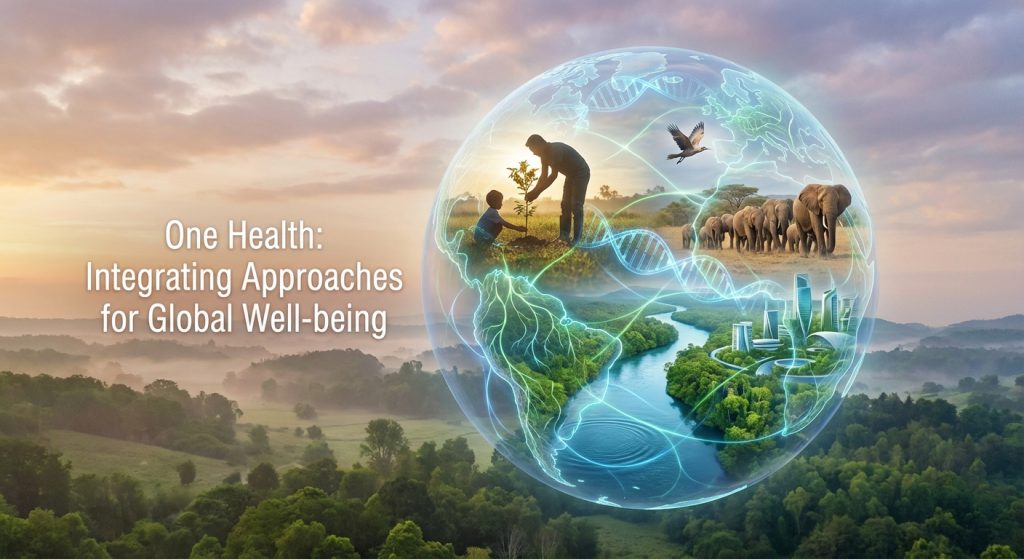
The world faces complex, interconnected challenges. These include emerging infectious diseases, antimicrobial resistance, climate change, and food insecurity. Therefore, a new paradigm is essential. This is the One Health approach. It recognizes that the health of people is closely linked to the health of animals and our shared environment. Furthermore, it calls for collaboration across disciplines. This integration is vital for effective policy-making and global health security.
Traditionally, health sectors operated in silos. Human health, animal health, and environmental health were often managed independently. However, this fragmentation is no longer sufficient. For instance, many new diseases affecting humans originate in animals. These are called zoonotic diseases. Additionally, environmental degradation can impact both animal and human health. Therefore, a unified strategy is crucial. The One Health approach provides this framework.

Understanding the Core Principles of One Health
At its heart, One Health is about synergy. It emphasizes that the well-being of each component affects the others. Thus, addressing a health issue in one area can positively impact the others. For example, controlling an outbreak of a disease in livestock can prevent its spread to humans. Moreover, protecting natural habitats helps maintain biodiversity. This, in turn, can reduce the risk of zoonotic spillover. Therefore, the approach is inherently holistic.
Key principles include:
- Interdisciplinarity: Bringing together experts from various fields. This includes physicians, veterinarians, ecologists, economists, and policymakers.
- Collaboration: Fostering strong partnerships between different sectors and organizations.
- Shared Responsibility: Recognizing that all stakeholders have a role to play.
- Risk Assessment and Mitigation: Proactively identifying and addressing potential threats.
- Data Sharing and Surveillance: Establishing robust systems for monitoring health trends across species and environments.
This integrated perspective is crucial for tackling global health crises. It moves beyond simply treating symptoms to addressing root causes. For instance, understanding how environmental AMR reservoirs contribute to the spread of resistant bacteria is vital. This requires collaboration between environmental scientists and public health officials.
The Urgency of One Health Integration
Several global trends highlight the need for One Health. The increasing human population leads to greater interaction with animals and ecosystems. This can create more opportunities for disease transmission. Also, climate change alters habitats. It forces species to migrate, potentially increasing contact between different animal populations and with humans. Consequently, the risk of novel pathogens emerging grows. For example, changes in weather patterns can affect vector-borne diseases.
Antimicrobial resistance (AMR) is another major threat. The overuse and misuse of antibiotics in humans and animals contribute to this crisis. Therefore, a One Health approach is essential to combat AMR effectively. It involves coordinated strategies for antibiotic stewardship in both human and veterinary medicine. Furthermore, it includes monitoring antibiotic use in agriculture. This comprehensive view is critical for preserving the effectiveness of these life-saving drugs. You can learn more about antibiotic resistance and new treatments.
Food security is also intrinsically linked to One Health. Sustainable agriculture practices are necessary to feed a growing global population. However, these practices must also consider animal welfare and environmental impact. For example, reducing antibiotic use in livestock production not only benefits animal health but also public health by curbing AMR. Similarly, protecting pollinators is crucial for crop yields.
Implementing One Health Strategies: Challenges and Opportunities
Integrating One Health principles into policy and practice is not without its challenges. Different sectors often have distinct mandates, funding streams, and regulatory frameworks. Bridging these divides requires significant effort. Building trust and fostering effective communication among diverse stakeholders is paramount. Moreover, developing common metrics and data-sharing platforms can be complex.
However, the opportunities are immense. A well-implemented One Health approach can lead to:
- More effective disease prevention and control: By addressing threats at their source.
- Improved public health outcomes: Reducing the burden of zoonotic diseases and AMR.
- Enhanced food safety and security: Through sustainable agricultural practices.
- Better environmental conservation: Protecting ecosystems benefits all species.
- Economic benefits: Reducing the costs associated with disease outbreaks and healthcare.
For instance, strengthening global AMR surveillance is a key opportunity. This allows for early detection of resistance patterns. It informs targeted interventions. Furthermore, it helps track the movement of resistant pathogens across borders.
Policy Recommendations for Global Policymakers
Global policymakers play a pivotal role in championing and facilitating the One Health approach. Several actionable recommendations can guide their efforts.
Strengthening Governance and Coordination
Firstly, establish high-level coordination mechanisms. These should bring together relevant government ministries and agencies. This ensures alignment of policies and programs. For example, a national One Health task force can be instrumental. It can oversee the implementation of integrated strategies.
Secondly, develop enabling legislation and policies. These should support cross-sectoral collaboration. They should also incentivize One Health practices. Furthermore, regulatory frameworks need to be harmonized where possible.
Investing in Capacity Building and Research
Moreover, invest in training and education. This is crucial for building a skilled One Health workforce. It includes training in epidemiology, veterinary medicine, environmental science, and public health. Additionally, support research that explores the complex interactions between human, animal, and environmental health. Research into areas like horizontal gene transfer can reveal new risks.
Furthermore, promote innovation in diagnostics and surveillance. Technologies like AI-driven disease detection and rapid point-of-care diagnostics are invaluable. These tools can help in early detection and response.
Promoting Public Awareness and Engagement
Crucially, raise public awareness about the One Health concept. Educate communities about their role in promoting health for all. This includes promoting responsible pet ownership and safe food handling. It also involves encouraging sustainable environmental practices. Public engagement is key to successful implementation.
Finally, foster international cooperation. Share best practices and lessons learned across countries. Support developing nations in building their One Health capacities. This global solidarity is essential for tackling shared threats.
Case Studies: One Health in Action
Several successful initiatives demonstrate the power of the One Health approach. For instance, the global effort to combat Avian Influenza (Bird Flu) has been a significant One Health undertaking. It involves close collaboration between veterinary services, public health agencies, and international organizations. This collaboration has been vital in monitoring outbreaks in poultry and preventing human transmission. Continued vigilance is essential to prevent the next pandemic, as highlighted in articles about Avian Flu surveillance.
Another example is the integrated management of Vector-Borne Diseases. These diseases, such as Malaria and Dengue Fever, are influenced by environmental factors, animal hosts, and human behavior. A One Health strategy addresses these interconnected elements. It involves environmental management to control mosquito breeding grounds. It also includes public health campaigns to prevent human exposure. Furthermore, it considers the impact of climate change on disease distribution.
Efforts to reduce antimicrobial resistance also showcase One Health in practice. Initiatives like livestock antibiotic reduction programs are critical. They aim to decrease the overall use of antibiotics in agriculture. This helps slow the development of resistant bacteria. It also protects human health by reducing the circulation of resistant strains in the food chain.
The Future of One Health
Looking ahead, the One Health approach will become even more critical. As our world becomes more interconnected and environmental pressures increase, the threats to our collective health will evolve. Therefore, embracing this integrated perspective is not just a recommendation; it is a necessity for survival and prosperity.
Continued investment in research and innovation is vital. This includes exploring novel approaches to disease surveillance and treatment. For example, advancements in nanotechnology for antibiotic delivery hold promise. So does the development of synthetic biology solutions against superbugs.
Ultimately, the success of the One Health approach depends on a fundamental shift in thinking. It requires us to see ourselves not as separate from nature, but as an integral part of it. By working together, across disciplines and borders, we can build a healthier future for all. This includes not only humans but also the animals we share the planet with and the environment that sustains us. The One Health approach is the pathway to achieving this shared goal.
Frequently Asked Questions (FAQ)
What is the main goal of the One Health approach?
The main goal of the One Health approach is to improve, preserve, and restore health for people, animals, and the environment. It seeks to achieve this by fostering collaboration between different sectors and disciplines.
Why is the One Health approach important for global health security?
It is important because many emerging health threats, like pandemics, originate at the interface between humans, animals, and the environment. By addressing these threats holistically, we can prevent outbreaks and mitigate their impact more effectively.
How does environmental health relate to human and animal health in the One Health framework?
Environmental health is a cornerstone of One Health. A degraded environment can harbor pathogens, increase exposure to toxins, and disrupt ecosystems, all of which negatively impact both human and animal health. For example, deforestation can increase zoonotic disease risk.
What are some practical examples of One Health in action?
Practical examples include coordinated efforts to combat zoonotic diseases like rabies or influenza, integrated strategies for managing antimicrobial resistance across human and animal health sectors, and research into the impact of climate change on disease patterns.
What challenges do policymakers face when implementing One Health strategies?
Challenges include overcoming institutional silos, securing adequate and coordinated funding, harmonizing diverse regulatory frameworks, and building effective communication and trust among various stakeholders from different sectors.
