Lab on a Chip: Revolutionizing Diagnostics Today
Published on January 21, 2026 by Admin
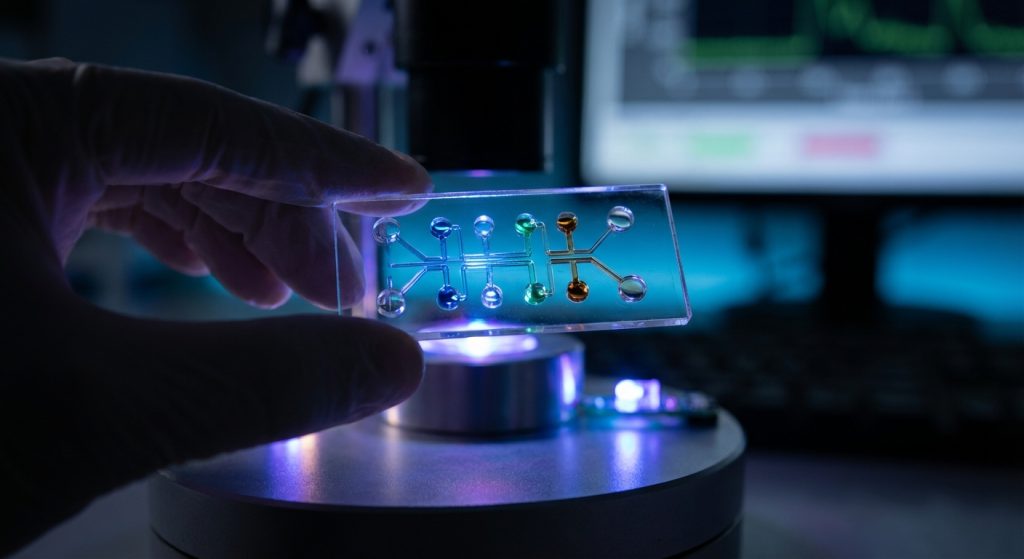
Lab on a chip (LOC) technology is changing how we diagnose diseases. These tiny devices shrink a full laboratory onto a small chip. This makes diagnostics faster, cheaper, and more accessible. Therefore, LOC devices offer significant advantages over traditional lab methods. They are especially useful in point-of-care settings and remote areas.
These microfluidic devices precisely control tiny volumes of fluids. This precision allows for complex biological assays. Consequently, they can perform tests that once required large, expensive equipment. This innovation is a game-changer for healthcare and research. It promises earlier disease detection and more personalized treatments.
What is Lab on a Chip Technology?
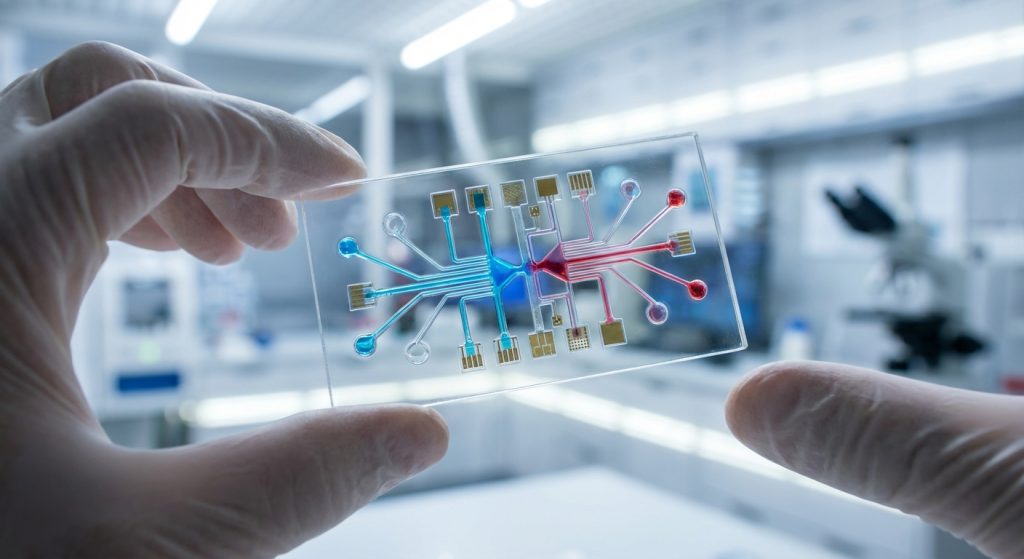
Lab on a chip, also known as microfluidics or micrototal analysis systems (μTAS), integrates multiple laboratory functions onto a single chip. These functions include sample preparation, mixing, separation, and detection. Therefore, they perform these processes using micro-scale channels and chambers.
The chips are typically made from materials like glass, silicon, or polymers. These materials offer excellent chemical resistance and optical properties. Furthermore, the small scale of these devices means they use very little sample and reagent. This leads to reduced costs and waste. In essence, it’s a miniaturized, automated laboratory.
Key Components of LOC Devices
Several key components work together in a LOC device. These include:
- Microchannels: These are tiny pathways that guide the flow of fluids. Their size ranges from micrometers to millimeters.
- Chambers/Wells: These are small reservoirs for holding samples or reagents.
- Pumps and Valves: These control the movement and mixing of fluids. They can be integrated or external.
- Detection Systems: These analyze the results of the assays. This can involve optical, electrochemical, or other sensing methods.
The integration of these components allows for automated and streamlined diagnostic processes. As a result, it minimizes human error and increases reproducibility.
The Power of Microfluidics in Diagnostics
Microfluidics is the science and technology of manipulating and controlling fluids at a small scale. In LOC devices, microfluidics is the driving force. It allows for precise handling of minuscule fluid volumes, often in the nanoliter or picoliter range. This precision is crucial for many diagnostic applications.
For instance, analyzing rare biomarkers requires concentrating them from a large sample volume. Microfluidic techniques can efficiently perform this concentration. Moreover, they enable faster reaction kinetics due to shorter diffusion distances. Consequently, this leads to quicker test results. You can learn more about related advancements in rapid diagnostics.
Advantages Over Traditional Methods
LOC technology offers several compelling advantages. Firstly, it requires minimal sample volume. This is a significant benefit when dealing with precious samples like blood or cerebrospinal fluid. Secondly, LOC devices are often portable and battery-powered. This makes them ideal for point-of-care testing. As a result, diagnosis can happen directly at the patient’s bedside or in remote clinics.
Furthermore, the reduced reagent consumption lowers the cost per test. This affordability is essential for widespread adoption, especially in resource-limited settings. Additionally, the automation inherent in LOC systems reduces the need for highly trained personnel. This democratizes access to advanced diagnostics. The speed of analysis is also much faster, often providing results in minutes rather than hours or days.
Applications of Lab on a Chip in Healthcare
The applications of LOC technology in healthcare are vast and growing. They span from infectious disease detection to chronic disease management and cancer diagnostics. Therefore, these devices are transforming various medical fields.
Infectious Disease Detection
Detecting infectious agents quickly is critical for effective treatment and preventing outbreaks. LOC devices can rapidly identify pathogens like bacteria, viruses, and fungi. For example, a chip can be designed to detect specific DNA or RNA sequences unique to a pathogen. This allows for early diagnosis and targeted therapy.
This is particularly important for diseases where rapid intervention is key, such as sepsis or influenza. The ability to perform tests at the point of care means treatment can begin immediately. This can significantly improve patient outcomes and reduce the spread of infection. This ties into the broader fight against antimicrobial resistance, an area where new treatment strategies are urgently needed.
Cancer Diagnostics
Early cancer detection significantly improves prognosis. LOC devices are being developed to detect circulating tumor cells (CTCs) or specific cancer biomarkers in blood. CTCs are cancer cells that have broken away from a primary tumor. Their presence in the bloodstream can indicate metastasis.
By isolating and analyzing these cells on a chip, doctors can gain valuable information about the cancer’s stage and aggressiveness. This can guide treatment decisions. Moreover, liquid biopsies, which use LOC technology to analyze blood for cancer DNA, are a rapidly advancing field. These offer a less invasive alternative to traditional tissue biopsies. You can find more on liquid biopsies for early cancer detection.
Chronic Disease Management
Managing chronic conditions like diabetes, heart disease, and HIV requires regular monitoring. LOC devices can be used for frequent, at-home monitoring of key health indicators. For instance, glucose monitoring for diabetics can be made easier and more accurate. Similarly, monitoring viral load for HIV patients can be done conveniently outside a clinic.
This continuous monitoring provides a more comprehensive picture of a patient’s health. It allows for timely adjustments to treatment plans. As a result, it helps patients maintain better control over their conditions. Wearable biosensors, a related technology, also offer continuous monitoring for chronic disease prevention. This represents a significant shift towards proactive healthcare.
The Technology Behind Lab on a Chip
The development of LOC technology relies on advancements in microfabrication techniques. These techniques allow for the precise creation of the microscopic features on the chips. Fabrication methods vary depending on the chosen chip material.
Microfabrication Techniques
Common fabrication methods include photolithography, etching, and molding. Photolithography uses light to transfer a pattern onto a substrate. Etching then removes material to create the desired microchannels. For polymer-based chips, techniques like injection molding or hot embossing are frequently used.
These processes require specialized equipment and expertise. However, they enable the mass production of complex microfluidic devices. The choice of material and fabrication method impacts the cost, performance, and scalability of the LOC system. For instance, silicon and glass offer high precision but can be more expensive. Polymers are generally cheaper and easier to fabricate but might have limitations in chemical resistance or optical clarity.
Integration of Sensors and Electronics
For a LOC device to be fully functional, it needs to integrate sensors and electronics. These components are responsible for detecting the results of the assay and processing the data. Sensors can be optical, electrochemical, or mechanical. They are often embedded directly into the chip during fabrication or bonded to the chip surface.
Electronics are used to control the device’s operation, acquire data from the sensors, and communicate the results. In many cases, these electronics are external to the chip. However, there is a growing trend towards integrating electronics onto the chip itself. This further miniaturizes the system and enhances its portability. This integration is key to creating truly autonomous diagnostic systems.
Challenges and Future Directions
Despite its immense potential, LOC technology faces several challenges. These include scaling up production, ensuring robust performance in real-world conditions, and regulatory approval. However, the future of LOC devices looks incredibly promising.
Manufacturing and Scalability
Mass production of LOC devices at an affordable cost remains a hurdle. Developing standardized, high-throughput manufacturing processes is crucial. This will enable widespread adoption. Furthermore, ensuring batch-to-batch consistency is vital for reliable diagnostics. As the technology matures, these manufacturing challenges are being addressed through innovative approaches.
Regulatory Hurdles and Standardization
Gaining regulatory approval for novel medical devices can be a lengthy and complex process. Establishing clear standards for LOC device performance and safety is necessary. This will streamline the approval process and build trust among healthcare providers and patients. International collaboration on standardization efforts is key to global market access.
Future Innovations
The future of LOC technology is exciting. Researchers are exploring novel materials, advanced sensing techniques, and artificial intelligence integration. For example, integrating AI could allow LOC devices to perform complex data analysis and provide more sophisticated diagnostic insights. This could lead to truly personalized medicine, where diagnostics are tailored to an individual’s specific genetic makeup and health status. The synergy between microfluidics and AI promises a new era in diagnostics, much like the impact of AI in drug discovery.
Furthermore, the development of fully integrated, self-powered LOC systems will enhance their autonomy and ease of use. This will make advanced diagnostics accessible even in the most remote locations on Earth. The ongoing advancements in microfabrication and sensor technology are paving the way for increasingly sophisticated and versatile diagnostic tools.
Conclusion
Lab on a chip technology represents a significant leap forward in diagnostics. Its ability to miniaturize complex laboratory processes onto a small chip offers unprecedented advantages. These include speed, affordability, and accessibility. Therefore, LOC devices are poised to revolutionize healthcare delivery. They promise earlier disease detection, more personalized treatments, and improved health outcomes for people worldwide.
As research and development continue, we can expect even more innovative applications of this transformative technology. The integration of microfluidics with other cutting-edge fields like AI and advanced materials science will undoubtedly shape the future of diagnostics. Ultimately, this will lead to a healthier and more equitable future for all.
Frequently Asked Questions
What is the main benefit of Lab on a Chip technology?
The main benefit is miniaturization. It allows complex lab tests to be performed on a small chip, making diagnostics faster, cheaper, and more portable.
What kind of samples can be used with Lab on a Chip devices?
LOC devices can typically use very small volumes of various biological samples, including blood, urine, saliva, and other bodily fluids.
Are Lab on a Chip devices expensive?
While initial development can be costly, the mass production of LOC devices aims to significantly reduce the cost per test compared to traditional laboratory methods. This makes them more affordable in the long run.
What are some common applications of Lab on a Chip technology?
Common applications include infectious disease detection, cancer diagnostics, monitoring of chronic diseases like diabetes, and drug discovery research.
What is microfluidics?
Microfluidics is the science and technology of manipulating and controlling fluids at a very small scale, typically in channels with dimensions from micrometers to millimeters. It is the core principle behind Lab on a Chip devices.