Bacterial Efflux Pumps: New Battlegrounds in Antimicrobial Warfare
Published on January 21, 2026 by Admin

The rise of antimicrobial resistance (AMR) poses a grave global threat. Bacteria are developing new ways to survive our best drugs. One critical defense mechanism is the efflux pump. These pumps actively expel antibiotics from bacterial cells. Therefore, understanding and targeting them is vital. This article explores bacterial efflux pump blockers. It discusses their mechanisms, potential, and challenges. We will also look at future directions in this critical field.
The Problem of Bacterial Efflux Pumps
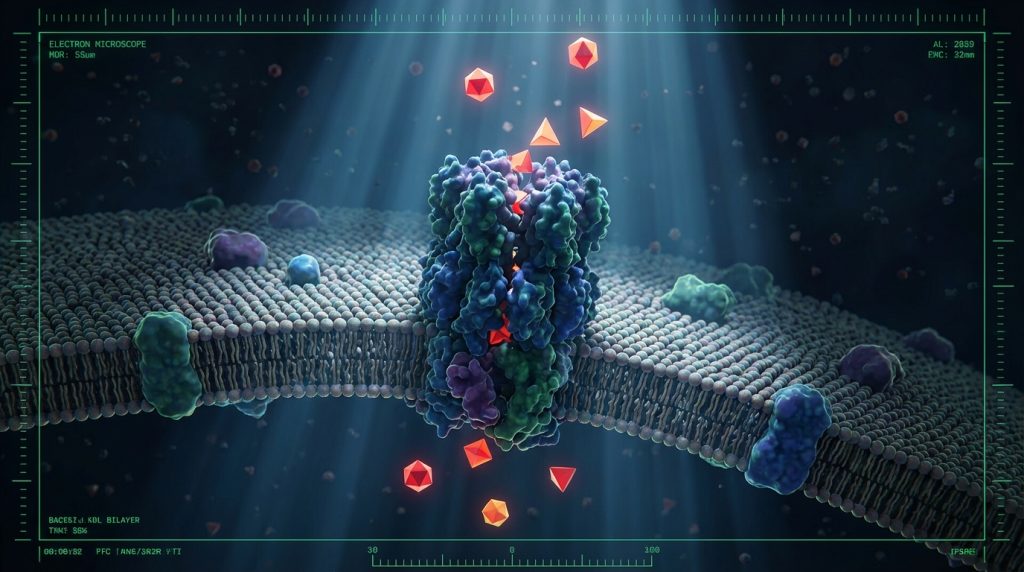
Bacterial cells possess natural defense systems. Efflux pumps are a prime example. They are transmembrane proteins. Their function is to transport substances out of the cell. This includes nutrients, toxins, and even antibiotics. Many bacteria have multiple efflux pumps. Some are specific to certain compounds. Others have broad substrate ranges. This broad-spectrum activity makes them a significant challenge.
When bacteria are exposed to antibiotics, efflux pumps become crucial. They can pump out the drug before it reaches its target. This significantly reduces the drug’s effectiveness. As a result, infections become harder to treat. This contributes directly to AMR. The World Health Organization (WHO) highlights AMR as a major public health crisis. The economic burden of resistance is substantial, impacting healthcare systems globally.
Several classes of efflux pumps exist. These include the Major Facilitator Superfamily (MFS) and the Resistance-Nodulation-Division (RND) superfamily. Each class has distinct structures and mechanisms. However, their ultimate effect is the same: reducing intracellular drug concentration.
Mechanisms of Efflux Pump Blockers
Bacterial efflux pump blockers, or inhibitors (EPIs), work in several ways. They aim to neutralize the pump’s activity. This allows antibiotics to remain inside the cell. Consequently, the antibiotic can then kill the bacteria. Therefore, EPIs are often used in combination with existing antibiotics.
Here are some key mechanisms:
- Competitive Inhibition: Some blockers bind to the pump’s substrate-binding site. This prevents the antibiotic from entering the pump. Thus, the pump cannot expel it.
- Allosteric Inhibition: Other blockers bind to a different site on the pump. This changes the pump’s shape. As a result, its function is disrupted.
- Energy Depletion: Many efflux pumps require cellular energy to function. Some compounds can interfere with this energy supply. This indirectly inhibits the pump.
- Interference with Assembly: Some novel approaches target the proteins involved in building the efflux pump. Preventing their assembly renders the pump non-functional.
The development of EPIs is a complex process. Researchers must find compounds that are effective against specific pumps. Furthermore, they must have low toxicity to human cells. This is a significant hurdle.
Types of Efflux Pump Inhibitors
Researchers have explored various classes of compounds as EPIs. These range from natural products to synthetic molecules. For instance, some plant-derived compounds show promise. Others are based on known pharmaceutical structures.
Some notable examples include:
- Reserpine derivatives: These compounds have been studied for their ability to inhibit certain efflux pumps.
- Piperaquine: This antimalarial drug has shown efflux pump inhibitory activity against some bacteria.
- Quaternary ammonium compounds: These have been investigated for their broad-spectrum antimicrobial and efflux pump inhibitory properties.
- Peptide-based inhibitors: Novel peptides are being designed to specifically target efflux pump mechanisms.
Additionally, researchers are looking into compounds that disrupt bacterial communication systems. For example, quorum sensing inhibitors can also affect efflux pump expression and function. This presents a multi-pronged attack strategy.
The Role of Efflux Pump Blockers in Combating Superbugs
Superbugs, or multidrug-resistant bacteria, are a growing concern. They can withstand multiple antibiotics. This makes infections extremely difficult to manage. Efflux pumps are a major contributor to this resistance. Therefore, blocking these pumps is a logical strategy.
When an antibiotic is used with an EPI, the antibiotic can work again. This is a form of drug repurposing or combination therapy. It can potentially revive older antibiotics. It can also make current antibiotics more effective. This is crucial for treating infections caused by resistant strains.
Moreover, EPIs might slow down the development of new resistance. By reducing the selective pressure from antibiotics, bacteria may not evolve resistance as quickly. This buys valuable time for developing new drugs. The fight against superbugs requires a multifaceted approach. Efflux pump blockers are a key component of this strategy.
Challenges in Developing Efflux Pump Blockers
Despite the promise, developing effective EPIs faces significant challenges. One major hurdle is specificity. Bacteria have many different efflux pumps. A blocker needs to be effective without harming the host. Therefore, finding compounds that target specific bacterial pumps is difficult.
Another challenge is the potential for resistance to develop against the blockers themselves. Bacteria are adept at evolving. They might develop mutations that make the pumps resistant to the inhibitors. This means that ongoing research is essential to stay ahead of bacterial adaptation.
Furthermore, the pharmacokinetics and pharmacodynamics of EPIs need careful consideration. They must be stable in the body. They must also reach the site of infection in sufficient concentrations. Delivering these drugs effectively is also a concern. For example, nanotechnology offers potential solutions for targeted drug delivery.
Finally, the cost of developing new drugs is high. The market for EPIs, often used in combination, may also present economic challenges for pharmaceutical companies.
Future Directions and Innovations
The field of efflux pump blockers is rapidly evolving. Researchers are employing new technologies and approaches. For instance, advances in genomics and bioinformatics help identify novel pump targets. Machine learning and artificial intelligence are also accelerating drug discovery. These tools can predict potential EPIs and optimize their design.
Synthetic biology offers another avenue. Scientists can engineer bacteria or other organisms to produce novel EPIs. This approach leverages nature’s own mechanisms for combating pathogens. Also, exploring natural sources for new compounds remains important. Many undiscovered molecules with potential EPI activity exist in environments like microbial dark matter and soil microbes.
Combinatorial approaches are also gaining traction. This involves developing synergistic drug combinations. These might include EPIs, antibiotics, and other antimicrobial agents. Such strategies could provide more robust and durable treatments. For example, targeting biofilms, which often harbor bacteria with high efflux pump activity, is crucial. Strategies to tackle biofilms are vital in this context.
The concept of “One Health” is also relevant. This approach recognizes the interconnectedness of human, animal, and environmental health. Understanding how efflux pumps operate across different species and environments can lead to more effective global strategies for AMR control. This aligns with initiatives for integrating approaches for global well-being.
Frequently Asked Questions (FAQ)
What exactly is an efflux pump in bacteria?
An efflux pump is a protein embedded in the bacterial cell membrane. It actively transports substances, including antibiotics, out of the cell. This helps bacteria survive exposure to toxic compounds.
How do bacterial efflux pump blockers help fight infections?
These blockers prevent efflux pumps from expelling antibiotics. This allows antibiotics to accumulate inside the bacterial cell. Therefore, the antibiotic can reach its target and kill the bacterium.
Are efflux pump blockers used alone or with antibiotics?
Efflux pump blockers are typically used in combination with antibiotics. They enhance the effectiveness of existing antibiotics. This strategy helps overcome drug resistance.
What are the main challenges in developing these blockers?
Key challenges include achieving specificity for bacterial pumps, avoiding toxicity to human cells, and preventing bacteria from developing resistance to the blockers themselves.
Can efflux pump blockers revive old antibiotics?
Yes, they can potentially revive older antibiotics that have become less effective due to resistance mechanisms like efflux pumps. This combination therapy can restore their therapeutic value.
Conclusion
Bacterial efflux pumps represent a formidable obstacle in the fight against infectious diseases. However, efflux pump blockers offer a promising avenue. By inhibiting these pumps, we can restore the efficacy of existing antibiotics. Furthermore, we can potentially slow the emergence of new resistance. The development of novel EPIs requires continued research and innovation. Therefore, a multidisciplinary approach is essential. This includes exploring new chemical entities, leveraging advanced technologies, and adopting integrated strategies like “One Health”. Ultimately, targeting efflux pumps is a critical step towards a future where we can effectively combat superbugs.