
Asteroid Mining: Unearthing Earth’s Future Riches
Published on February 4, 2026 by Admin
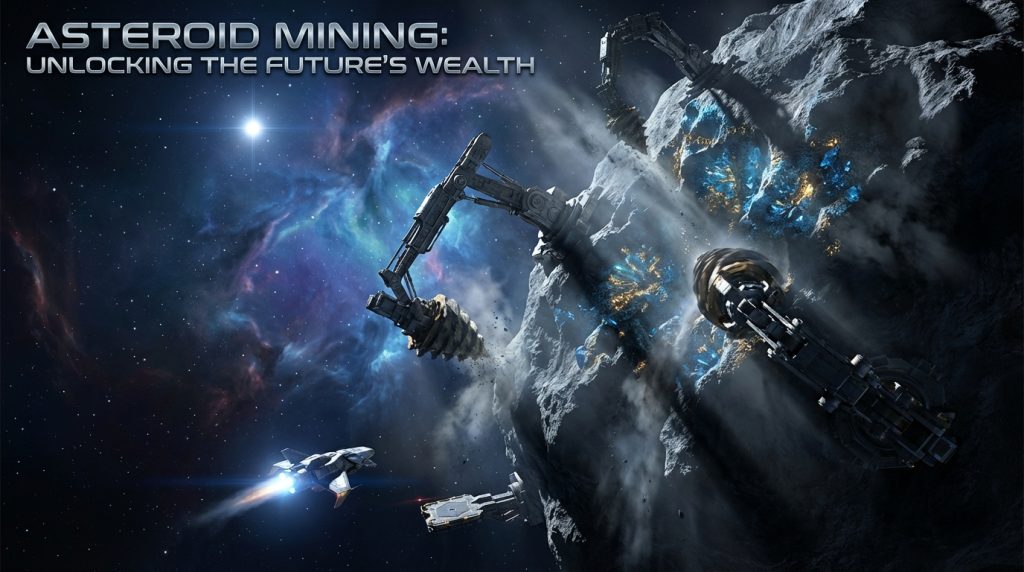
The vastness of space holds immense potential. Asteroids, in particular, are seen as cosmic treasure chests. They are rich in valuable resources. This has sparked interest in asteroid mining. It promises a new era of resource extraction. This could reshape our economy and future. Let’s explore this exciting frontier.
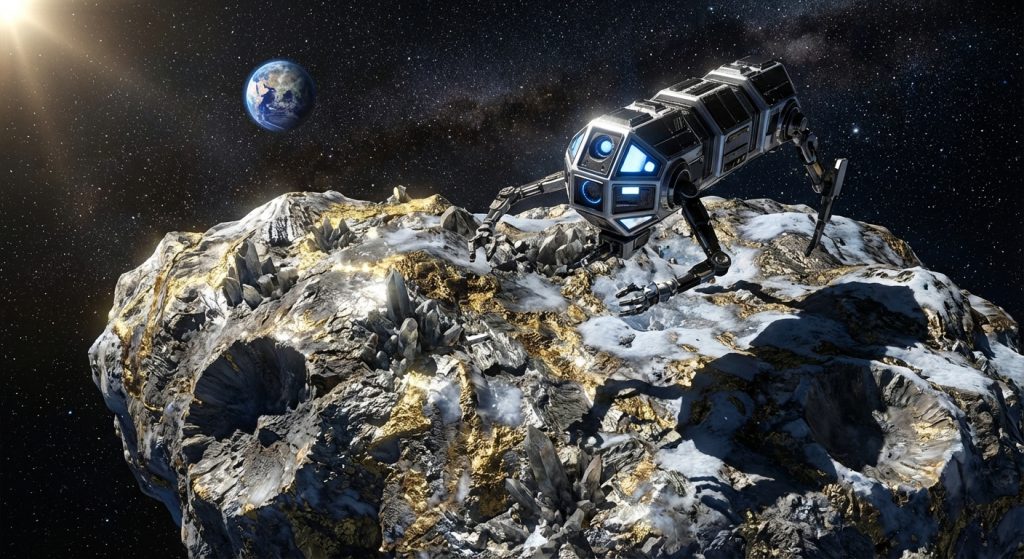
Why Mine Asteroids?
Earth’s resources are finite. We are consuming them rapidly. Finding new sources is crucial for sustainability. Asteroids offer a compelling solution. They contain abundant precious metals. Platinum-group metals are key examples. These are vital for technology and industry. Rare earth elements are also found there. These are essential for electronics. Furthermore, water ice is present. This is crucial for life support and rocket fuel.
Precious Metals and Rare Earths
Many asteroids are rich in platinum, gold, and palladium. These metals are incredibly valuable on Earth. They are used in catalytic converters. They are also vital for electronics and jewelry. Mining them in space could reduce scarcity. It could also lower prices. This would benefit many industries. Rare earth elements are also abundant. These are critical for magnets, batteries, and lasers. Their terrestrial supply is concentrated and often contentious. Space mining offers diversification.
Water: The In-Situ Resource Revolution
Water is often called the “new oil” for space exploration. Asteroids contain significant amounts of water ice. This is a game-changer. Water can be used for drinking and growing food. More importantly, it can be split into hydrogen and oxygen. These are the components of rocket fuel. This means spacecraft could refuel in space. They wouldn’t need to carry all their fuel from Earth. This drastically reduces launch costs. It enables deeper space exploration. Therefore, water ice is a primary target for early missions.
Types of Asteroids and Their Resources
Not all asteroids are created equal. Scientists classify them based on their composition. This helps predict their resource potential. Understanding these types is key for targeting mining efforts.
C-Type Asteroids
These are the most common type. They make up about 75% of asteroids. C-type asteroids are carbonaceous. They are rich in water and organic compounds. They also contain silicates and metals. Their water content makes them attractive targets. They are essentially icy bodies. Therefore, they are a prime candidate for water extraction.
S-Type Asteroids
These are stony asteroids. They are made of silicate minerals. They also contain metals like iron and nickel. S-type asteroids are less common than C-types. However, they can be rich in metals. This includes platinum-group metals. As a result, they are highly sought after for their metallic content.
M-Type Asteroids
These are metallic asteroids. They are composed primarily of iron and nickel. They may also contain precious metals. M-type asteroids are believed to be the cores of differentiated planetesimals. These are remnants of early solar system formation. Because of their composition, they are considered the richest in pure metals.
The Technology and Challenges of Asteroid Mining
While the potential is enormous, asteroid mining faces significant hurdles. Developing the necessary technology is a major undertaking. The harsh environment of space presents unique challenges.
Extraction Techniques
Several methods are being considered. One approach involves robotic excavators. These would break up the asteroid’s surface. Another idea is to use nets or tethers. These could capture smaller asteroids. Then, they could be brought closer to a processing facility. For larger asteroids, more complex techniques might be needed. These could involve drilling or even vaporizing material. Consequently, a variety of tools will be required.
Robotics and AI
Human presence in deep space is expensive and risky. Therefore, robotic systems are essential. Advanced AI will be needed. This will enable autonomous operation. Robots will need to navigate complex terrain. They must also perform delicate extraction tasks. Furthermore, they need to process raw materials. This requires sophisticated programming and sensors. The development of these autonomous systems is ongoing.
Spacecraft and Propulsion
Reaching asteroids requires advanced spacecraft. Efficient propulsion systems are vital. Current chemical rockets are slow and costly for long-distance travel. New technologies like ion propulsion or solar sails are being developed. These offer greater efficiency for long missions. Also, spacecraft must be robust. They need to withstand the vacuum and radiation of space. Therefore, materials science plays a crucial role.
Economic Viability
The cost of developing and deploying asteroid mining operations is immense. Proving economic viability is critical. The return on investment must be clear. This depends on the value of extracted resources. It also depends on the efficiency of extraction. Early missions might focus on high-value materials. This could help offset initial costs. As technology improves, the economics will become more favorable. This is similar to how early terrestrial mining was challenging.
The Future of Space Resources
Asteroid mining is not just about bringing resources back to Earth. It’s also about enabling further space exploration and development. It could lead to orbital manufacturing. It could also support the creation of space-based infrastructure.
In-Space Manufacturing and Construction
Resources mined from asteroids can be used in space. This could include building satellites. It could also involve constructing larger structures like space stations or telescopes. Manufacturing in space reduces the need for costly launches from Earth. Therefore, it’s a key enabler of a space-based economy. This aligns with the principles of sustainable resource utilization.
Supporting Lunar and Martian Bases
Future human settlements on the Moon or Mars will require vast resources. Asteroid mining could supply these bases. Water ice from asteroids could be transported. It could provide essential life support. It could also fuel missions between celestial bodies. This reduces reliance on Earth-based supply chains. It makes long-term habitation more feasible. The concept of using local resources is known as ISRU (In-Situ Resource Utilization).
The Broader Economic Impact
A successful asteroid mining industry could transform global markets. It could create new industries and jobs. It could also lead to breakthroughs in materials science and engineering. Furthermore, it could foster international cooperation. This venture requires global collaboration. Thus, it could drive innovation across many sectors. It opens up possibilities previously confined to science fiction. This is akin to how advancements in agriculture have historically changed societies.
Ethical and Legal Considerations
As with any new frontier, asteroid mining brings ethical and legal questions. Who owns space resources? How do we ensure equitable access? These issues need careful consideration.
Ownership and Regulation
Current international space law is not fully equipped to handle resource extraction. The Outer Space Treaty states that space is the province of all mankind. However, it doesn’t explicitly address resource ownership. New frameworks are needed. These must balance commercial interests with the common good. International cooperation will be vital to establish clear rules. This will prevent conflict and ensure responsible development. We must learn from the challenges faced in ethical mining practices on Earth.
Environmental Impact in Space
While space seems vast, we must consider its preservation. Mining operations should minimize their impact. This includes avoiding orbital debris. It also means considering the long-term effects on celestial bodies. Responsible practices are paramount. We must ensure that our expansion into space is sustainable. This is a critical responsibility for future generations.
Conclusion
Asteroid mining represents a bold vision for the future. It offers a path to abundant resources. It could fuel human expansion into the solar system. While challenges remain, technological advancements are bringing this future closer. The potential rewards are immense. They extend beyond mere profit to enabling a new era of discovery and prosperity. Therefore, continued research and investment are crucial. The cosmos awaits our ingenuity. The journey to harness its riches has just begun.
Frequently Asked Questions (FAQ)
When might asteroid mining become a reality?
While the exact timeline is uncertain, many experts believe we could see initial prospecting and small-scale extraction missions within the next 10-20 years. Full-scale commercial operations may take longer, perhaps 30-50 years, as the technology matures and economic models are proven.
What are the biggest challenges to asteroid mining?
The primary challenges include the immense cost of space missions, developing reliable and autonomous robotic systems for extraction and processing, the vast distances involved, and the lack of a clear international legal framework for space resource ownership. Moreover, ensuring the economic viability of such ventures is a significant hurdle.
Which resources are most sought after from asteroids?
The most sought-after resources include platinum-group metals (like platinum, palladium, and rhodium), rare earth elements, and water ice. Water is particularly valuable as it can be used for life support and rocket propellant, enabling further space exploration.
Will asteroid mining benefit Earth directly?
Yes, asteroid mining could benefit Earth directly by increasing the supply of rare and precious metals, potentially lowering their prices and making them more accessible for various industries. It could also alleviate pressure on Earth’s finite resources, promoting sustainability. Furthermore, it could drive technological innovation that has terrestrial applications.
Are there any existing companies working on asteroid mining?
Yes, several companies and organizations are actively involved in research and development related to asteroid mining. These include companies like AstroForge, OffWorld, and ispace, as well as space agencies like NASA and ESA, which are conducting missions that lay the groundwork for future resource utilization.
