

The COVID-19 pandemic thrust mRNA technology into the global spotlight. However, its potential extends far beyond infectious disease prevention. This revolutionary platform is poised to transform medicine. Indeed, smart vaccines leveraging mRNA are emerging. They promise new avenues for treating cancer, autoimmune diseases, and genetic disorders. Let’s explore this exciting evolution.
The Foundation: How mRNA Technology Works
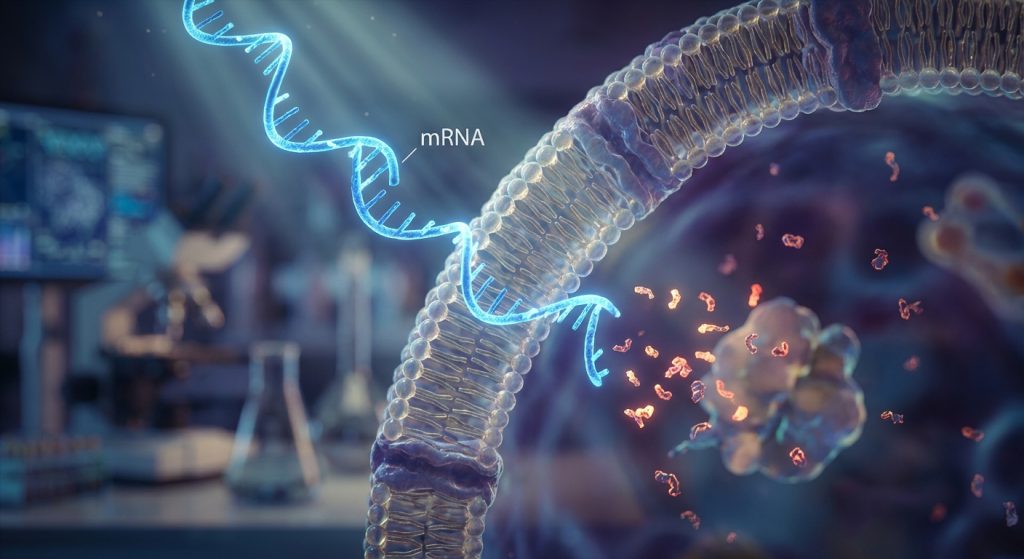
Messenger RNA (mRNA) acts as a temporary instruction manual for our cells. It tells them how to build specific proteins. Conventional vaccines often use weakened or inactivated pathogens. In contrast, mRNA vaccines deliver a genetic blueprint. This blueprint instructs cells to produce a harmless piece of a virus or pathogen. Our immune system then learns to recognize and fight it. This process is highly adaptable.
The beauty of mRNA lies in its flexibility. Scientists can quickly design and manufacture mRNA sequences. These sequences can target virtually any protein. Therefore, the applications are vast. It’s a significant leap from older vaccine technologies. This adaptability is key to its future potential.
Beyond Infectious Diseases: New Frontiers
The success against COVID-19 was just the beginning. Researchers are now applying mRNA technology to a range of other diseases. This includes challenging conditions that have long eluded effective treatments. The adaptability of mRNA is its greatest strength here.
Cancer Immunotherapy
Cancer is often characterized by uncontrolled cell growth. These cells can evade the immune system. mRNA vaccines offer a novel approach. They can be designed to teach the immune system to identify and attack cancer cells. Specifically, they can instruct the body to produce tumor-specific antigens. These are proteins found on cancer cells. As a result, the immune system can mount a targeted response. This is a form of personalized medicine.
Clinical trials are already underway for various cancers. These include melanoma, pancreatic cancer, and lung cancer. Early results are promising. They suggest a future where cancer treatment is more precise and less toxic. This approach could revolutionize oncology. It offers hope for previously untreatable conditions.
Autoimmune Diseases
Autoimmune diseases occur when the immune system mistakenly attacks healthy tissues. Examples include type 1 diabetes and rheumatoid arthritis. Traditionally, treatments focus on suppressing the immune system. However, this can leave patients vulnerable to infections. mRNA technology offers a different strategy. It can be used to ‘retrain’ the immune system. It aims to induce immune tolerance towards specific self-antigens. This could calm an overactive immune response without broad suppression. Consequently, it could offer a safer and more effective treatment. This is a complex area of research.
Genetic Disorders
Many genetic disorders stem from missing or faulty proteins. Gene therapy has shown promise but faces challenges. mRNA offers a potentially safer alternative. It can deliver instructions for producing the correct protein. This is a temporary fix, as mRNA degrades naturally. However, for some conditions, regular administration could manage symptoms. Therefore, it offers a new pathway for treating inherited diseases. Conditions like cystic fibrosis or certain metabolic disorders could benefit. This approach is still in its early stages. However, it holds significant promise.
The “Smart” Aspect: Enhanced Vaccine Design
The term “smart vaccine” refers to the advanced capabilities of these new mRNA platforms. Several innovations are making them more sophisticated:
- Targeted Delivery: Researchers are developing ways to deliver mRNA more precisely. This includes using lipid nanoparticles (LNPs) that can be engineered to target specific cell types.
- Durability and Stability: Modifications to the mRNA molecule itself improve its stability. This can extend its lifespan within the cell. It also allows for easier storage and transport.
- Controlled Release: Future vaccines might incorporate mechanisms for controlled protein production. This means the body would produce the therapeutic protein over a desired period.
- Combination Therapies: mRNA can be used to deliver multiple instructions simultaneously. This allows for the creation of vaccines that target several antigens or therapeutic proteins at once.
These advancements mean vaccines can be tailored with unprecedented precision. They can be designed to elicit specific immune responses or deliver precise therapeutic effects. Therefore, “smart” is an apt description.
Challenges and Future Directions
Despite the immense potential, challenges remain. Manufacturing costs can be high. Cold chain storage requirements, though improving, are still a consideration for some formulations. Furthermore, long-term safety data is continuously being gathered. Ethical considerations also arise, particularly with applications in genetic disorders.
However, the pace of innovation is rapid. Scientists are working on overcoming these hurdles. For example, research into more stable mRNA formulations is ongoing. This will reduce reliance on ultra-cold storage. Additionally, cost-effective manufacturing processes are being developed. The regulatory landscape is also evolving to accommodate these new technologies.
Looking ahead, we can anticipate mRNA vaccines playing a crucial role in:
- Preventing a wider range of infectious diseases, including emerging threats.
- Developing personalized cancer treatments.
- Managing chronic autoimmune conditions.
- Offering new hope for rare genetic diseases.
- Potentially even playing a role in regenerative medicine.
The integration of AI in drug discovery is also accelerating these developments. For instance, AI can help identify optimal mRNA sequences faster. This mirrors advancements seen in areas like machine learning for pathogen identification.
Conclusion: A New Era in Medicine
The evolution of mRNA technology beyond COVID-19 is truly remarkable. It represents a paradigm shift in how we approach disease prevention and treatment. Smart vaccines are no longer science fiction. They are becoming a reality, offering targeted, flexible, and powerful therapeutic options. As research continues, we can expect mRNA to revolutionize healthcare. It promises a future with more effective treatments for some of humanity’s most persistent health challenges. This technology is fundamentally changing what’s possible in medicine.
Frequently Asked Questions (FAQ)
What is the main difference between traditional vaccines and mRNA vaccines?
Traditional vaccines use weakened or inactivated pathogens. mRNA vaccines use a genetic code (mRNA) to instruct cells to produce a specific protein. This protein then triggers an immune response.
Are mRNA vaccines safe for long-term use?
Extensive clinical trials and real-world data have shown mRNA vaccines to be safe. mRNA is a temporary molecule that degrades naturally in the body. Long-term monitoring continues, as with all medical interventions.
Can mRNA vaccines be used to treat diseases other than infectious ones?
Yes, absolutely. mRNA technology is being actively researched for cancer immunotherapy, autoimmune diseases, and genetic disorders. Its flexibility allows it to target a wide range of conditions.
What does “smart vaccine” mean in this context?
“Smart vaccine” refers to the enhanced design and capabilities of mRNA vaccines. This includes targeted delivery, improved stability, controlled protein release, and the ability to target multiple antigens or therapeutic proteins.
How quickly can mRNA vaccines be developed?
One of the key advantages of mRNA technology is its speed of development. Because the mRNA sequence can be designed and synthesized relatively quickly, new vaccines can be created much faster than with traditional methods.
