Bio-printing Skin: A Revolution for Burn Victims
Published on February 6, 2026 by Admin
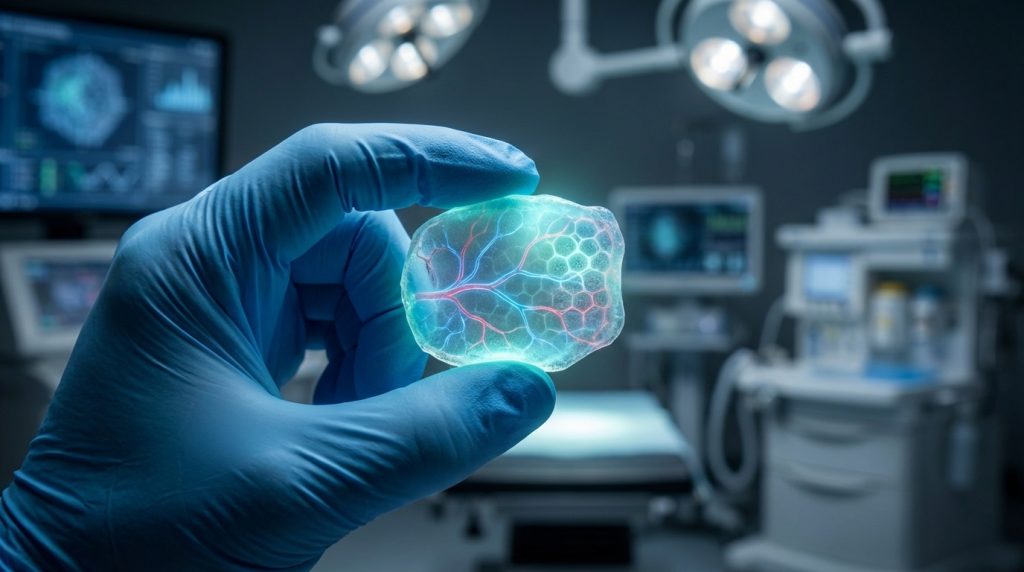
Severe burns are devastating. They cause immense pain. They also lead to permanent scarring. Furthermore, they increase infection risk. Traditional skin grafts have limitations. They can be painful. They may not always cover large areas. However, a groundbreaking technology is changing this. It is called bio-printing. This innovation uses 3D printing. It creates lab-grown skin. This offers new hope for burn survivors.
This article explores bio-printing skin. We will look at how it works. We will also discuss its benefits. Finally, we will touch on its future potential. Surgeons and biotechnologists are at the forefront. They are driving this medical revolution.
The Challenge of Burn Treatment
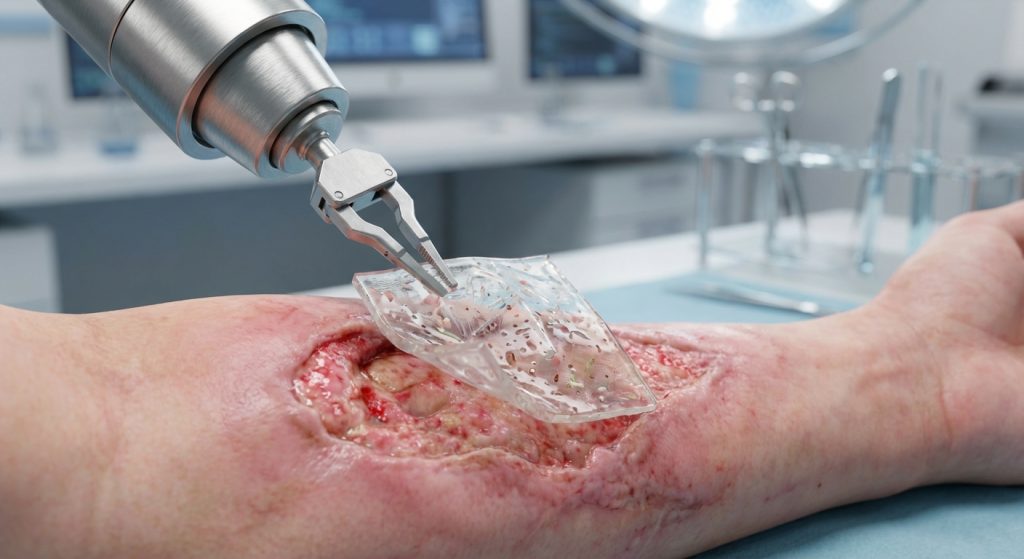
Treating severe burns is complex. The skin is our largest organ. It protects us from the environment. It regulates body temperature. It also helps us feel sensations. When skin is severely damaged, these functions are compromised. Large-area burns require significant skin replacement. Autografts, using a patient’s own skin, are common. However, they require a donor site. This creates another wound. This can be painful. It also limits the amount of skin available.
Allografts, from donors, can be used. Yet, the body may reject them. This leads to graft failure. Therefore, new solutions are desperately needed. Scientists have been researching alternatives. They aim for better, faster healing. They also want to minimize scarring and pain.
What is Bio-printing Skin?
Bio-printing is an additive manufacturing process. It uses bio-inks. These inks contain living cells. They also include growth factors and biomaterials. These materials form a scaffold. The printer deposits these materials layer by layer. It follows a precise digital model. This model is often based on the patient’s own anatomy.
The goal is to create functional tissue. For skin, this means recreating its layers. These include the epidermis and dermis. The cells used are often derived from the patient’s own skin cells. This reduces the risk of rejection. It also promotes better integration with existing tissue.
The Bio-printing Process
The process typically involves several key steps:
- Cell Sourcing: Small skin samples are taken from the burn victim. These are then cultured in a lab. This multiplies the cells.
- Bio-ink Formulation: The cultured cells are mixed with a biocompatible hydrogel. This hydrogel acts as a scaffold. It provides nutrients and support. Growth factors are often added. These encourage cell growth and differentiation.
- 3D Design: A digital blueprint of the required skin graft is created. This can be based on medical scans. It ensures the graft matches the wound size and shape.
- Printing: A specialized bio-printer deposits the bio-ink. It does so precisely, layer by layer. This builds the skin graft according to the design.
- Maturation: The printed skin graft is placed in a bioreactor. This controlled environment allows the cells to mature. It promotes the formation of a stable, functional tissue.
This meticulous process ensures a high-quality product. It is tailored to the individual patient’s needs. Thus, it represents a significant leap forward.
Advantages of Bio-printed Skin
Bio-printing skin offers numerous advantages over traditional methods. Firstly, it can create large skin grafts. This is crucial for extensive burns. Secondly, using the patient’s own cells minimizes immune rejection. This leads to better graft survival. Thirdly, the process can be faster. This is important for critical burn patients. Faster healing means reduced hospital stays. It also means a lower risk of infection.
Furthermore, bio-printed skin can mimic natural skin structure. This can lead to better cosmetic outcomes. It may also restore more function. For example, it can help regenerate sweat glands and hair follicles. This is something traditional grafts struggle with. The potential for improved quality of life is immense.
Reducing Pain and Scarring
One of the most significant benefits is pain reduction. Traditional skin grafting involves taking skin from another part of the body. This creates a second wound. Bio-printing often uses the patient’s own cells. This means no large donor sites are needed. Therefore, less pain is experienced. Also, the ability to print large, integrated grafts can reduce the need for multiple surgeries. This further minimizes patient discomfort.
Scarring is also a major concern. Large burns can lead to hypertrophic scars. These are raised and often disfiguring. Bio-printed skin, with its controlled structure, has the potential to produce more natural-looking skin. This can lead to less severe scarring. Consequently, this improves the patient’s appearance and self-esteem.
Current Status and Future Prospects
Bio-printing skin is still an evolving field. However, significant progress has been made. Several research groups and companies are developing this technology. Clinical trials are underway. Early results are promising. Some early successes have been reported in treating specific types of wounds.
The future holds even greater promise. Scientists are working on printing more complex skin structures. They aim to include blood vessels. This will improve graft viability. They also want to integrate nerve endings. This will restore sensation. Eventually, they hope to print complete skin organs. This could revolutionize reconstructive surgery. It might even lead to the elimination of skin grafts altogether.
The integration of artificial intelligence could further refine the printing process. AI can optimize bio-ink formulations. It can also improve the accuracy of the digital models. This ensures the best possible outcomes for patients. This technology is a testament to human ingenuity in medicine. It shows how we can harness biotechnology for healing.
Challenges and Ethical Considerations
Despite the excitement, challenges remain. Scaling up production is a major hurdle. Making bio-printed skin affordable and accessible is also critical. Regulatory approval processes can be lengthy. Ensuring the long-term safety and efficacy of these grafts is paramount. Moreover, ethical questions arise. These include the source of cells and the equitable distribution of this advanced technology.
As this field advances, collaboration is key. Surgeons, biotechnologists, engineers, and ethicists must work together. This ensures responsible development. It also guarantees that the benefits reach those who need them most. For instance, understanding the nuances of gene editing and its ethical implications is crucial as we explore new frontiers in biological manipulation.
The Role of Biotechnologists and Surgeons
Biotechnologists are essential in developing the bio-inks. They optimize cell cultures. They also design the printing processes. Their expertise in cellular biology and biomaterials is fundamental. Surgeons, on the other hand, are responsible for patient selection. They perform the implantation procedures. They also manage post-operative care. Their clinical experience guides the development process. It ensures the technology meets real-world medical needs.
Together, they form a powerful team. Their combined knowledge drives innovation. They are turning science fiction into medical reality. This collaborative spirit is vital for such complex medical advancements. It is akin to the interdisciplinary nature required in fields like regenerative medicine and artificial wombs, where multiple disciplines converge to solve complex biological challenges.
Conclusion
Bio-printing skin represents a paradigm shift in burn care. It offers a path to faster healing. It promises reduced pain and scarring. It also holds the potential for more functional and aesthetically pleasing results. While challenges exist, the trajectory is clear. Lab-grown skin is no longer a distant dream. It is becoming a tangible reality.
This technology will undoubtedly save lives. It will also significantly improve the quality of life for countless burn victims. The collaboration between surgeons and biotechnologists is paving the way. They are building a future where severe burns are no longer life-altering catastrophes. They are creating a future of healing and regeneration.
Frequently Asked Questions (FAQ)
What is the main advantage of bio-printed skin over traditional skin grafts?
The primary advantage is the reduced risk of immune rejection because bio-printed skin often uses the patient’s own cells. Additionally, it can be produced in large quantities, which is crucial for extensive burns, and it can lead to better functional and cosmetic outcomes with less pain and scarring.
How long does it take to create a bio-printed skin graft?
The process involves several stages: cell culturing, bio-ink formulation, printing, and maturation. While the printing itself can be relatively quick, the entire process from taking a skin sample to having a mature, ready-to-implant graft can take several weeks. However, this is often faster than waiting for a suitable donor or for large autografts to heal sufficiently.
Is bio-printed skin safe for human use?
Currently, bio-printed skin is in clinical trials. While early results are promising, ongoing research and regulatory approvals are necessary to ensure its long-term safety and efficacy for widespread human use. The use of the patient’s own cells significantly improves its safety profile by minimizing immune responses.
What types of cells are used in bio-printing skin?
Typically, skin cells such as keratinocytes (epidermis) and fibroblasts (dermis) are used. These are often derived from the patient’s own skin biopsy. Sometimes, stem cells are also incorporated to aid in tissue regeneration and differentiation.
Will bio-printed skin replace all skin grafting techniques?
It is unlikely to completely replace all existing techniques in the immediate future. However, for severe and extensive burns, it offers a superior alternative to traditional methods. As the technology matures and becomes more accessible, it is expected to become a primary treatment option for many burn patients.