Regenerative Coffee Farming: Soil Health and Flavor
Published on February 8, 2026 by Admin
What is Regenerative Coffee Farming?
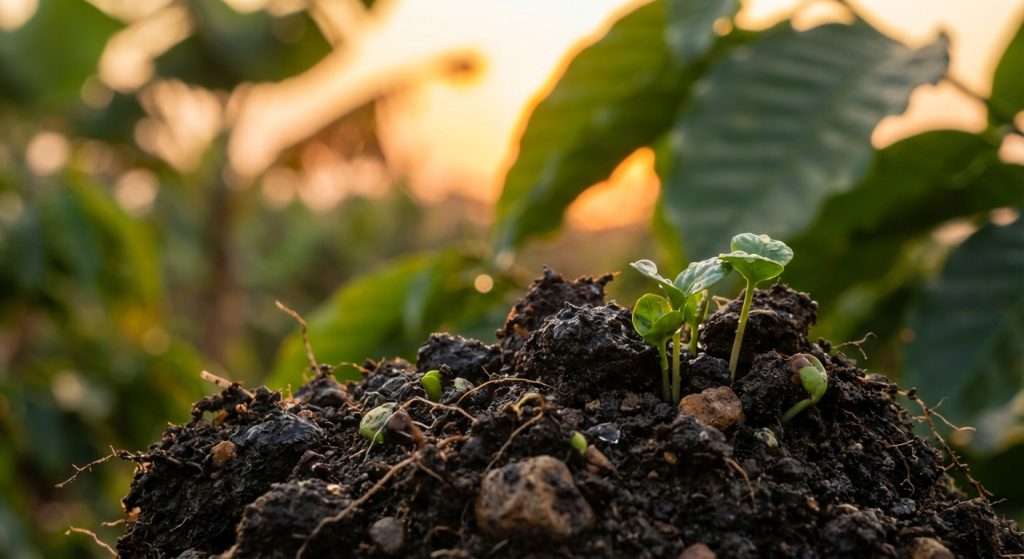
Regenerative coffee farming is more than just growing beans. It’s about actively healing the land. Farmers focus on improving soil health. They also enhance biodiversity. This approach goes beyond sustainability. It aims to restore ecosystems. Furthermore, it creates a more resilient farming system.
Traditional farming can deplete soil. It can harm local wildlife. Regenerative practices reverse this damage. They build soil organic matter. This sequesters carbon. It also improves water retention. Healthy soil leads to healthier plants. Consequently, it produces higher quality coffee.
The Core Principles of Regenerative Agriculture
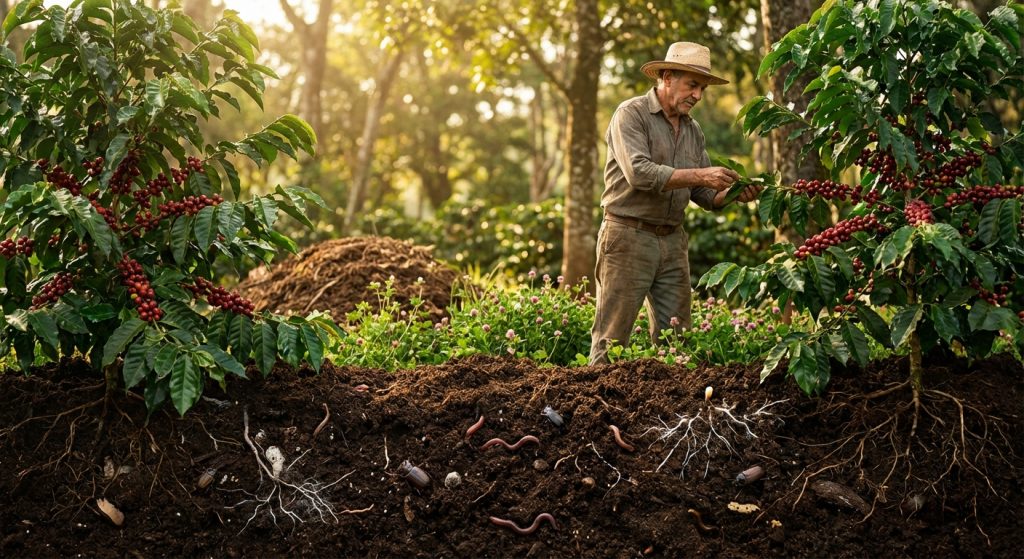
Several key principles guide regenerative agriculture. These principles are interconnected. They work together to create a thriving farm ecosystem.
1. Minimize Soil Disturbance
Tilling can destroy soil structure. It releases stored carbon. Regenerative farmers avoid excessive tilling. They use cover crops instead. Cover crops protect the soil. They also add nutrients. No-till or reduced-till methods are preferred. This keeps the soil ecosystem intact.
2. Keep the Soil Covered
Bare soil is vulnerable. It erodes easily. It loses moisture quickly. Cover crops are essential. They act as a living mulch. Mulching also helps retain moisture. It suppresses weeds. It provides habitat for beneficial insects.
3. Maximize Biodiversity
Monocultures are fragile. Diverse ecosystems are robust. Farmers plant a variety of crops. They encourage native plants. Shade trees are crucial for coffee. These trees support beneficial insects. They also provide habitat for birds. Diverse systems attract pollinators. They also help control pests naturally. This approach supports the complex symbiotic relationship between pollinators and plant life.
4. Maintain Living Roots
Living roots feed soil microbes. They also improve soil structure. Cover crops ensure roots are always present. This continuous feeding supports a healthy soil food web. It is vital for nutrient cycling.
5. Integrate Livestock (When Possible)
Animals play a role in regenerative systems. Grazing animals can improve soil fertility. Their manure adds nutrients. Managed grazing can stimulate plant growth. It also helps control weeds. This is known as regenerative grazing.
Benefits for Coffee Farmers and Exporters
Adopting regenerative practices offers significant advantages. These benefits extend from the farm to the global market.
Improved Crop Yields and Quality
Healthy soil leads to healthier coffee plants. Plants are more resilient to drought and pests. This results in more consistent yields. The coffee beans themselves often show improved quality. Flavor profiles can become more complex and nuanced. This is because the plants are better nourished.
Reduced Input Costs
Regenerative farming reduces the need for synthetic fertilizers and pesticides. This lowers operational costs. It also decreases reliance on external inputs. Farmers can save money over time. This makes their operations more profitable.
Enhanced Environmental Stewardship
Farmers become custodians of the land. They are actively restoring ecosystems. This includes improving water quality. It also means reducing greenhouse gas emissions. Many consumers now seek ethically sourced products. Regenerative coffee meets this demand. It helps build a positive brand image.
Increased Resilience to Climate Change
Climate change presents challenges. Extreme weather events are more common. Regenerative soils absorb more water. This makes farms more resistant to drought. It also reduces flood damage. Diverse systems are less susceptible to single-crop failures. Therefore, farms are more secure.
Market Opportunities and Premiums
There is a growing market for specialty and sustainable coffee. Consumers are willing to pay more for coffee grown regeneratively. This can lead to premium pricing. It also opens doors to new markets. Exporters can leverage these practices to differentiate their products. They can highlight the positive impact on the environment. This appeals to conscious consumers.
Challenges and Solutions
Transitioning to regenerative farming isn’t always easy. Farmers face several hurdles. However, solutions are emerging.
Initial Investment and Transition Period
Changing farming practices requires time and resources. There might be an initial dip in yields during the transition. Farmers need support and education. Financial incentives can help. Access to training programs is crucial. Learning about permaculture systems can offer valuable insights.
Knowledge and Training Gaps
Regenerative agriculture requires a different skillset. Farmers need to understand soil science. They need to learn about integrated pest management. Extension services and farmer networks are vital. Sharing knowledge among farmers is key. Organizations can provide workshops and resources.
Market Access and Consumer Education
Connecting regenerative farmers with the right buyers is important. Educating consumers about the benefits is also necessary. Clear labeling and storytelling can help. Certifications can provide credibility. Exporters play a role in building these connections.
The Future of Coffee: A Regenerative Outlook
Regenerative coffee farming is not just a trend. It is a necessary evolution. It offers a path towards a more sustainable and equitable coffee industry. By prioritizing land health, farmers can grow better coffee. They can also build more resilient businesses. This benefits everyone involved, from the farmer to the consumer.
The coffee industry has a significant impact. It can either degrade land or regenerate it. Choosing the regenerative path is a choice for a healthier planet. It is also a choice for a more prosperous future for coffee farmers. This approach aligns with broader goals of ecological restoration. It also contributes to mitigating climate change.
Frequently Asked Questions
What are the main differences between sustainable and regenerative coffee farming?
Sustainable farming aims to maintain current levels. It seeks to minimize negative impacts. Regenerative farming goes further. It actively aims to improve the land. It seeks to restore degraded ecosystems and build soil health.
How does regenerative farming improve coffee flavor?
Healthy, nutrient-rich soil leads to healthier coffee plants. These plants produce higher quality beans. This often results in more complex and desirable flavor profiles. The improved nutrition in the soil directly impacts bean development.
Is regenerative coffee more expensive to produce?
Initially, there might be transition costs. However, regenerative farming often reduces the need for expensive inputs like synthetic fertilizers and pesticides. Over time, this can lead to lower production costs and increased profitability.
How can exporters support regenerative coffee farmers?
Exporters can offer fair prices for regeneratively grown coffee. They can provide technical assistance and training. They can also help farmers access markets that value sustainability. Building strong relationships and transparent supply chains is essential.
What is the role of shade trees in regenerative coffee farms?
Shade trees are vital. They provide habitat for biodiversity. They also help regulate temperature and humidity. This creates a more stable microclimate for coffee plants. Furthermore, they contribute to soil health and carbon sequestration.